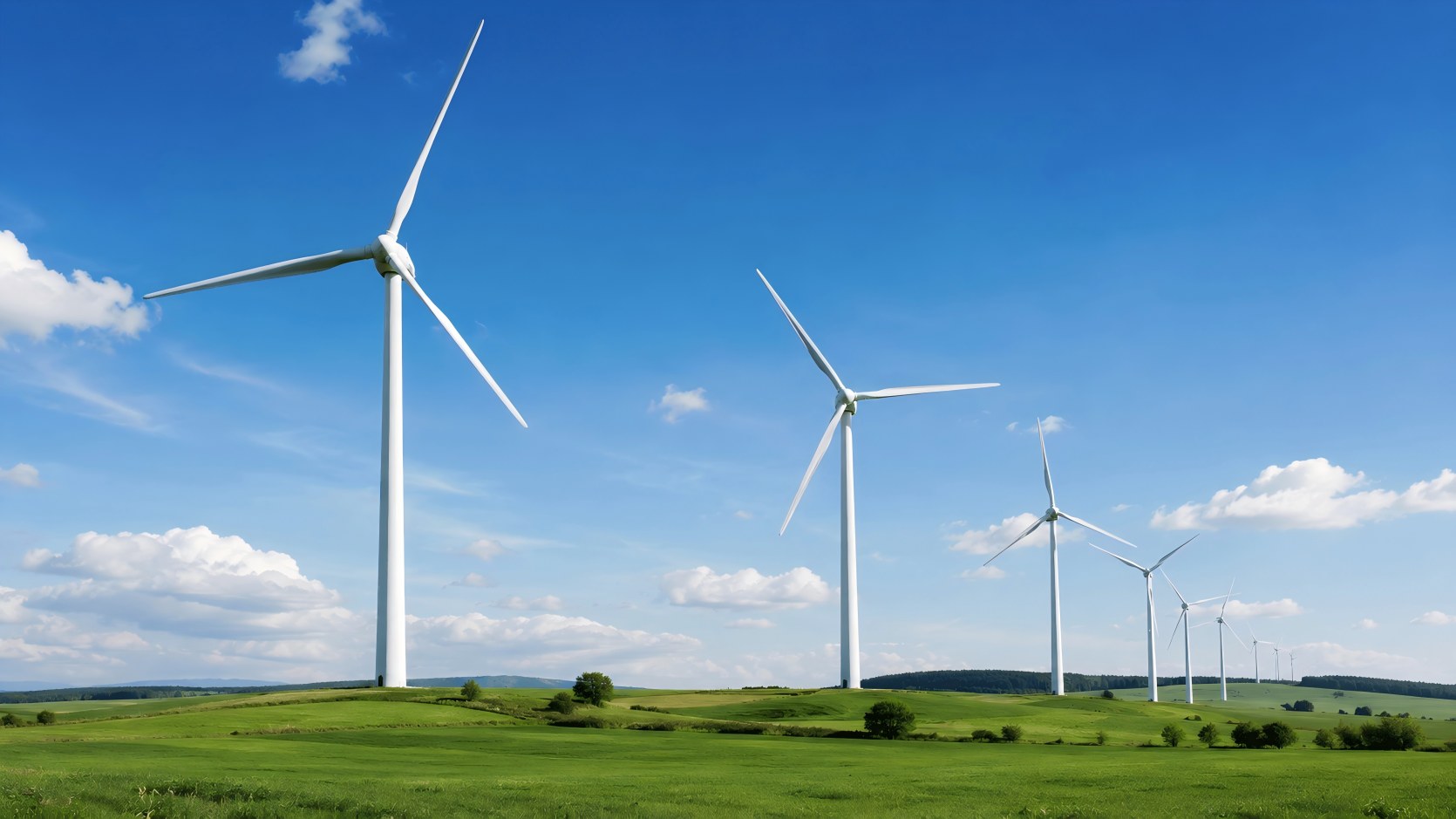
How do wind energy systems work?
Wind energy converts the movement of air into mechanical rotation, which drives a generator to produce electricity. The process happens inside a wind turbine, and while the technology has grown more sophisticated over time, the core idea is straightforward. Wherever air moves consistently and with enough force, wind energy can be put to work.
What Is Wind Energy?
Wind energy is the energy carried by moving air. Wind forms because the sun heats the Earth’s surface unevenly — land warms faster than water, warm air rises, and cooler air moves in to replace it.
Because it originates from solar radiation, wind energy is an indirect form of solar energy. And since the sun keeps warming the Earth, wind remains a continuously renewable resource.
How Does Wind Energy Work?
The conversion of wind into electricity follows a clear sequence inside a wind energy system:
- Wind moves across the turbine blades. The blades are long and curved, shaped similarly to an airplane wing.
- The blade shape creates lift. Air moves faster over one side of the blade, creating a pressure difference that pulls the blade into rotation — lift, not just push.
- The rotor begins to spin. The blades connect to a central hub called the rotor, which turns as the blades turn.
- The rotating shaft drives a generator. A shaft runs from the rotor into the turbine housing, connecting to a generator either directly or through a gearbox.
- The generator produces electricity. Rotating magnets inside wire coils generate an electrical current — the same basic principle used in most power generation.
- Electricity is delivered or stored. The output passes through a transformer and flows to the grid, is used on-site, or is stored in batteries for later use.
For a more detailed explanation of turbine blade aerodynamics, the U.S. Department of Energy offers a useful overview of how wind turbines work.
Main Parts of a Wind Turbine
Each component in a wind turbine has a specific job in turning moving air into usable electricity:
- Blades — Aerodynamically shaped to capture wind and convert it into rotational force. Most utility-scale turbines use three blades.
- Rotor — The hub that holds the blades and transfers their rotation to the drivetrain. A larger rotor diameter captures more wind.
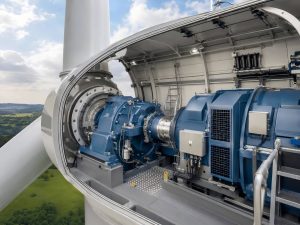
- Nacelle — The housing at the top of the tower, directly behind the rotor. It contains the gearbox (if the design uses one), the generator, and the control systems.
- Tower — Elevates the rotor and nacelle to reach stronger, more consistent wind. Most utility-scale towers stand between 80 and 120 meters tall.
- Generator — Converts mechanical rotation into electricity through electromagnetic induction.
Why Speed Makes Such a Big Difference
Wind speed has a dramatic effect on power output. Available wind power increases with the cube of wind speed — meaning even a modest increase in wind speed produces a much larger gain in energy output.
This is why wind resource assessment is a critical part of any wind energy project. A site with steady, stronger winds will consistently outperform an identical turbine placed somewhere with weaker or irregular wind. Most utility-scale turbines start generating at around 3–4 meters per second and reach full output at roughly 12–14 meters per second.
Where Wind Power Is Used
Wind electricity is produced across a wide range of settings:
- Utility-scale wind farms — Large arrays of turbines feeding power directly into the regional or national grid
- Offshore wind projects — Installations in coastal waters, where wind tends to blow stronger and more consistently
- Farms and rural areas — Smaller turbines used for on-site power generation
- Factories and industrial sites — Wind as part of an on-site energy mix to offset grid consumption
- Hybrid solar and wind systems — Combining both sources smooths out the natural gaps each technology has on its own
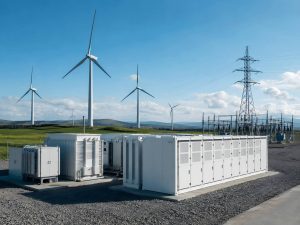
- Battery storage systems — Storing surplus wind electricity for use when generation drops or demand spikes
Articles on hybrid renewable energy systems and battery storage configurations cover how these setups work in more detail. In commercial and industrial sites, wind energy is often discussed together with commercial wind turbines, solar power, and battery storage systems.
Strengths and Limitations Worth Knowing
Advantages:
- Renewable and continuously replenished by natural atmospheric cycles
- No fuel costs once a turbine is operational
- Low emissions during operation
- Compatible with farming and other land uses in open areas
- Works well alongside solar panels and battery storage
Limitations:
- Wind is intermittent — turbines only generate within a specific speed range
- Site selection requires careful wind resource analysis
- Upfront costs for equipment, installation, and grid connection can be substantial
- Noise and visual impact may need assessment near residential areas
- Maintenance and grid management require planning from the outset
Wind Energy Place in the Modern Power Grid
Wind energy works best when planners consider the full picture from the start, including wind resource quality, turbine design, tower height, site conditions, and how electricity will reach end users or storage. A well-matched system can deliver reliable, low-cost power for decades. In a modern renewable energy system, wind power often works alongside solar panels, grid infrastructure, and energy storage.
Wind increasingly pairs with solar and battery storage to provide more consistent output across different times of day and seasons. Understanding how wind energy works — and where it fits within a broader energy system — is a solid starting point for anyone evaluating it.
