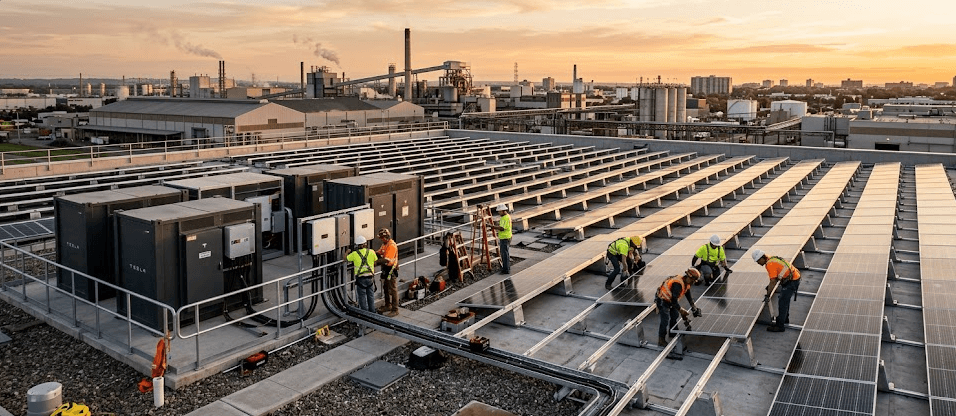
Hybrid Energy System Installation: Timeline and What to Watch Out For
Many people seem to assume that hybrid energy system installation is a quick process—and I used to think so, too. However, here is the reality: the actual physical installation work is, in fact, the easiest part. What truly causes projects to get bogged down are those long, drawn-out weeks of waiting—waiting for permits and approvals, constantly chasing up procurement updates, and navigating the cumbersome bureaucratic processes of utility companies. Moreover, most installation providers tend to remain completely silent about these hurdles until the project has officially kicked off and you are already fully committed.
In truth, the typical timeline for installing a commercial-scale hybrid energy facility ranges anywhere from 8 to 20 weeks. If anyone promises you that it will take “just 6 to 8 weeks,” they are merely catering to your expectations—telling you exactly what you want to hear.
| Phase | Typical Duration | |
|---|---|---|
| 01 | Site Assessment & Design | 1–2 weeks |
| 02 | Permits & Approvals: Longest wait | 2–8 weeks |
| 03 | Procurement & Installation | 3–6 weeks |
| 04 | Testing & Handover Shortest phase | ~1 week |
How Long Does a Hybrid Energy System Installation Take?
A realistic commercial hybrid energy system installation runs 8 to 20 weeks. The physical installation itself takes 1 to 2 weeks. Everything before it — permits, procurement, approvals — is what determines your real timeline. Build your project schedule around those phases, not the installation day.
Site Assessment & System Design (1–2 Weeks)
What happens: Your installer evaluates 12 months of utility data, surveys your roof or land, checks grid connection capacity, and maps your load profile across seasons. This phase produces a system design document specifying solar capacity, battery size, and inverter configuration.
Why it matters: This phase determines whether your system will perform as promised over the next 25 years. A system sized on assumptions instead of real data will either fall short on savings or cost more in oversizing than you’ll ever recover.
Watch out for: Installers who skip this and jump straight to quoting. That’s your exit cue.
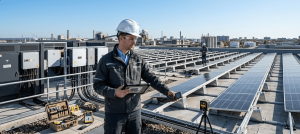
Permits & Approvals (2–8 Weeks)
This is where projects stall. Not from technical failure — from paperwork.
Your installer submits applications for building permits, electrical permits, utility interconnection agreements, and fire department clearance for battery storage. Approval timelines vary widely — we’ve seen them clear in 12 business days and drag past four months. The difference is almost always preparation, not luck.
Your installer should be handling every application. If they’re asking you to manage any of it, that’s not partnership — that’s offloading their job onto you. Get your utility bills, property surveys, and roof engineering reports ready before submission. These are the items that cause delays when missing, and they’re always the ones nobody asks for until the last minute.
Equipment Procurement & Hybrid Installation (3–6 Weeks)
Here’s what separates good installers from everyone else: they order long-lead equipment the day you sign, not the day permits clear. Battery storage units carry a 4 to 8 week lead time. If procurement only starts after approvals, you’ve already lost a month before a single panel goes up.
Ask your installer directly: when will they order the equipment?
Once everything arrives, physical installation moves fast — typically 1 to 2 weeks. Structural mounting, panels, battery enclosures, electrical wiring, and control system configuration. You’ll have one planned outage of 2 to 4 hours for the main switchover. Get the timing committed in writing before work begins.
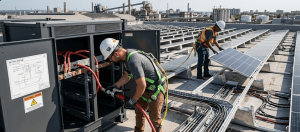
Hybrid Energy System Testing & Handover (~1 Week)
Most installers treat this phase as a formality. It isn’t.
What happens: Each component is tested individually — solar cycling, battery charge and discharge, grid failover simulation, monitoring validation — then the full system runs together. On handover day, your team is trained on dashboard monitoring, operating modes, emergency procedures, and maintenance schedules.
Do not sign off without written commissioning reports for every test. Get the operations manual, warranty documents, and 24/7 emergency contact in writing before the crew leaves the site. That’s not being difficult. That’s protecting a 20-year asset.
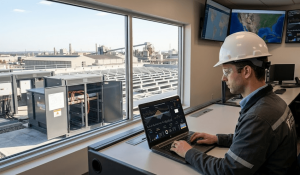
Plan for the Wait. Your Hybrid Energy Installation Takes Care of Itself.
The panels go up in days. The permits, procurement, and approvals take weeks. That’s the part worth planning for — and the part most facilities don’t budget time for until it’s already costing them.
Prepare your documents before the installer submits the permits. Ask your installer when they will order the equipment. Lock your outage window in writing. Show up to handover day ready to take ownership of the system.
Do those four things, and the hybrid energy system installation becomes the easy part. Because it always was.
