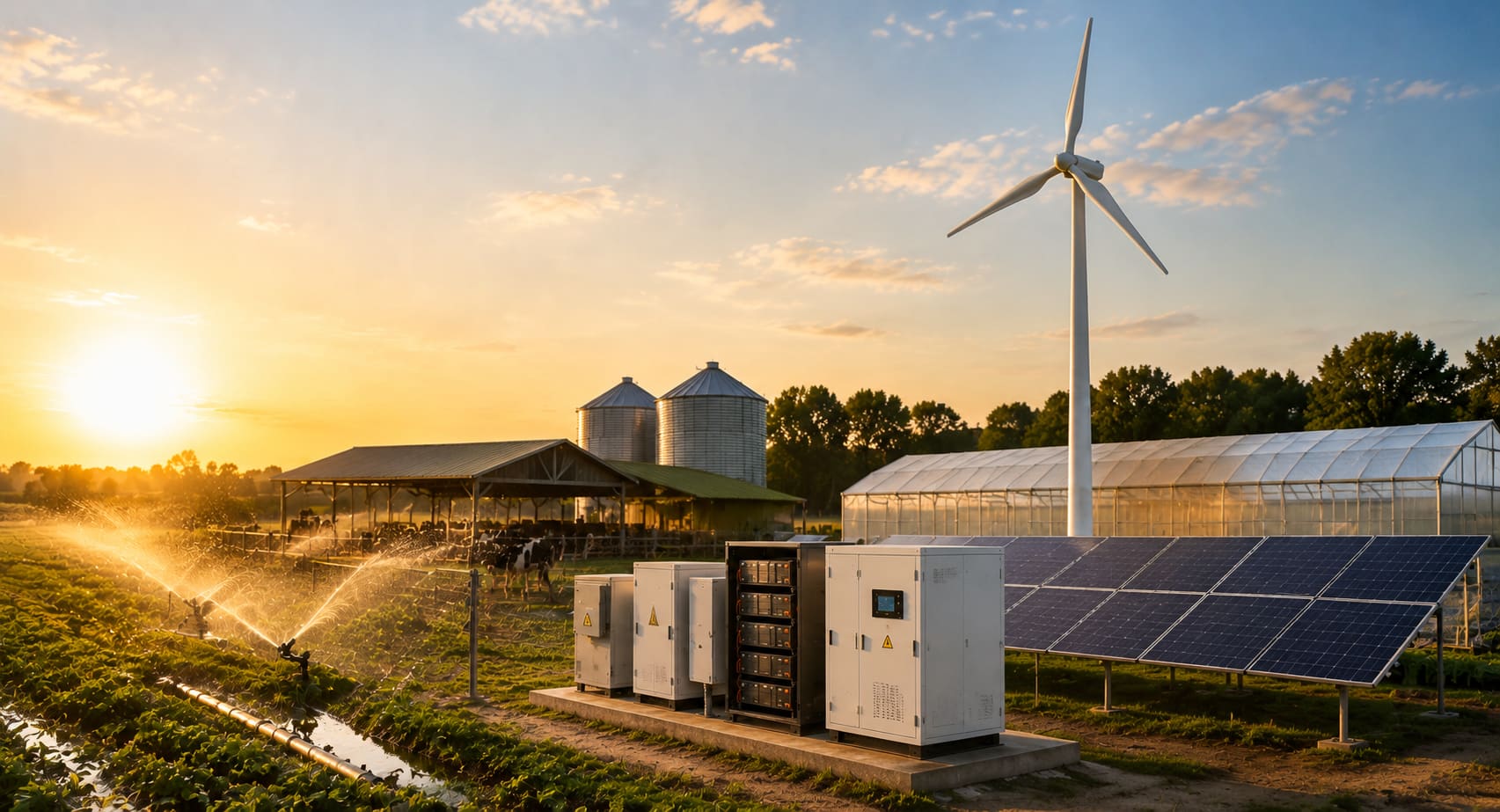
How Off Grid Hybrid Power Supports Agricultural Energy Needs
An off grid hybrid power system supports agricultural energy needs by providing reliable electricity for irrigation, greenhouse management, refrigeration, livestock equipment, and other essential farm operations. By combining renewable energy sources such as solar and wind with battery storage and backup power, it allows farms to generate and manage their own electricity without relying entirely on the grid.
For agricultural businesses in areas with limited or unstable power access, a standalone hybrid power system solution improves energy reliability, reduces dependence on diesel generators, and helps maintain continuous operation of critical equipment.
Off Grid Hybrid Power Improves Energy Reliability and Independence for Farms
The primary role of off-grid hybrid energy systems in agriculture is to provide a stable and independent electricity supply. Instead of relying completely on traditional grids or diesel generators, farms can use locally available renewable resources to generate power based on their actual energy needs.
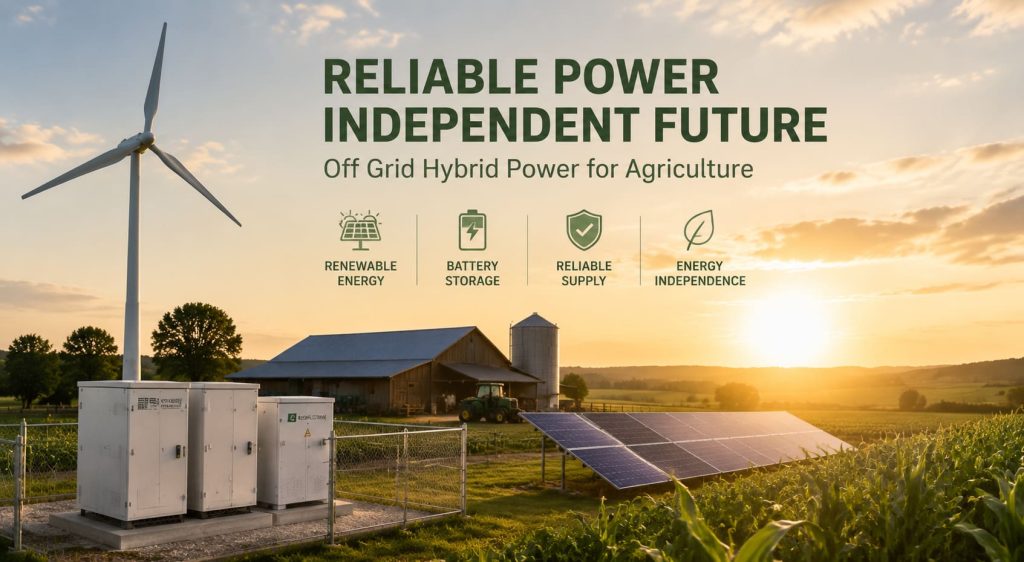
For remote agricultural operations, unstable electricity can interrupt important processes and reduce productivity. An off grid hybrid power system helps reduce these risks by providing continuous energy support through a combination of renewable generation and battery storage.
By improving energy independence, farmers can maintain daily operations even when grid power is unavailable. This reliability is especially important for farms that depend on electricity-sensitive equipment and cannot afford unexpected downtime.
Supports Irrigation, Greenhouses, Livestock, and Farm Equipment
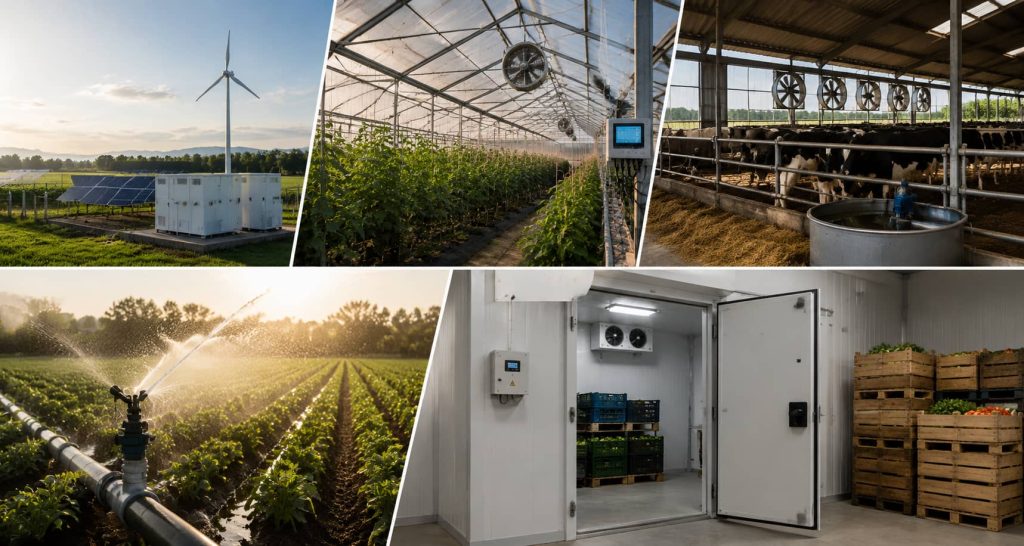
Agricultural production involves many energy-intensive processes, and each application has specific power requirements. An off grid hybrid power system helps farmers operate essential equipment by providing electricity where and when it is needed.
For Irrigation Systems
Irrigation is one of the most important applications of electricity in agriculture. Water pumps require stable power to deliver water to crops, especially during dry seasons when consistent irrigation directly affects crop growth and yield.
An off grid hybrid power system can supply electricity for irrigation pumps by using solar energy during daylight hours and battery storage when additional power is required. In areas with suitable wind resources, wind turbines can provide supplementary energy to improve system reliability.
This approach allows farmers to maintain regular irrigation schedules without depending entirely on grid electricity or fuel-powered generators. As a result, crops receive consistent water supply, while farmers reduce operational risks caused by power interruptions.
Off Grid Hybrid Power for Greenhouse Management
Modern greenhouses rely on electricity to maintain controlled growing environments. Ventilation fans, temperature control systems, lighting equipment, and monitoring devices all require stable power to maintain suitable conditions for plant growth.
A standalone hybrid power system supports greenhouse operations by providing a continuous electricity supply for these systems. Battery storage ensures that critical equipment can continue operating during periods of low solar or wind generation.
Reliable energy helps farmers maintain stable temperature and humidity levels, protect crops from environmental changes, and improve production consistency. For commercial greenhouse operations, a dependable power supply is essential for maintaining product quality and reducing losses.
Off Grid Hybrid Power for Livestock Farms
Livestock operations also depend on electricity for feeding systems, water pumps, ventilation, cooling equipment, and environmental monitoring. Any power interruption can affect animal health and farm efficiency.
With an off grid hybrid power system, livestock farms can maintain essential equipment operation without relying solely on external electricity sources. Stable power supports better environmental control and helps farmers maintain consistent daily management.
For farms located in remote areas, this improves operational reliability and reduces the challenges associated with limited grid availability.
For Refrigeration and Agricultural Processing
After harvesting, many agricultural products require refrigeration, storage, and processing equipment to maintain quality. Reliable electricity is essential for cold storage facilities, packaging equipment, and processing systems.
A standalone hybrid power system solution can provide stable energy for these applications by combining renewable generation with battery storage. This helps prevent product losses caused by unexpected power failures and allows agricultural businesses to maintain efficient post-harvest operations.
For farms and agricultural companies involved in food production, reliable power directly supports product quality, storage efficiency, and overall business performance.
Key Considerations When Choosing Off Grid Hybrid Power for Agriculture
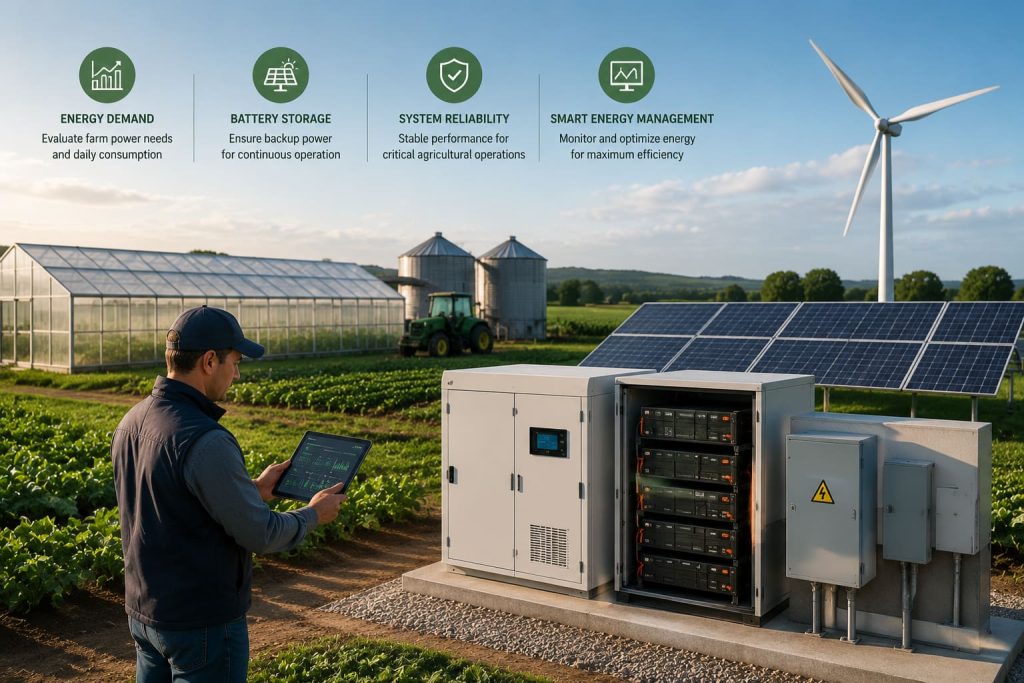
Selecting the right off grid hybrid power system requires evaluating energy demand, local conditions, and system reliability. A proper design helps ensure that the system meets agricultural power needs and operates efficiently.
Evaluate Energy Demand and System Capacity
Understanding the farm’s electricity requirements is the first step. Different equipment, such as irrigation pumps and greenhouse systems, have different power demands.
A suitable off-grid hybrid energy system should match daily energy consumption and peak loads. Proper sizing helps avoid insufficient power supply or unnecessary investment.
Consider Renewable Resources and Battery Storage Requirements
Renewable resources, including solar and wind availability, directly affect system performance. Local weather conditions should be considered when designing a standalone hybrid power system solution.
Battery storage capacity is also important because it provides power during periods of low renewable generation, ensuring continuous operation of essential equipment.
Focus on System Reliability and Long-Term Support
Agricultural operations require stable electricity, making system reliability a key consideration. A high-quality off grid hybrid power system should provide consistent performance and reduce power interruption risks.
Farmers should also consider maintenance requirements, equipment durability, and technical support to ensure long-term system operation.
Off Grid Hybrid Power Provides Reliable Energy Support for Agriculture
Agriculture depends on stable electricity for irrigation, greenhouse systems, livestock equipment, and other essential operations. An off grid hybrid power system helps farms maintain reliable energy supply by combining renewable generation, battery storage, and backup power.
By improving energy independence, supporting critical equipment, and reducing power risks, an off-grid hybrid energy system provides a practical solution for modern agricultural needs. Choosing the right system based on energy demand and operating conditions ensures long-term performance and value.
