Where Can Hybrid Energy System Be Used? Key Applications Explained
Reliable electricity is not always easy to achieve. A remote farm may need stable power for irrigation, a telecom tower may operate far away from the grid, and a factory may need to avoid costly production interruptions caused by power instability. In these situations, a hybrid energy system provides a practical way to maintain a continuous and flexible energy supply.
By combining renewable energy sources such as solar and wind with battery storage and backup power, a renewable hybrid power system can adapt to different environments and energy demands. Whether used for off-grid communities, agricultural operations, commercial buildings, industrial facilities, or critical infrastructure, hybrid systems help users improve power reliability, reduce operating costs, and increase energy independence.
Applications in Off-Grid and Remote Areas
Rural communities, islands, mining sites, and temporary construction projects are often located far from existing power grids, making traditional grid connections expensive and difficult to maintain. A hybrid energy system, by combining renewable energy sources with battery storage and backup power, can provide a more stable electricity supply even when weather conditions change. Unlike relying only on diesel generators, hybrid systems can reduce fuel consumption, lower transportation requirements, and improve long-term energy reliability. This makes them a practical choice for locations where continuous power is important, but grid access is limited.
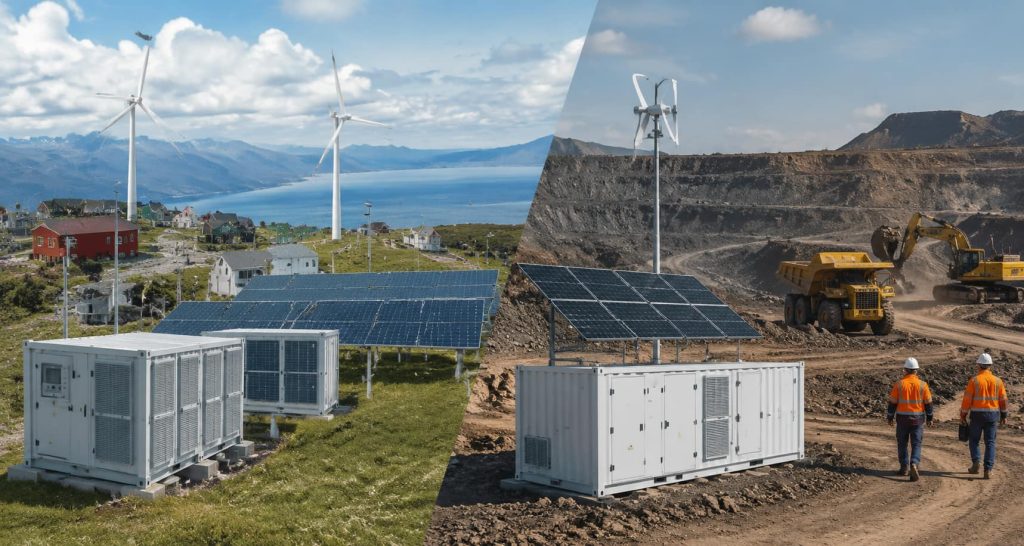
Hybrid Energy System for Rural Communities and Island Microgrids
Remote villages and island communities need electricity for essential services such as homes, schools, medical facilities, water pumping systems, and communication equipment. However, extending traditional power grids to these areas may require significant investment and long construction periods.
A hybrid off-grid power system can create a local microgrid by combining solar panels, wind turbines, battery storage, and backup generators. During periods of strong sunlight or wind, renewable sources can provide electricity directly and charge the battery system. When renewable generation is low, stored energy can continue supplying power to maintain daily operations.
For these communities, the biggest benefit of a hybrid energy system is improved energy independence. It reduces reliance on transported fuel, minimizes power interruptions, and provides a cleaner electricity solution for long-term development.
For Mining Sites and Remote Construction Projects
Mining operations and remote construction sites often require reliable electricity for heavy equipment, lighting, communication systems, and worker facilities. However, these projects are frequently located in areas where grid power is unavailable.
A hybrid energy system allows operators to combine renewable energy with battery storage and traditional backup power to create a more flexible energy supply. For example, solar and wind power can reduce the workload of diesel generators during normal operation, while battery storage can support critical equipment when energy demand changes.
The practical value of hybrid systems in these applications is lower operating costs and improved project efficiency. By reducing fuel consumption and generator operating hours, companies can decrease maintenance needs while maintaining reliable power for remote operations.
Hybrid Energy System Applications in Agriculture
Modern agriculture depends on electricity for many daily operations, including irrigation, greenhouse management, refrigeration, livestock systems, and automated monitoring equipment. For farms located in rural areas, unstable electricity can directly affect productivity and operational efficiency.
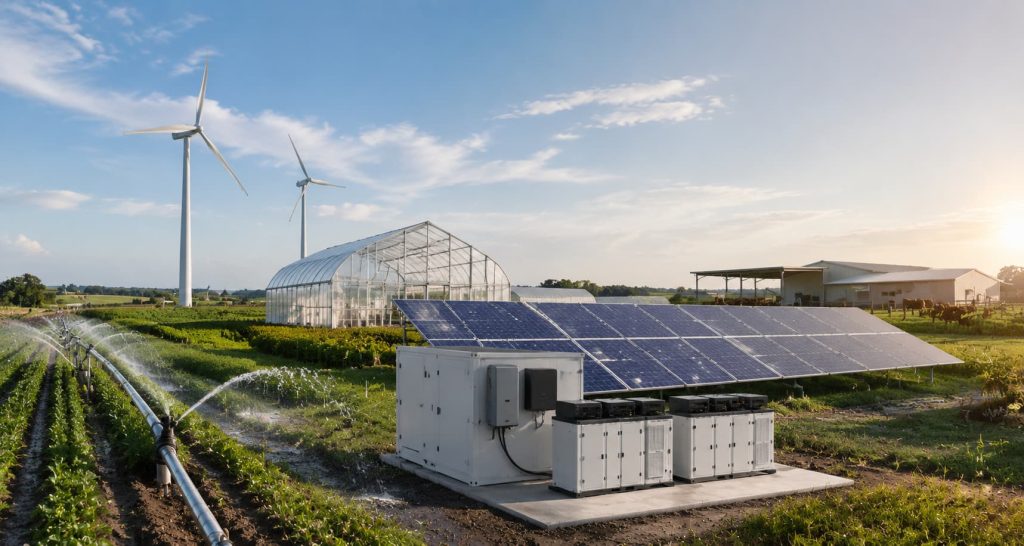
A hybrid energy system provides farmers with a more reliable power source by combining renewable energy generation and energy storage. Instead of depending entirely on grid electricity or diesel generators, farms can generate and manage their own power based on local conditions.
For example, solar energy can support irrigation pumps during daytime hours, while battery storage can provide electricity during early mornings, evenings, or cloudy periods. In areas with suitable wind conditions, wind turbines can provide additional power to improve system stability.
The main advantage of a renewable hybrid power system for agriculture is maintaining continuous operation of essential equipment. Stable electricity helps farmers protect crops, maintain greenhouse conditions, and reduce energy expenses over time. For large farms and agricultural businesses, hybrid systems also provide greater control over energy costs and future expansion.
Hybrid Energy System Applications in Commercial and Industrial Facilities
Factories, warehouses, hotels, and commercial buildings require a stable electricity supply to maintain daily operations. Even short power interruptions can affect production schedules, reduce efficiency, and increase operating costs.
A hybrid microgrid system helps businesses improve energy reliability by combining renewable power generation, battery storage, and grid electricity. The system can supply electricity during normal operation, store excess renewable energy, and provide additional power when demand increases.
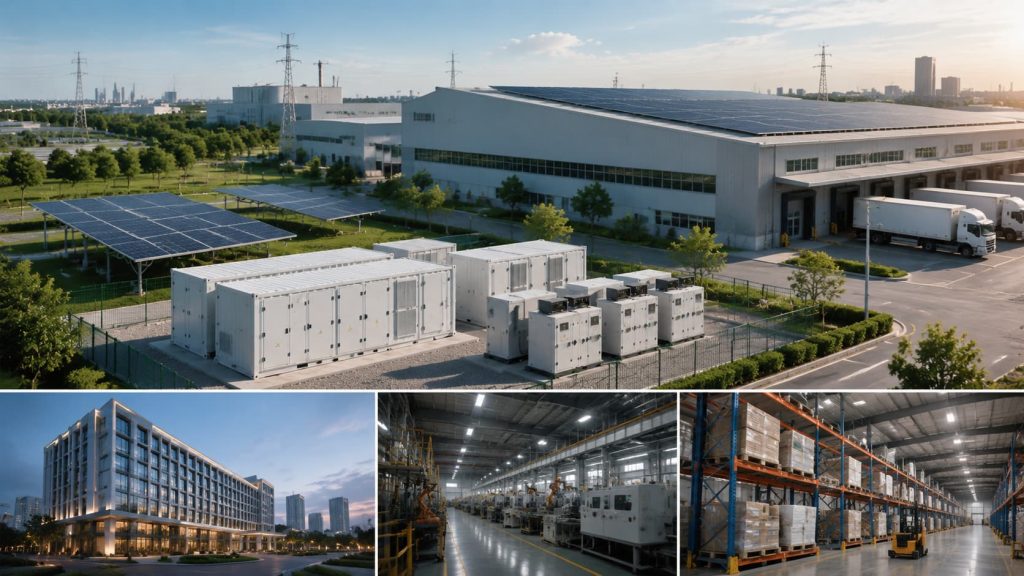
For Manufacturing Plants and Commercial Buildings
Manufacturing facilities often consume large amounts of electricity for production lines, automation equipment, machinery, and facility systems. For these users, energy reliability directly affects production efficiency and profitability.
A hybrid microgrid system can help factories reduce electricity costs by using renewable energy whenever available. For example, rooftop solar panels can provide power during daytime production hours, while battery storage can support peak demand periods or temporary grid interruptions.
Commercial buildings such as hotels, shopping centers, and warehouses can also benefit from hybrid systems. These facilities require continuous electricity for lighting, air conditioning, refrigeration, security systems, and communication equipment. A hybrid solution helps maintain normal operations while improving energy efficiency.
For businesses, the value of a hybrid energy system is not only lower electricity expenses but also stronger energy resilience. Companies can better manage energy consumption and reduce the risks associated with unstable power supply.
For Telecom Towers and Critical Infrastructure
Some applications require electricity 24 hours a day because power failures can directly affect communication, safety, and essential services. Telecom towers, hospitals, emergency facilities, and monitoring stations are examples of infrastructure where reliable power is critical.
A hybrid energy system provides continuous energy support by combining renewable generation with battery storage and backup power sources. These systems can operate in locations where grid access is limited and help reduce dependence on fuel-based generators.
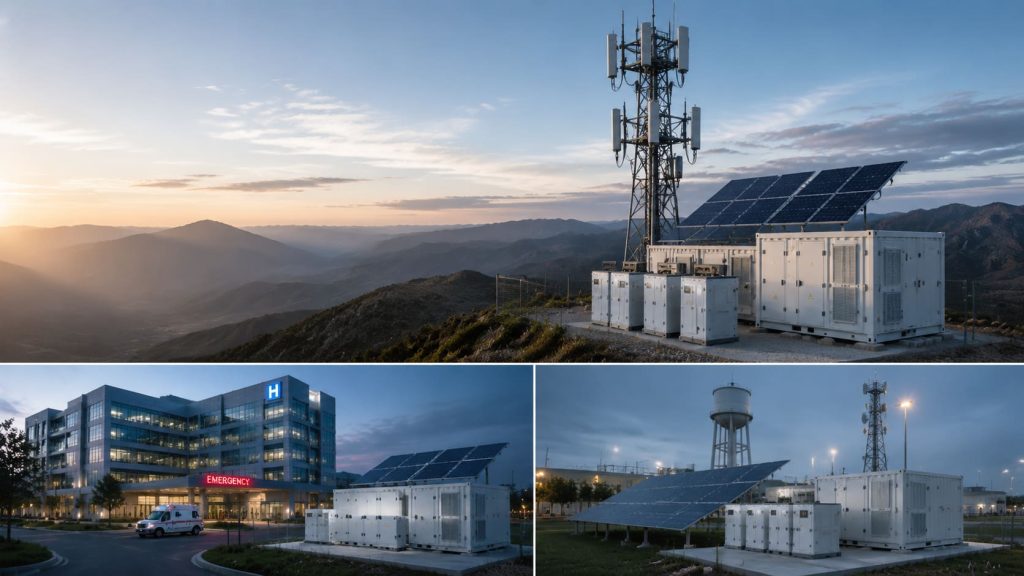
For Telecom Towers and Remote Monitoring Stations
Telecom towers are often installed in remote locations such as mountains, deserts, and rural areas. These sites require stable electricity to operate communication equipment, but traditional power solutions may require frequent fuel delivery and maintenance.
A renewable hybrid power system using solar panels, wind turbines, and batteries can provide reliable power for telecom equipment. Renewable energy supplies daily operation, while battery storage maintains power availability when renewable generation is insufficient.
For telecom operators, hybrid systems reduce fuel costs, lower maintenance requirements, and improve network reliability. This makes them an effective solution for expanding communication infrastructure in remote areas.
Hybrid Energy System for Emergency Power and Microgrids
Hospitals, emergency shelters, campuses, and public facilities require dependable electricity to protect essential services. During natural disasters or grid failures, maintaining power for medical equipment, communication systems, and safety facilities is extremely important.
A hybrid power system can support these applications by providing backup electricity and improving energy resilience. When connected with microgrid technology, hybrid systems allow facilities to continue operating even when external power sources experience disruptions.
By combining renewable energy generation and energy storage, hybrid systems provide a flexible solution for critical infrastructure that requires reliable and independent power.
Hybrid Energy System Provides Flexible Solutions for Reliable Power Applications
A hybrid energy system can support many different applications because it adapts to various energy requirements and operating environments. From remote communities and agricultural projects to factories, telecom networks, and emergency facilities, hybrid solutions help users achieve more reliable electricity and better energy management.
For customers planning renewable energy projects, understanding the application environment is the first step toward selecting the right system design. With proper configuration of energy sources, storage capacity, and power requirements, a hybrid energy system can provide long-term value and reliable performance.
