Hybrid Power System Basics: What to Know Before Starting
A hybrid power system combines multiple energy sources, such as solar, wind, battery storage, and grid or backup power, to create a more stable and efficient energy solution. Compared with single-source renewable systems, a hybrid energy system can better manage energy fluctuations and provide a more reliable power supply.
For businesses, remote facilities, and renewable energy users, understanding how a hybrid energy system works, what components it includes, and how to select the right solution is essential before investing. This guide explains the basic knowledge you need to know before getting started.
What Is a Hybrid Power System and How Does It Work?
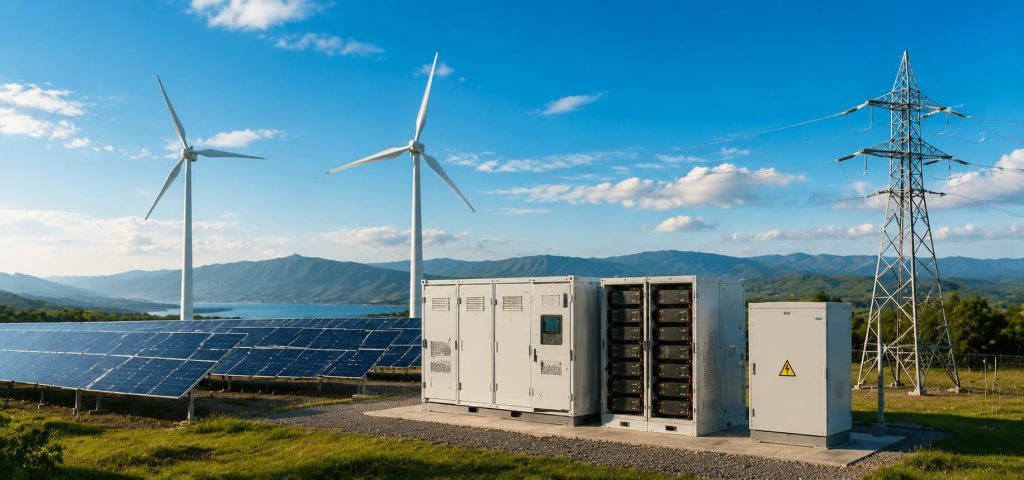
A hybrid power system is an integrated energy system that uses two or more power sources to generate, store, and distribute electricity. The goal is to improve energy reliability by combining different energy technologies and reducing dependence on a single power source.
Typical hybrid energy systems primarily include:
- Solar energy system: Solar panels convert sunlight into electricity and usually serve as one of the primary renewable energy sources.
- Wind energy system: Wind turbines generate electricity when suitable wind resources are available, complementing solar power production.
- Battery storage system: Batteries store excess electricity and provide power when renewable generation is insufficient.
- Hybrid inverter and controller: These components manage energy conversion, power distribution, and system operation.
- Grid connection or backup generator (optional): Additional power sources can provide extra reliability for applications requiring continuous operation.
The working process of a hybrid energy system is based on intelligent energy management. During periods of high renewable energy production, excess electricity can be stored in batteries or supplied to connected loads. When renewable energy output decreases, the system automatically uses stored energy or backup power to maintain a stable electricity supply.
For example, solar panels may generate most of the electricity during the day, while battery storage supports nighttime operation. If wind resources are available, wind turbines can provide additional power to improve overall system efficiency.
Key Components of a Hybrid Power System
Understanding the main components of a hybrid power system helps users evaluate system performance and choose the right configuration for their applications.
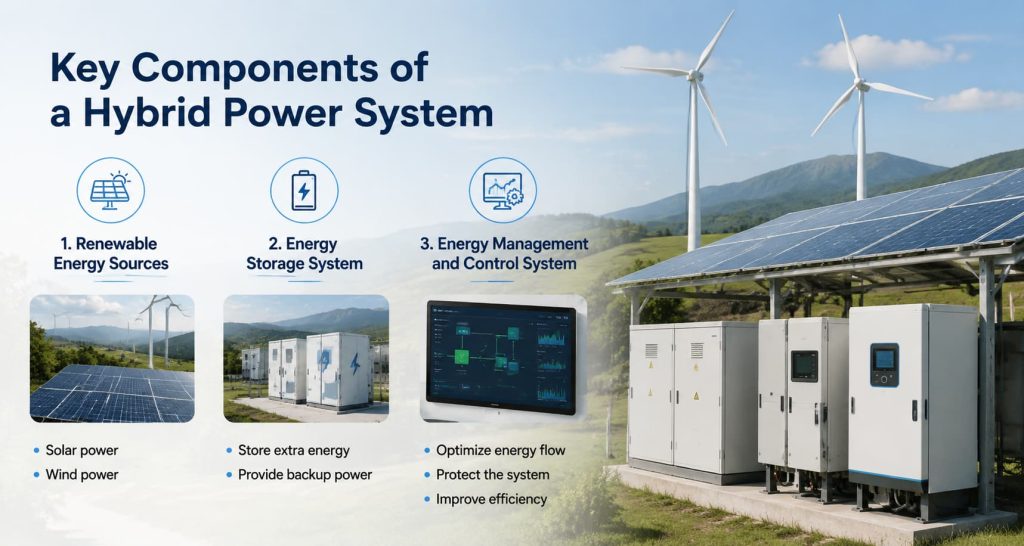
1. Renewable Energy Sources
Renewable generation is the foundation of a hybrid energy system. Solar and wind energy are the most common combinations because their generation patterns can complement each other.
- Solar power provides stable electricity during sunny hours.
- Wind power can generate electricity during different weather conditions, including periods with limited sunlight.
By combining multiple renewable sources, a hybrid energy system can reduce energy fluctuations and improve overall power availability.
2. Energy Storage System
Battery storage plays an important role in improving the reliability of a hybrid energy system. It stores extra electricity produced during high-generation periods and releases energy when demand increases.
A properly designed battery system helps:
- Maintain continuous power supply
- Reduce energy waste
- Improve renewable energy utilization
- Support off-grid operation
Battery capacity selection depends on factors such as daily energy consumption, backup requirements, and operating conditions.
3. Energy Management and Control System
The controller and inverter are the “brain” of a hybrid energy system. They monitor energy production, battery status, and electricity demand to optimize system operation.
Key functions include:
- Managing power flow between different energy sources
- Protecting batteries from overcharging or deep discharge
- Improving energy efficiency
- Allowing real-time system monitoring
An advanced control system ensures that each component works together effectively and improves the long-term performance of the hybrid power system.
Benefits and Applications
A hybrid power system provides several advantages compared with traditional energy solutions or single renewable energy systems.
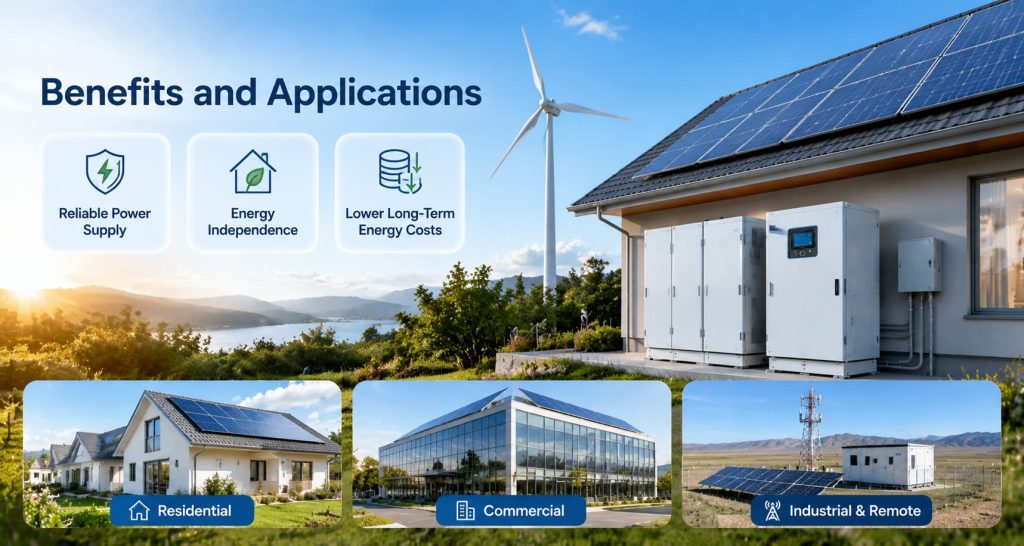
Reliable Power Supply
One of the biggest advantages of a hybrid energy system is improved reliability. Renewable energy sources are affected by weather and environmental conditions. By combining solar, wind, and battery storage, the system can maintain a more stable electricity supply.
This makes hybrid power systems suitable for locations where power reliability is a priority.
Improved Energy Independence
A hybrid energy system allows users to generate and store their own electricity, reducing dependence on external power sources. This is especially valuable for remote areas, off-grid projects, and facilities with limited access to reliable electricity.
Lower Long-Term Energy Costs
Although the initial investment of a hybrid power system may be higher than a single energy solution, it can reduce long-term operating costs by:
- Decreasing fuel consumption
- Reducing electricity expenses
- Improving renewable energy usage
Flexible Applications For Hybrid Power System
Because hybrid energy systems can be customized based on energy requirements, they are used in many different scenarios, including:
1. Residential Applications
- Homes requiring backup power
- Energy self-sufficiency projects
- Small-scale renewable energy systems
2. Commercial Applications
- Offices
- Retail facilities
- Small businesses
- Energy management projects
3. Industrial and Remote Applications
- Farms
- Telecommunications sites
- Remote monitoring stations
- Off-grid facilities
The flexibility of a hybrid power system makes it a practical solution for various energy needs.
How to Choose the Right Hybrid Power System Solution?
Choosing the right hybrid power system requires evaluating your energy needs, operating environment, and future requirements. The first step is to understand your daily power consumption, peak load demand, and whether you need continuous backup power. A properly sized system can improve efficiency while avoiding unnecessary investment.
The available renewable resources should also be considered when designing a hybrid energy system. Factors such as sunlight availability, wind conditions, battery capacity, and system scalability will affect the final configuration. A professional manufacturer can help customize the system based on your application requirements and ensure reliable long-term performance.
When selecting a hybrid energy system supplier, customers should also consider product quality, engineering capability, technical support, and after-sales service. A reliable partner can provide complete solutions from system design and manufacturing to installation guidance and maintenance support.
Key Takeaways for Hybrid Power System Beginners
A hybrid power system combines multiple energy sources, such as solar, wind, and battery storage, to provide a more stable and efficient power supply. By balancing different energy inputs and managing energy storage, it can overcome the limitations of individual renewable energy sources.
For beginners, the key factors to understand are the system structure, main components, application requirements, and selection criteria. A suitable hybrid energy system should be designed according to actual energy demand, available renewable resources, and long-term operating goals.
Before choosing a hybrid solution, evaluating system capacity, component quality, and manufacturer experience can help ensure reliable performance. With the right configuration and professional support, a hybrid power system can provide a practical solution for improving energy reliability and reducing dependence on traditional power sources.
