How to Choose the Right Solar Module for Your Solar Energy System
Choosing the right solar module requires more than selecting a product with the highest power rating or the lowest price. A suitable PV module should match your solar energy system design, electricity requirements, installation conditions, and long-term performance expectations. Since solar modules directly affect energy generation and system reliability, making the right choice at the beginning can improve efficiency and reduce unnecessary costs throughout the system’s lifespan.
Before purchasing a PV module, buyers should evaluate several key factors, including system type, energy demand, available installation space, module technology, power output, cost, and application requirements. A well-planned selection process ensures that the solar module works effectively with other components, such as the solar charge controller, inverter, and battery storage system.
Solar Module Selection Starts with Identifying Your Solar Energy System Type
Before comparing different solar module options, it is important to understand what type of solar energy system you are building. The system design determines the required module specifications and affects how the PV module works with other components.
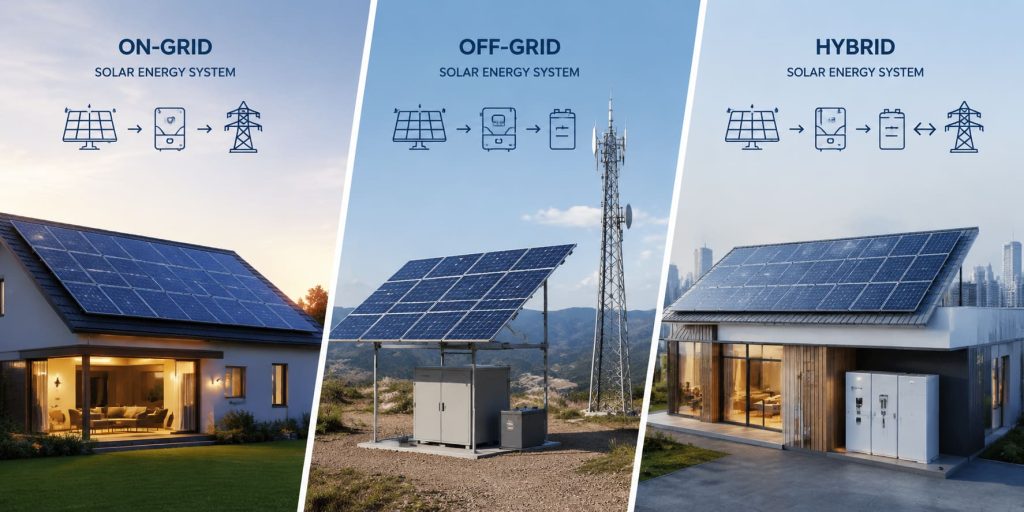
On-Grid Solar Energy System
An on-grid solar energy system is connected to the public electricity grid. Since excess electricity can be transferred to the grid, these systems usually focus on maximizing energy production and improving cost efficiency.
For on-grid applications, buyers should prioritize solar panels with high efficiency, stable output, and strong durability. The selected PV module should also be compatible with the inverter to ensure smooth energy conversion.
Off-Grid Solar Energy System
An off-grid system operates independently without grid support and usually relies on batteries for energy storage. These systems are commonly used for remote areas, communication equipment, agricultural applications, and independent power solutions.
In this case, the solar module must provide reliable energy generation under different weather conditions. The compatibility between the PV module, battery, and solar charge controller is especially important because the controller regulates charging efficiency and protects the battery from overcharging or excessive discharge.
Hybrid Solar Energy System
A hybrid solar energy system combines solar power generation, battery storage, and grid connection. These systems require more flexible energy management and careful component matching.
When selecting a solar panel for a hybrid system, buyers should consider not only power output but also how the module integrates with the complete energy management system. A properly selected PV module helps improve overall system stability and energy utilization.
Evaluate Energy Requirements
After identifying the solar system type, the next step is to determine how much energy the system needs to generate. This is one of the most important stages in solar module selection because the wrong capacity can result in insufficient power supply or unnecessary investment.
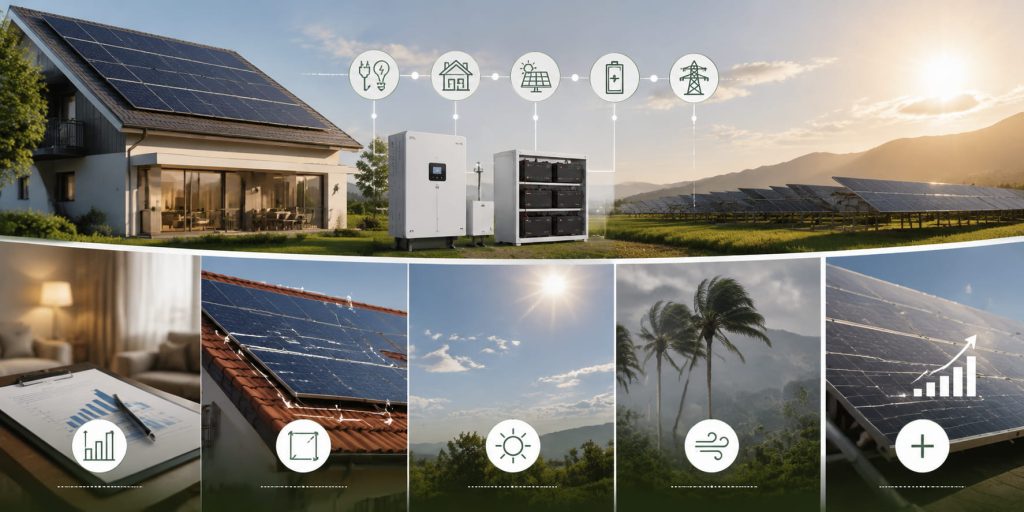
Calculate Your Daily Energy Consumption
The first factor to evaluate is your daily electricity usage. Buyers should understand how much energy their solar energy system needs to produce based on current consumption and future requirements.
For example, residential users may need solar panels to support household appliances, lighting, and backup power needs. Commercial users may require higher-capacity systems to support equipment operation and reduce electricity costs.
By estimating daily energy consumption, buyers can determine:
- Required total solar system capacity
- Number of solar modules needed
- Suitable module power rating
- Battery storage requirements
A proper energy assessment prevents purchasing too few solar panels and ensures the system can meet actual electricity demands.
Consider Available Installation Space
Installation space directly affects PV module selection. When available space is limited, high-efficiency solar modules can generate more electricity within a smaller area.
For rooftop solar projects, buyers often prefer solar modules with higher efficiency because the installation area is usually restricted. However, for large-scale solar farms or open-field projects, the cost per watt and overall system economics may become more important.
Therefore, the best PV module is not always the one with the highest efficiency, but the one that provides the best balance between available space, energy output, and investment cost.
Analyze Sunlight Conditions and Environmental Factors
PV module performance is influenced by local environmental conditions. Before purchasing, buyers should evaluate:
- Average sunlight availability
- Temperature changes
- Humidity levels
- Wind conditions
- Possible shading issues
High-quality solar panels are designed to maintain stable performance in different environments. Features such as low degradation rates and strong weather resistance can help maintain energy output over many years.
In addition, the solar charge controller should be selected according to the solar module’s voltage and current characteristics. Proper matching between these components improves charging efficiency and protects the overall solar energy system.
Consider Future Expansion Requirements
A solar energy system is often a long-term investment. Buyers should consider whether electricity demand may increase in the future.
Choosing a scalable PV module solution allows additional modules, batteries, or other components to be integrated more easily. Proper planning at the beginning can reduce future upgrade costs and improve system flexibility.
Compare Solar Module Types, Power Output, Cost, and Applications
Solar modules are available in different technologies, and each type has different advantages in terms of efficiency, power output, cost, and application scenarios. Before purchasing, buyers should understand the differences between common solar module types to select the most suitable option for their solar energy system.
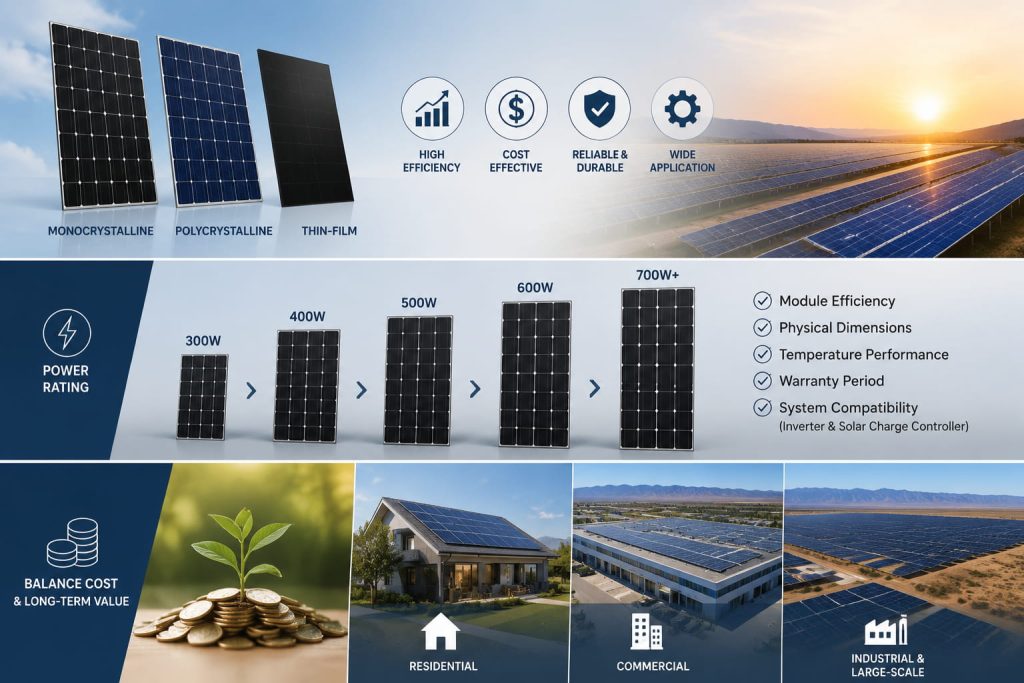
Monocrystalline Solar Module
Monocrystalline solar modules are currently one of the most popular choices due to their high efficiency and excellent power generation performance. They are manufactured using high-purity silicon cells, which allows them to produce more electricity within a smaller installation area.
Typical power range: 400W–700W+
Cost level: Medium to High
Best applications: Residential rooftops, commercial buildings, industrial solar systems, and projects with limited installation space
These solar modules are ideal for users who want maximum energy output and long-term reliability. Although the initial cost may be higher than other options, their higher efficiency and better space utilization can provide greater value over the system lifetime.
Polycrystalline Solar Module
Polycrystalline solar modules are produced using a different silicon manufacturing process, which generally results in lower production costs. Compared with monocrystalline modules, they usually have lower efficiency but can still provide reliable performance for many solar applications.
Typical power range: 250W–500W
Cost level: Low to Medium
Best applications: Large-area solar projects, agricultural systems, and cost-sensitive installations
Because these modules require more installation space to achieve the same power output, they are often selected for projects where land availability is sufficient and reducing upfront investment is a priority.
Thin-Film Solar Module
Thin-film solar modules use thin layers of photovoltaic materials, making them lightweight and flexible compared with traditional silicon-based modules. They are designed for specific applications where weight, flexibility, or unique installation conditions are important.
Typical power range: Varies depending on technology and design
Cost level: Variable
Best applications: Portable solar systems, lightweight structures, curved surfaces, and customized solar solutions
Although thin-film modules generally have lower efficiency than crystalline silicon modules, their flexibility and lightweight design make them suitable for special projects where conventional solar modules may not be practical.
