How to Choose an MPPT Controller for Your Solar Power System?
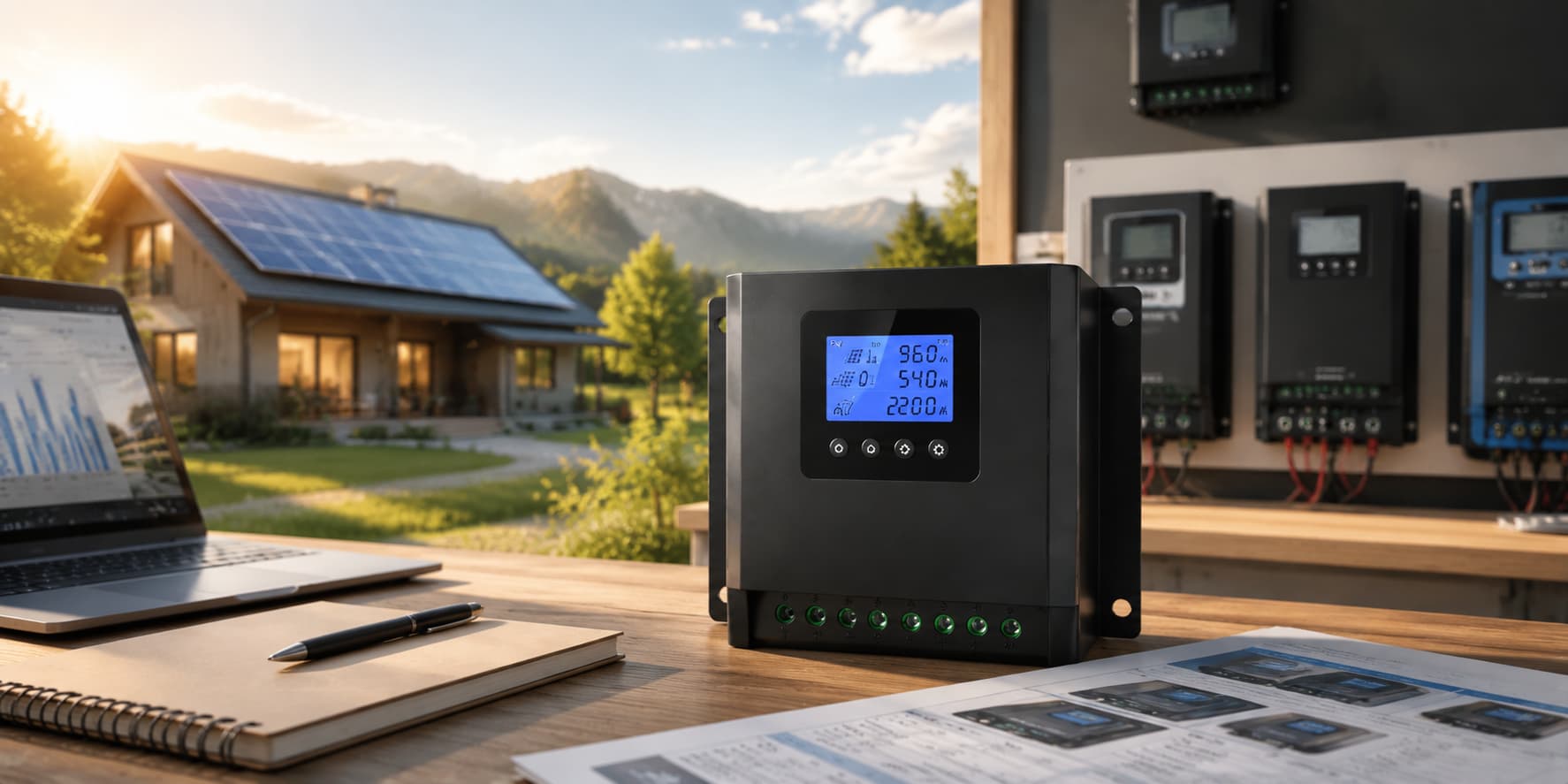
A solar power system is more than just solar panels and batteries. The efficiency, stability, and long-term performance of the entire system depend heavily on how well these components work together. Among these key components, the MPPT controller plays an essential role in optimizing solar energy conversion and improving battery charging efficiency. The right controller must match your system voltage, panel wattage, battery type, and application environment. Understanding how to evaluate voltage compatibility, power capacity, battery requirements, and application-specific needs helps users select a controller that delivers both immediate performance and long-term system stability.
What Is an MPPT Controller and How Does It Work?
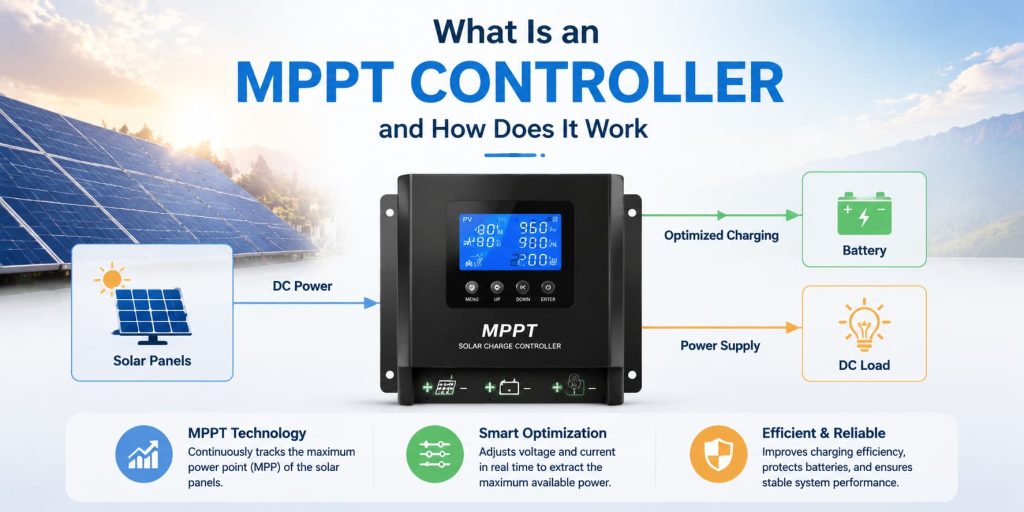
An MPPT controller (Maximum Power Point Tracking controller) is an advanced solar charge controller that helps maximize the energy output of solar panels. It works by continuously monitoring the voltage and current of the solar array and adjusting the operating point to ensure the panels generate the highest possible power.
Unlike traditional PWM controllers, a maximum power point tracker can convert excess solar panel voltage into additional charging current, improving overall charging efficiency. This makes it especially suitable for systems with high-power solar panels, changing sunlight conditions, and larger battery storage requirements.
By optimizing energy conversion and providing intelligent charging management, a maximum power point tracker helps improve solar system performance, protect batteries, and increase the reliability of renewable energy applications.
Why You Need an MPPT Controller for Your Solar Power System?
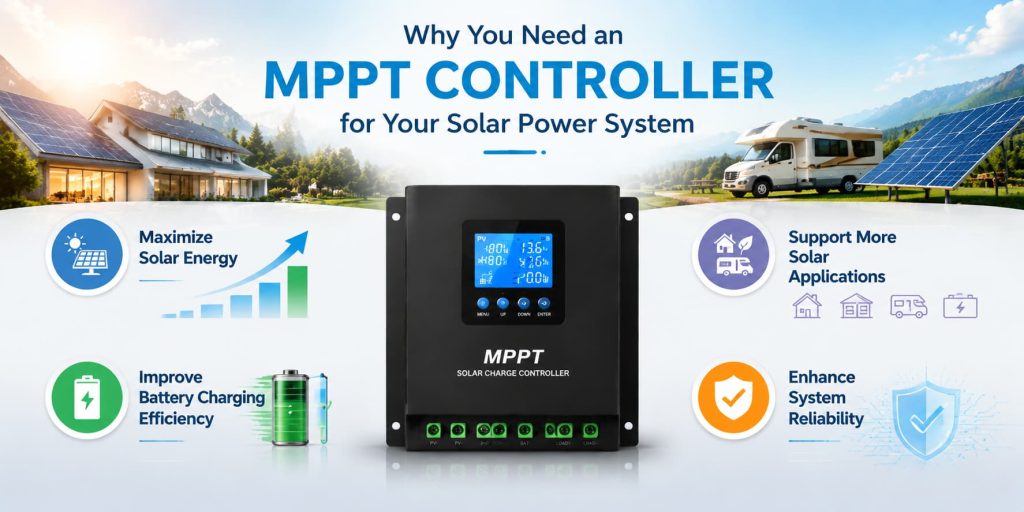
An MPPT controller plays an important role in improving solar system efficiency and ensuring stable energy management. The key benefits include:
Maximize Solar Energy Utilization
A maximum power point tracker tracks the solar panel’s maximum power point to capture more available energy and improve overall system efficiency.
Improve Battery Charging Efficiency
By optimizing voltage and current conversion, an MPPT solar charge controller delivers more effective charging performance and helps extend battery life.
Support More Solar Applications
An MPPT controller is ideal for residential solar systems, off-grid power solutions, RV applications, and larger energy storage projects.
Enhance System Reliability
With intelligent control and protection features, an MPPT solar charge controller helps prevent overcharging, overheating, and other potential system issues.
How to Choose an MPPT Controller for Your Solar Power System?
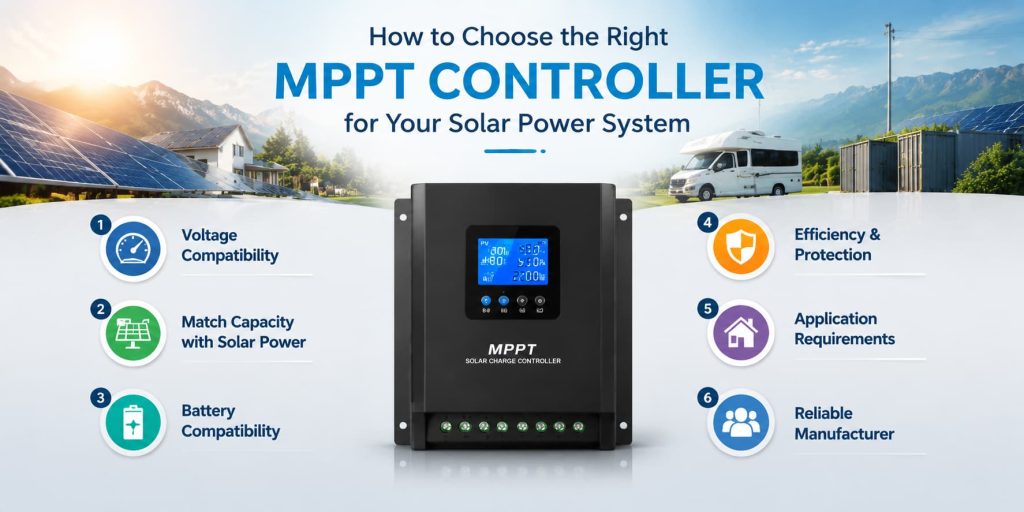
Selecting the right maximum power point tracker is essential for achieving maximum efficiency, reliable charging performance, and long-term stability in a solar power system. Since different solar applications have different power requirements, users should evaluate 6 key factors before making a purchase decision.
1. Check Voltage Compatibility
The first step when choosing an MPPT solar charge controller is confirming that the controller voltage matches your solar system configuration. The controller must be compatible with both the solar panel array voltage and the battery system voltage.
For example, small solar systems commonly use 12V battery configurations, while larger residential and commercial energy storage systems may require 24V or 48V solutions. Selecting a maximum power point tracker with the correct voltage range ensures stable energy conversion and prevents system performance issues.
In addition, users should pay attention to the controller’s maximum PV input voltage. A suitable maximum power point tracker should provide enough voltage capacity to handle the solar panel output, especially when multiple panels are connected in series.
2. Match the MPPT Controller Capacity with Solar Panel Power
The power rating of the maximum power point tracker should match the output capacity of the solar panels. Choosing a controller with insufficient capacity may limit the amount of solar energy that can be converted, while an oversized controller may increase unnecessary costs.
When selecting a maximum power point tracker, users should consider:
- Total solar panel wattage
- Maximum charging current
- PV input voltage range
- Future system expansion requirements
For example, a larger solar array requires a maximum power point tracker with higher current handling capability to ensure efficient energy transfer. Leaving some capacity margin is also recommended, as it allows the system to operate more reliably under different environmental conditions.
3. Consider Battery Compatibility and Charging Requirements
Battery type is another important factor when selecting an MPPT controller. Different batteries require different charging methods to maintain safety and performance.
A high-quality maximum power point tracker should support multiple battery technologies, including:
- Lithium-ion batteries
- Lead-acid batteries
- Gel batteries
- AGM batteries
For lithium battery systems, precise voltage control and intelligent charging management are especially important. The right MPPT solar charge controller can prevent overcharging, improve battery efficiency, and help extend battery service life.
4. Evaluate Efficiency and Protection Features
Efficiency and reliability directly affect the long-term performance of a solar power system. A professional maximum power point tracker should provide high conversion efficiency to maximize the energy collected from solar panels.
When comparing different models, users should consider features such as:
- High tracking efficiency
- Low energy loss
- Thermal management design
- Remote monitoring capability
- Intelligent charging control
Protection functions are also essential. Advanced MPPT controllers typically include over-voltage protection, over-current protection, reverse polarity protection, and overheating protection. These safety features help protect the controller, batteries, and other solar system components.
5. Choose an MPPT Controller Based on Application Requirements
The best MPPT solar charge controller depends on the specific application scenario. Different systems have different expectations for capacity, durability, and monitoring functions.
For example:
- Residential Solar Systems: Choose a maximum power point tracker that supports home energy storage and reliable battery management.
- Off-Grid Solar Systems: Select a durable MPPT controller with high efficiency and stable operation for remote environments.
- RV Solar Systems: Consider compact designs with flexible installation and efficient charging performance.
- Commercial Solar Systems: Use higher-capacity MPPT controllers with advanced monitoring and protection functions.
Understanding the actual application requirements helps users select an MPPT solar charge controller that provides the best balance between performance, cost, and reliability.
6. Select a Reliable MPPT Controller Manufacturer
The manufacturer’s quality is also an important consideration when purchasing a maximum power point tracker. A professional supplier should provide not only reliable products but also technical support, quality assurance, and customized solutions.
Experienced manufacturers can help customers select suitable controller specifications based on solar panel configuration, battery type, and application environment. This reduces installation risks and ensures stable operation throughout the system lifecycle.
For businesses, working with a trusted maximum power point tracker manufacturer also provides advantages in product customization, bulk supply, and long-term cooperation.
MPPT Controller Applications for Different Solar Power Systems
An MPPT controller is widely used in different solar power systems because it can improve energy utilization and provide efficient battery charging. The suitable application depends on system size, power requirements, and installation conditions.
Residential Solar Systems
For home solar applications, an MPPT solar charge controller helps optimize energy generation from rooftop solar panels and improves battery charging efficiency. It is commonly used in home energy storage and backup power systems.
Off-Grid Solar Systems
In remote areas without reliable grid access, a maximum power point tracker helps maximize available solar energy and ensures a stable power supply for cabins, monitoring equipment, and other off-grid applications.
RV and Mobile Solar Systems
An MPPT controller is suitable for RV solar solutions where space is limited and efficient energy management is required. It helps users get more usable power from compact solar panel setups.
Commercial and Industrial Solar Systems
For larger solar installations, an MPPT solar charge controller supports higher-power solar arrays and advanced energy storage systems, providing reliable performance and efficient power management.
Choose a Reliable MPPT Controller for Long-Term Solar Performance
Choosing the right maximum power point tracker is an important step in building an efficient and reliable solar power system. A suitable controller can improve solar energy utilization, protect batteries, and enhance the overall performance of the system.
When selecting an MPPT controller, users should consider solar panel capacity, battery compatibility, system voltage, efficiency, and application requirements. By evaluating these factors carefully, it is possible to select a solution that meets both current energy needs and future expansion plans.
