Key Factors to Consider When Choosing a Solar Mounting System
Choosing the right solar mounting system is essential for ensuring the stability, safety, and long-term performance of a photovoltaic project. Although solar panels are responsible for energy generation, the mounting structure provides the foundation that keeps the modules securely positioned and protected throughout their service life.
A suitable solar mounting system can improve installation efficiency, withstand environmental stress, and reduce long-term maintenance costs. However, with different mounting types, materials, and structural designs available, selecting the right solution requires careful evaluation. Factors such as application requirements, load capacity, durability, and supplier experience should all be considered before making a purchase decision.
Why a Reliable Solar Mounting System Is Important
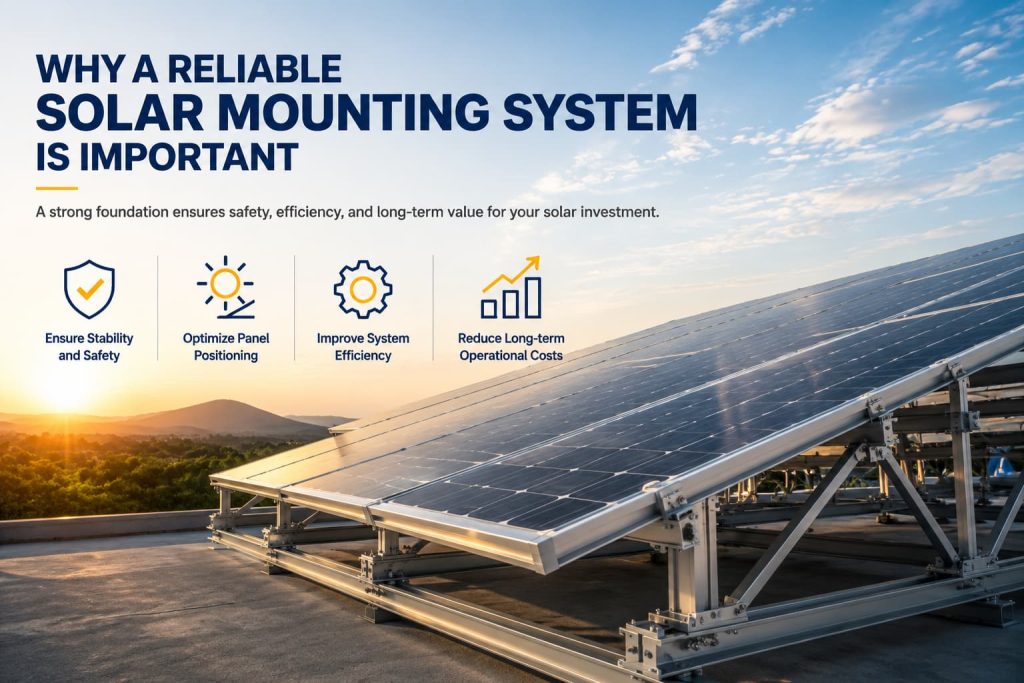
The solar mounting system serves as the structural foundation of a photovoltaic system. Although it does not generate electricity directly, it plays a critical role in maintaining the performance and safety of solar panels over decades of outdoor operation.
First, a reliable solar racking system ensures the stability of solar modules under different environmental conditions. Solar panels are continuously exposed to wind, rain, temperature changes, and other external factors. Without a properly designed mounting structure, panels may shift, experience stress, or suffer damage, which can reduce energy production and increase maintenance requirements.
Second, the solar racking system helps optimize solar panel positioning. The correct tilt angle and orientation allow photovoltaic modules to receive more sunlight, improving overall energy generation. Whether used for rooftop installations, ground-mounted projects, or commercial solar applications, a suitable mounting design helps maximize system efficiency.
In addition, a durable PV mounting system can reduce long-term operational costs. High-quality materials and professional engineering minimize corrosion, structural failures, and frequent maintenance. Therefore, selecting the right mounting solution is not only a technical decision but also an important investment decision.
Key Factors to Consider When Choosing a Solar Mounting System
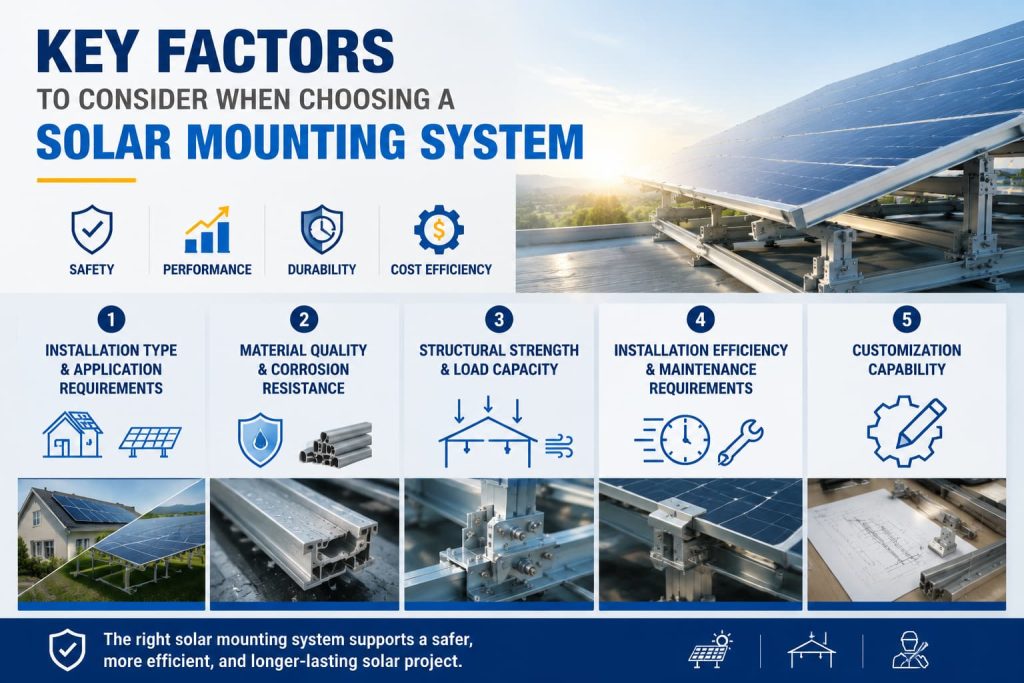
When selecting a solar mounting system, buyers should evaluate5 key factors to ensure the solution matches their project requirements.
1. Installation Type and Application Requirements
The first consideration is the application environment. Different solar projects require different mounting designs.
For rooftop solar installations, the PV mounting system should be lightweight, space-efficient, and compatible with different roof structures. For ground-mounted solar projects, the system needs stronger structural support and better adaptability to soil conditions.
Understanding the installation environment helps determine the most suitable mounting type, such as rooftop or ground mounting systems, or customized solutions for special applications.
2. Material Quality and Corrosion Resistance
Material quality directly affects the lifespan of a solar mounting system. Since mounting structures are exposed to outdoor conditions for many years, they must have excellent resistance against corrosion, weather changes, and mechanical stress.
Aluminum alloy is commonly used because it provides lightweight performance and strong corrosion resistance. Stainless steel and galvanized steel are also widely applied in projects that require higher structural strength.
A high-quality solar racking system should include proper surface treatment and protection technology to maintain reliable performance throughout its service life.
3. Structural Strength and Load Capacity
Safety is one of the most important factors when choosing a solar mounting system. The structure must support the weight of solar panels while resisting external forces such as wind loads and snow pressure.
A professionally designed solar racking system should undergo structural calculations and testing to ensure stability under different operating conditions. Proper load capacity not only protects the solar modules but also improves the overall reliability of the photovoltaic system.
4. Installation Efficiency and Maintenance Requirements
Installation time and maintenance requirements can significantly affect project costs. A well-designed solar mounting system should allow efficient installation with fewer components and simpler assembly processes.
At the same time, the system should require minimal maintenance after installation. Features such as durable materials, reliable fasteners, and optimized designs help reduce future maintenance work and improve project profitability.
5. Customization Capability
Different solar projects often have unique requirements. A flexible PV mounting system manufacturer should be able to provide customized solutions based on panel size, installation location, structural requirements, and project goals.
Customized designs can improve system compatibility and help customers achieve better performance in complex installation environments.
How to Choose a Reliable PV Racking Supplier
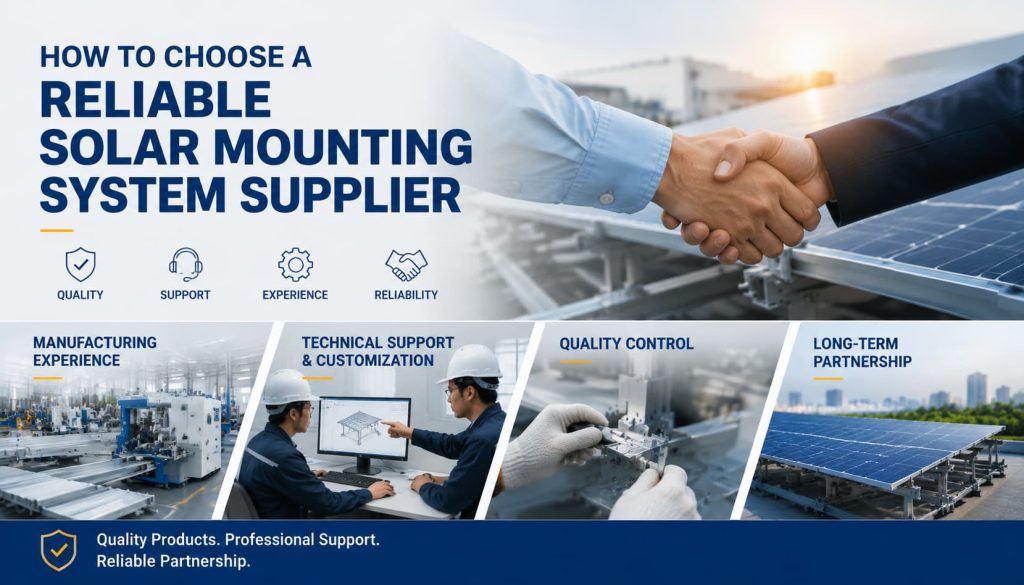
Selecting the right solar mounting system supplier is as important as selecting the right product. A reliable supplier should provide not only high-quality mounting structures but also professional technical support throughout the project.
First, buyers should evaluate the supplier’s manufacturing experience and product quality control processes. An experienced solar racking system manufacturer typically has stronger engineering capabilities, advanced production equipment, and strict quality inspection procedures.
Second, technical support and customization services should be considered. A professional supplier should be able to analyze project requirements and recommend suitable mounting solutions rather than offering only standard products.
Finally, long-term reliability should be a key factor in supplier selection. A trustworthy PV mounting system provider should focus on product durability, consistent quality, and customer support. This ensures that the mounting system can deliver stable performance throughout the entire solar project lifecycle.
Choosing the Right PV Mounting System for Long-Term Solar Performance
Choosing the right solar mounting system is a critical step in ensuring the long-term stability and performance of a solar project. A reliable mounting solution should not only provide strong structural support but also adapt to different installation environments, withstand external conditions, and help maintain consistent energy production throughout the system’s lifespan.
Before making a purchase decision, customers should carefully evaluate key factors such as application requirements, material quality, load capacity, installation efficiency, and supplier expertise. Working with an experienced solar racking system manufacturer can help ensure the selected solution meets project requirements and delivers long-term value.
