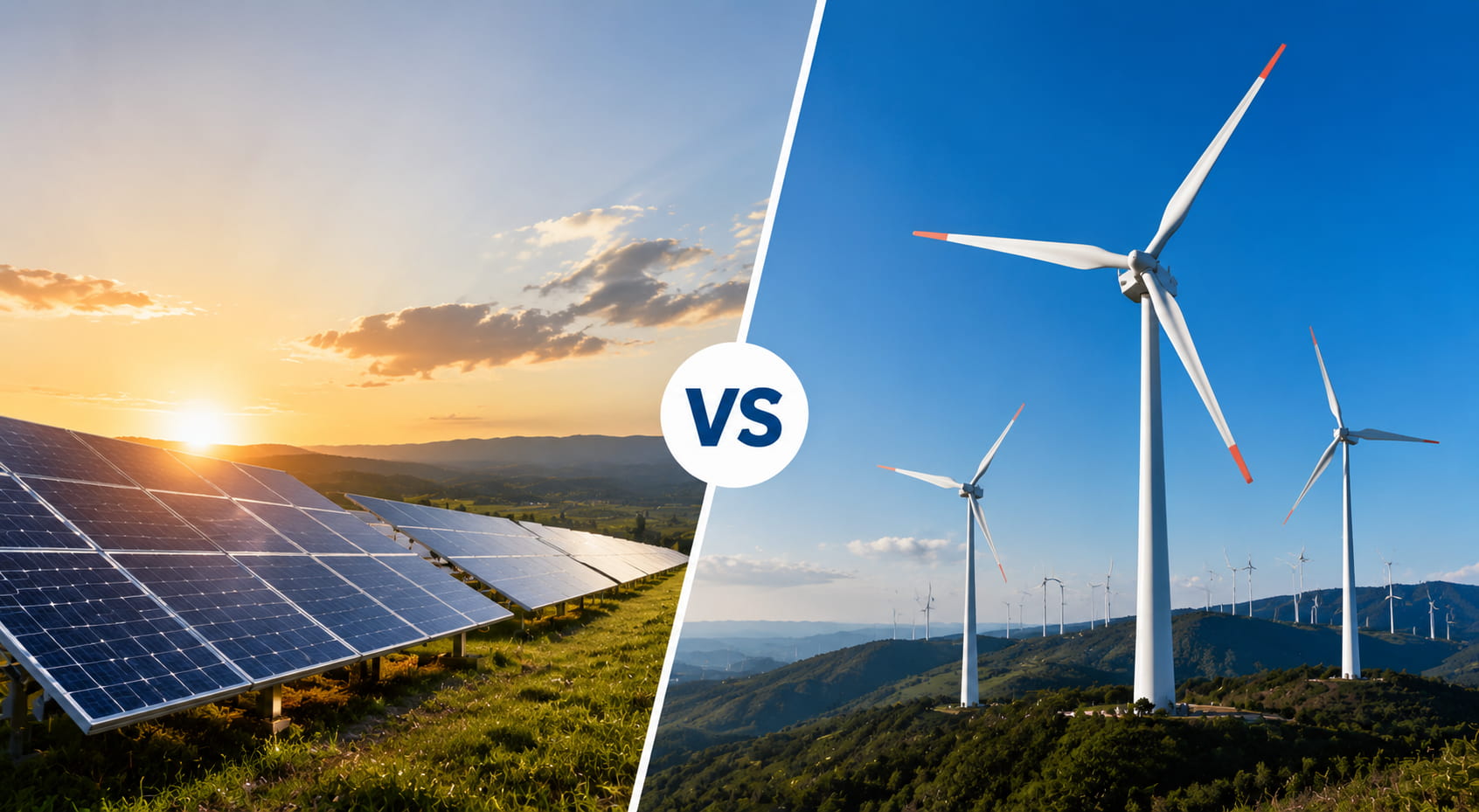
Solar Power Generation vs Wind Power Generation: Which Is Better?
Choosing between solar power generation and wind power generation does not mean finding a single “better” renewable energy source. In reality, neither technology is universally superior. The right choice depends on specific project requirements, including application scenarios, local environmental conditions, energy demand, system efficiency expectations, and long-term maintenance considerations.
Solar electricity generation is often preferred for projects that require flexible installation, stable energy output, and simple maintenance, especially in areas with sufficient sunlight. Wind power generation, meanwhile, can deliver excellent performance in locations with strong and consistent wind resources. Therefore, selecting the most suitable renewable energy solution requires a comprehensive comparison of their advantages and limitations.
This article compares solar energy generation and wind power generation from three key aspects: application scenarios, efficiency performance, and service life and maintenance requirements, helping users better understand which solution is more suitable for their specific energy needs.
Application Scenarios and Suitable Environments of Solar Power Generation vs Wind Power Generation
When comparing solar power generation and wind power generation, application scenarios are one of the most important factors to consider. Different renewable energy technologies perform better under different environmental conditions. Choosing the right solution depends on factors such as climate, available space, energy demand, and installation conditions.
Solar Power Generation Applications
1. Remote Agricultural Irrigation
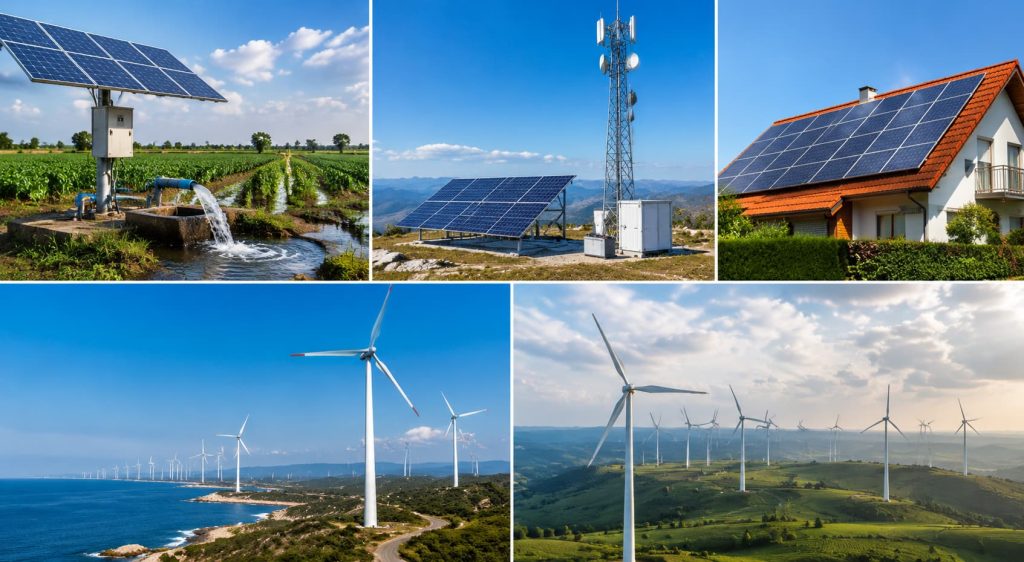
Solar electricity generation is widely used in agricultural irrigation projects, especially in remote areas without access to stable electricity grids. Solar panels can provide electricity for water pumps, irrigation controllers, and monitoring equipment by converting sunlight into usable energy.
For farms located in rural areas, solar-powered irrigation systems help reduce dependence on fuel-based equipment while providing a reliable power source for daily agricultural operations. This application is particularly suitable for regions with abundant sunlight and large open spaces.
2. Off-Grid Power Supply for Remote Areas
Many remote locations, including rural communities, construction sites, and communication stations, face challenges when connecting to traditional power infrastructure. Solar power generation provides a flexible solution because solar systems can be installed independently without requiring extensive grid expansion.
By combining solar panels with battery storage systems, users can achieve a stable electricity supply even during nighttime or periods of low sunlight. This makes solar energy a practical option for off-grid applications.
3. Residential and Commercial Buildings
Solar energy generation is commonly applied in residential buildings, factories, warehouses, and commercial facilities. Rooftop solar systems allow property owners to utilize unused space while generating clean electricity.
For commercial users, solar energy can help improve energy independence and provide a sustainable power solution for lighting, equipment operation, and daily electricity consumption.
Wind Power Generation Applications
1. Coastal and High-Wind Areas
Wind power generation is well-suited to locations with strong and consistent wind resources. Coastal regions, open plains, and mountainous areas often provide favorable conditions for wind turbines.
Large-scale wind farms are commonly developed in these areas because stable wind speeds can support continuous electricity production.
2. Utility-Scale Renewable Energy Projects
Wind power generation is often used in large renewable energy projects where significant electricity output is required. Large wind turbines can generate substantial amounts of electricity and contribute to regional power supply.
However, wind projects usually require detailed site assessments to evaluate wind speed, terrain conditions, and environmental factors before installation.
Efficiency and Energy Performance Comparison
Efficiency is an important factor when comparing solar power generation and wind power generation. However, the performance of renewable energy systems is not determined only by maximum power output. Natural conditions, resource availability, system design, and energy demand all affect how much usable electricity a system can produce.
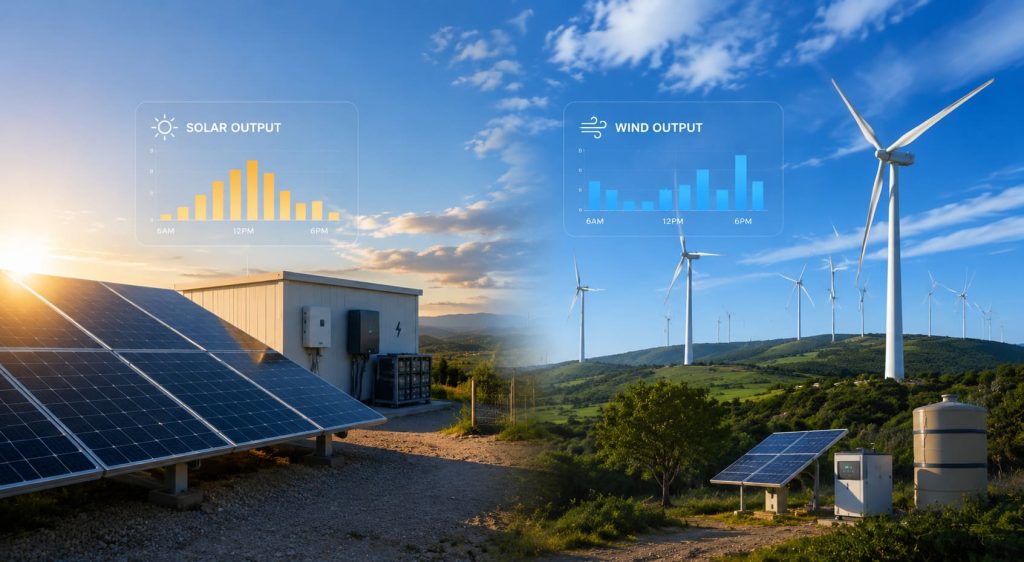
Solar power generation converts sunlight into electricity through photovoltaic panels. According to solar resource assessments, many regions suitable for photovoltaic development receive around 4–6 peak sun hours per day, although actual values vary depending on location, season, and weather conditions. For example, in rural areas with sufficient sunlight, a properly designed solar power system can generate electricity to support agricultural irrigation during the daytime, supply power for remote monitoring equipment, and provide energy for basic operations in areas without reliable grid access. When combined with battery storage, excess electricity produced during sunny periods can be stored for use at night or during temporary periods of low sunlight, improving overall energy reliability.
Wind power generation relies on wind speed and consistency to drive turbines and produce electricity. In areas with strong and stable wind resources, such as coastal regions, open plains, and high-altitude locations, wind turbines can achieve high energy output and provide continuous electricity production. Large-scale wind turbines can generate significant amounts of electricity for industrial applications and grid-connected renewable energy projects. However, wind power performance can vary significantly because wind conditions may change due to seasonal weather patterns and geographical factors.
For off-grid and small-scale projects, solar power generation is often considered a practical solution because solar resources are relatively easy to assess, installation options are flexible, and energy production can be planned based on local sunlight conditions. However, wind power generation can also provide reliable electricity in areas with strong and consistent wind resources. By selecting the appropriate renewable energy technology according to local conditions, users can achieve a more reliable and efficient power supply.
Lifespan and Maintenance Comparison
The service life and maintenance requirements of renewable energy systems directly affect long-term operation performance. Both solar energy generation and wind power generation are designed for long-term energy production. However, their equipment structures, maintenance methods, and operating environments create differences in daily management requirements.
Solar Power Generation Lifespan and Maintenance
1. Long Operating Lifespan
Solar energy generation systems are known for their long service life. High-quality photovoltaic panels typically provide reliable performance for more than 25 years under proper installation and suitable operating conditions.
Since solar panels have no mechanical moving parts, they experience less physical wear during operation. Over time, solar panels usually experience gradual efficiency reduction rather than sudden performance failures.
2. Simple Maintenance Requirements
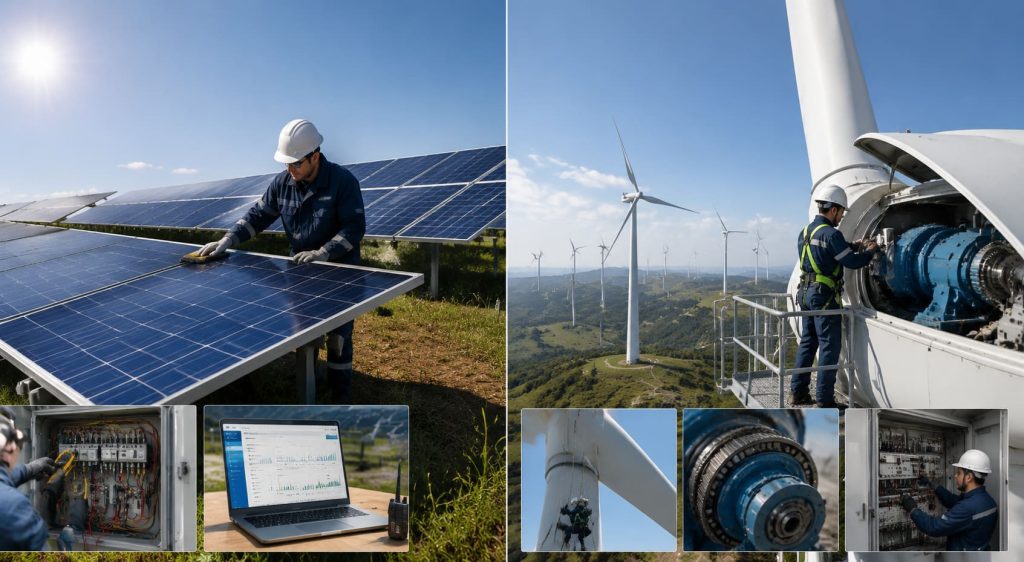
The maintenance process for solar electricity generation systems is relatively simple. Regular maintenance usually includes:
- Cleaning dust, leaves, and other surface materials from solar panels
- Checking electrical connections and wiring systems
- Inspecting inverters and monitoring system performance
With regular inspections, solar systems can maintain stable electricity generation throughout their service life. This makes solar energy generation suitable for remote locations where frequent technical maintenance may be difficult.
3. Stable Long-Term Performance
Solar power generation systems generally provide predictable energy output based on sunlight availability. With proper system design, high-quality components, and effective monitoring, solar installations can continue operating efficiently for many years.
Wind Power Generation Lifespan and Maintenance
1. Long-Term Energy Production Capability
Wind power generation systems also have a long operating lifespan. Modern wind turbines are typically designed to operate for approximately 20 to 25 years, depending on equipment quality, installation conditions, and maintenance practices.
Because wind turbines rely on mechanical movement to generate electricity, their operating lifespan can be influenced by factors such as wind speed, weather conditions, and mechanical stress.
2. Regular Mechanical Maintenance Requirements
Wind power generation requires more attention to mechanical components. Regular maintenance usually includes:
- Inspecting turbine blades for damage or surface wear
- Checking gearboxes, bearings, and rotating components
- Monitoring electrical systems and control equipment
These inspections help maintain safe operation and reduce the risk of unexpected equipment failures.
3. Performance Stability in Suitable Locations
When installed in areas with consistent wind resources, wind power generation can provide stable electricity production over many years. However, long-term performance depends heavily on site conditions, including average wind speed, environmental exposure, and maintenance accessibility.
