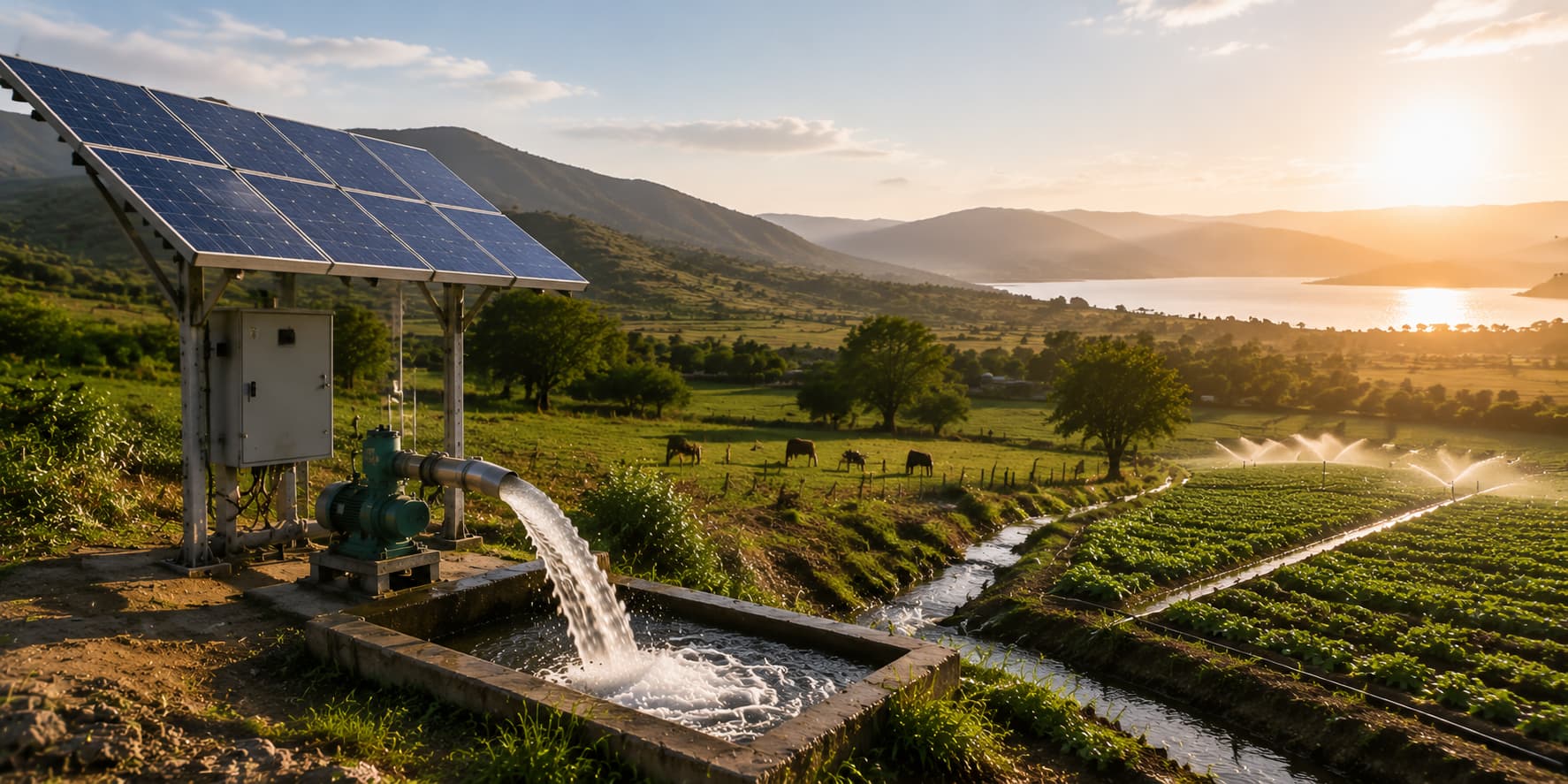
Solar Irrigation System Applications in Remote Agricultural Water Supply
A solar irrigation system is widely used in remote agricultural water supply applications where reliable electricity and irrigation infrastructure are limited. By using solar energy to power water pumps and irrigation equipment, these systems provide stable water access for crop farms, greenhouses, off-grid agricultural projects, and livestock operations.
Compared with traditional irrigation methods that depend on grid electricity or fuel-powered pumps, solar water pumping systems offer a more flexible solution for remote farming environments. They help agricultural operators maintain consistent irrigation schedules, reduce energy dependence, and improve water management efficiency. This article explores the main application scenarios of solar irrigation systems in remote agriculture, including crop farming, greenhouse agriculture, off-grid projects, and livestock water supply.
Why Remote Agricultural Areas Use Solar Irrigation Systems
Many remote agricultural regions are located far from existing power infrastructure, making traditional electric irrigation systems difficult and expensive to deploy. Solar irrigation systems allow farms to operate independently by using renewable solar energy to drive water pumps and deliver water directly to agricultural areas.
Compared with diesel-powered irrigation solutions, solar-powered systems can reduce fuel consumption, lower long-term operating costs, and minimize maintenance requirements. In addition, they can be combined with drip irrigation, sprinkler systems, and smart controllers to improve water efficiency and support more sustainable agricultural practices.
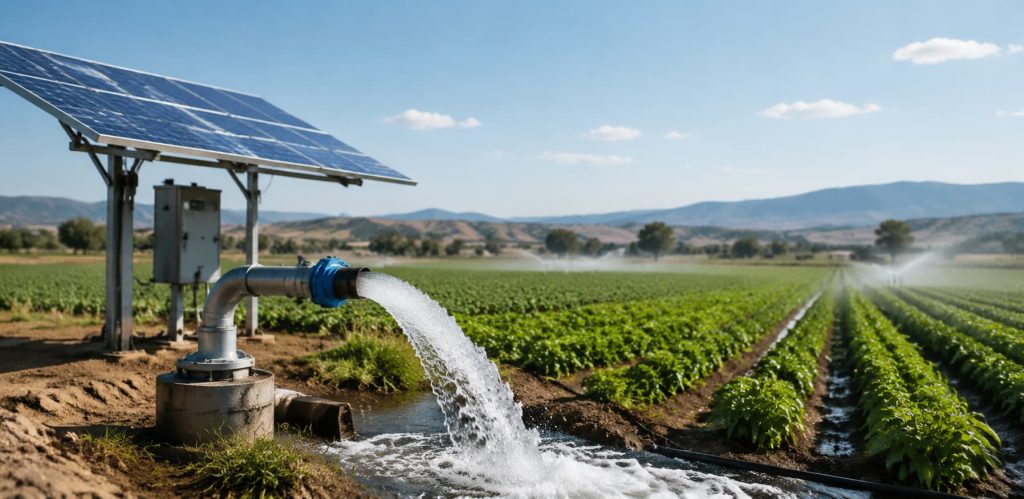
Solar Irrigation System Applications in Remote Agricultural Water Supply
Solar irrigation systems can be applied in various remote agricultural scenarios where reliable water supply and independent energy sources are required. From off-grid crop farms and plantations to livestock areas and greenhouses, these systems use solar-powered pumps to provide efficient water delivery while reducing dependence on traditional energy sources.
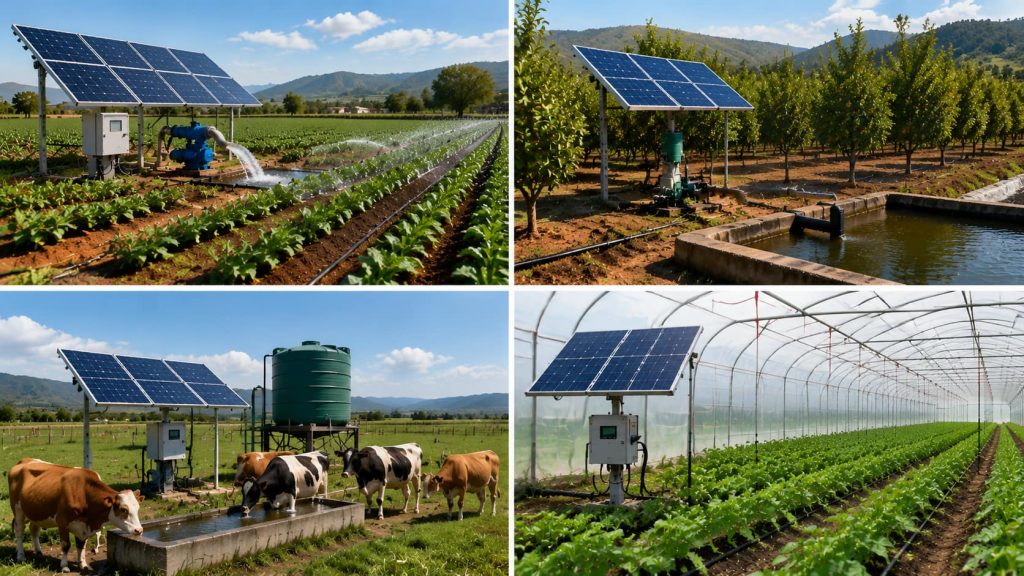
1. Off-Grid Crop Farms
Crop farms located in remote rural areas often require continuous irrigation throughout planting seasons. However, many of these farms lack access to stable electricity networks, especially in mountainous regions, isolated villages, and newly developed agricultural areas.
Crops such as vegetables, grains, and cash crops depend on a regular water supply to maintain growth. Without reliable irrigation infrastructure, farmers may experience reduced productivity, especially during dry seasons.
Why Used
Traditional irrigation methods in these areas usually rely on diesel pumps or manual water transportation. Diesel systems require a continuous fuel supply, which can be expensive and inconvenient in remote locations.
Solar irrigation systems provide an independent energy source by using available sunlight, making them suitable for farms where grid connection is unavailable or economically impractical.
How It Is Implemented
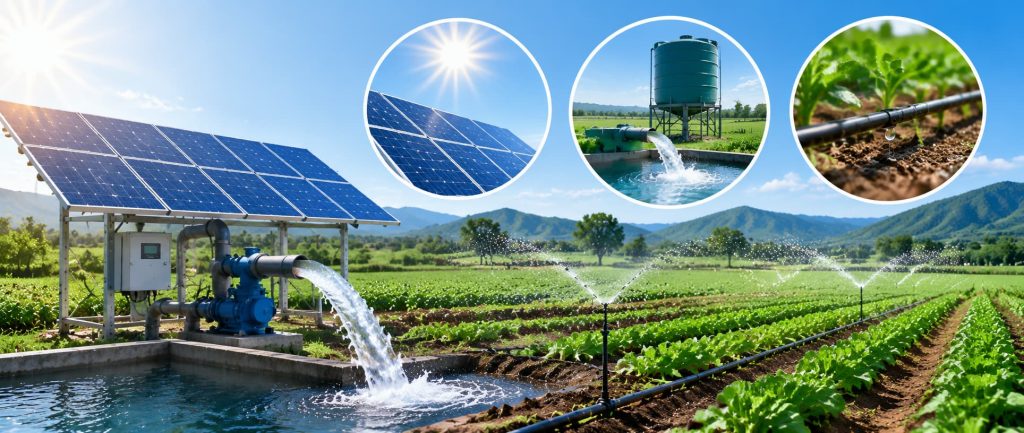
A typical solar irrigation system for remote crop farms includes:
- Solar panels installed near farmland to generate electricity
- Solar controllers to regulate power output
- Water pumps to extract water from wells, rivers, or reservoirs
- Storage tanks for water collection
- Drip irrigation or sprinkler systems for crop watering
During daylight hours, solar panels provide power to operate the pump. The extracted water can be delivered directly to fields or stored for irrigation during periods with lower sunlight.
2. Remote Orchards and Plantation Agriculture
Fruit orchards and plantation areas are often located in rural or mountainous regions where water sources may be far away from cultivation areas and electricity infrastructure is limited.
Examples include:
- Fruit tree plantations
- Coffee farms
- Tea plantations
- Rubber plantations
These agricultural projects usually require long-term irrigation support to maintain plant growth and improve production quality.
Why Used
Plantation areas often cover large areas and require stable water delivery over many years. Installing traditional electrical infrastructure can be costly, while diesel-powered pumping increases daily operating expenses.
Solar irrigation systems are suitable because they can provide a long-term renewable energy source with relatively low operating requirements after installation.
How It Is Implemented
In plantation applications, solar-powered pumps are commonly used to transport water from:
- Underground wells
- Reservoirs
- Rivers or nearby water storage facilities
The pumped water is distributed through irrigation networks, such as:
- Drip irrigation pipes placed around plant roots
- Sprinkler systems covering larger planting areas
For larger plantations, the system can also integrate automatic controllers and soil moisture sensors to adjust irrigation according to plant requirements, reducing unnecessary water consumption.
3. Livestock Farms and Remote Pastures
Remote livestock farms and grazing areas require reliable water sources for animals. These locations are often far from residential areas and may not have access to conventional electricity.
Farmers need a continuous water supply for:
- Animal drinking facilities
- Pasture irrigation
- Cleaning and farm operations
Why Used
In remote pastures, transporting water manually or operating diesel pumps can require significant labor and fuel costs.
Solar-powered pumping provides an automatic and independent water supply solution, reducing dependence on fuel delivery and improving farm management efficiency.
How It Is Implemented
Solar panels supply electricity to water pumps that transport groundwater or surface water into:
- Livestock drinking tanks
- Water storage reservoirs
- Irrigation systems for pasture areas
Water storage tanks are often included to maintain supply during cloudy days or periods of reduced solar generation.
4. Remote Greenhouses and Agricultural Facilities
Greenhouses require precise irrigation management to maintain suitable growing conditions. Many remote greenhouse projects are built in rural areas where stable electricity supply may not be available.
Why Used
Greenhouse crops often require frequent irrigation, and automated systems need continuous power for:
- Water pumps
- Irrigation valves
- Monitoring equipment
Solar energy provides a reliable power source while reducing dependence on external electricity.
How It Is Implemented
Solar irrigation systems can supply energy for:
- Automatic watering systems
- Fertigation equipment
- Water circulation pumps
- Smart irrigation controllers
By combining solar power with sensors, greenhouse irrigation can be adjusted based on soil moisture, temperature, and crop growth conditions.
Important Considerations When Applying Solar Irrigation Systems
Although solar irrigation systems provide an efficient solution for remote agricultural water supply, proper planning is required to ensure reliable operation and long-term benefits. Before installation, several important factors should be considered.
Assess Solar Resources and Environmental Conditions
The performance of a solar irrigation system depends on local sunlight availability. Farmers should evaluate average solar radiation, seasonal weather changes, and potential shading issues before installation. Areas with unstable sunlight may require additional solutions, such as larger solar panel capacity or water storage tanks.
Match System Capacity with Water Requirements
The solar pump and power system should be designed according to actual irrigation needs. Factors such as crop type, farmland size, water source location, pumping distance, and water lifting height all affect system performance. Proper sizing helps avoid insufficient water supply or unnecessary investment.
Choose Suitable Irrigation Methods and Maintain Equipment
Different crops require different irrigation methods. Drip irrigation is suitable for orchards and vegetables, while sprinkler systems are commonly used for larger fields and pastures. In addition, regular maintenance, including cleaning solar panels, checking pumps, and inspecting pipelines, helps maintain stable operation and extend system lifespan.
Building More Reliable Agricultural Water Supply with Solar Irrigation System
A solar irrigation system provides reliable water supply solutions for a wide range of remote agricultural applications. From crop farms and greenhouses to off-grid projects and livestock operations, solar-powered irrigation helps overcome energy limitations and improve agricultural water management.
By combining renewable energy with efficient irrigation methods, solar water pumping systems support sustainable farming practices while reducing dependence on traditional energy sources. For remote agricultural projects seeking reliable,d cost-effective water solutions, solar irrigation technology offers a practical path to more efficient and resilient farming operations.
