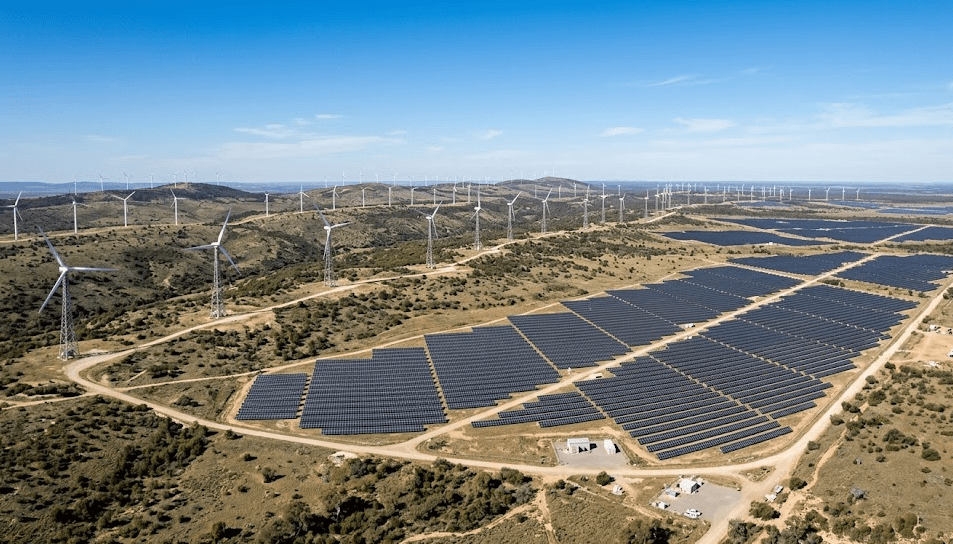
The Impact of Clean Energy on the Environment and Carbon Emissions
The shift toward clean energy is often framed as a climate policy issue. But the environmental effects are more specific than that — they show up in measurable changes to carbon output, air quality, water consumption, and land use. Understanding what actually changes, and how, gives a clearer picture of why energy source selection matters beyond cost and reliability.
How Clean Energy Reduces Carbon Emissions
Power generation remains the largest single source of global greenhouse gas emissions, accounting for roughly 26% of total output according to Climate TRACE data. The carbon intensity of that generation depends almost entirely on what fuel is used.
Coal-fired power produces around 820–1,020 g CO₂ per kilowatt-hour over its lifecycle. Natural gas comes in lower, at roughly 400–500 g CO₂/kWh. Wind and solar, by contrast, emit between 8 and 83 g CO₂/kWh on a lifecycle basis — mostly from manufacturing and installation, not operation. Once running, they produce no direct emissions.
The difference is significant at scale. The IEA estimates that clean energy deployment avoided approximately 2.6 billion tonnes of additional CO₂ emissions in 2024 alone. In 2025, the global average carbon intensity of electricity generation dropped to 458 g CO₂e per kWh — down 16% from 2005 levels — driven largely by the expansion of wind and solar capacity.
Switching the energy source is the most direct lever available for reducing emissions from electricity-dependent operations.
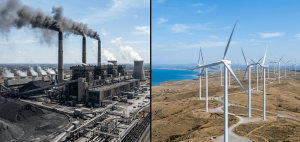
Clean Energy Impact on Air Quality
Carbon dioxide is the primary target in emissions discussions, but fossil fuel combustion also releases sulfur dioxide (SO₂), nitrogen oxides (NOₓ), and particulate matter — all of which have direct effects on air quality and human health.
Coal plants are particularly significant sources of SO₂ and NOₓ. These pollutants contribute to acid rain, ground-level ozone, and fine particulate pollution (PM2.5) in surrounding areas. Wind turbines and solar panels produce none of these during operation.
In areas with existing air quality concerns, power source choice affects more than just the carbon footprint. It affects the broader pollution load on the local environment.
Impact on Water Resources
Thermoelectric power plants — coal, natural gas, and nuclear — require large volumes of water for cooling. According to the U.S. Energy Information Administration, coal-fired generation withdraws approximately 19,185 gallons of water per megawatt-hour. Natural gas combined-cycle plants use around 2,800 gallons per MWh.
Wind turbines require negligible water to operate. Solar photovoltaic systems use minimal water — primarily for panel washing. This difference matters in regions where freshwater availability is limited or where industrial water use is already under regulatory pressure.
As more generations shift to wind and solar, the overall water withdrawal intensity of electricity systems drops. In the U.S., power sector water withdrawals fell from 53.1 trillion gallons in 2019 to 47.5 trillion in 2020, with the transition away from coal being the primary driver.
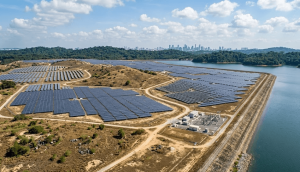
Impact on Land and Ecosystems
Fossil fuel extraction involves surface mining, drilling, and the infrastructure required to transport fuel — all of which alter landscapes and ecosystems over time. The disruption extends beyond the plant itself to the supply chain upstream.
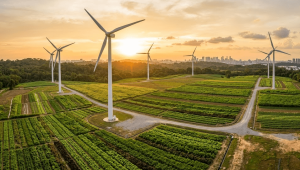
Renewable installations also occupy land, but differently. Wind turbines can coexist with agriculture; the land between and around them typically remains usable. Solar installations can be placed on rooftops, degraded land, or built into existing structures.
The more relevant comparison is long-term land impact over the full lifecycle of energy production, not just the footprint of the facility itself. On that basis, clean energy sources generally cause less cumulative land and ecosystem disruption than fossil fuel extraction and combustion combined.
Where the Impact Has Limits
Clean energy is not impact-free. Manufacturing wind turbines and solar panels requires raw materials — steel, aluminum, silicon, and rare earth elements — and that production process generates its own emissions and waste. The lifecycle emissions figures cited above account for this, which is why they are not zero.
Intermittency is a separate issue. Wind and solar generate power based on weather conditions, not demand. Without adequate storage or grid backup, facilities that rely on them may still draw from fossil fuel sources during low-generation periods.
These limitations do not cancel out the environmental advantages of clean energy. The full energy system design determines the net environmental benefit — not just the generation technology a facility chooses to install.
What the Data Points To
Across carbon output, air quality, water use, and land impact, the evidence points in a consistent direction: clean energy sources produce meaningfully lower environmental stress than fossil fuels across all four dimensions. Three factors determine the magnitude of the impact: what energy mix is being replaced, how large the installation is, and how well the surrounding system is designed to support it.
For facilities evaluating their energy options, these are not abstract considerations. They translate into measurable differences in emissions reporting, regulatory exposure, and long-term resource consumption.
