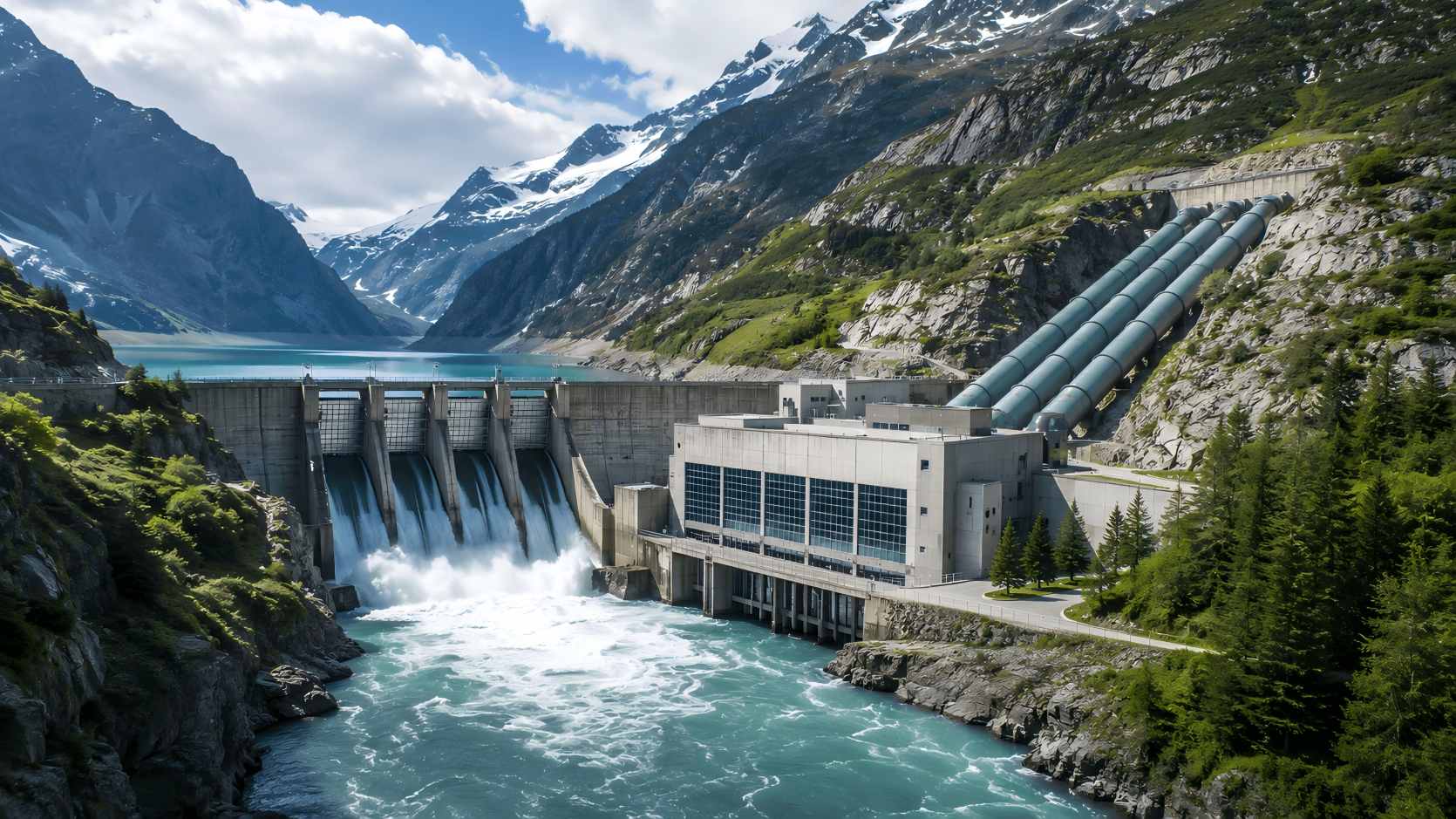
What is a Hydraulic Turbine and What Does It Do?
A hydraulic turbine converts the energy of moving or falling water into rotational mechanical energy. That mechanical output drives a generator to produce electricity or directly powers industrial equipment. It is the core machine in every hydroelectric power system.
Basic Function of a Hydraulic Turbine
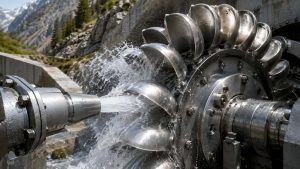
A hydraulic turbine captures the potential and kinetic energy of water and converts it into rotational mechanical energy at the shaft. That output serves two main purposes.
Hydroelectric power generation: The turbine shaft connects to a generator rotor. As water spins the turbine, the generator produces electricity — the operating principle behind both large dams and small run-of-river plants.
Industrial mechanical drive: Hydraulic turbines also drive pumps, compressors, and other rotating equipment directly, without electrical conversion, in facilities where water flow is available on-site.
How a Hydraulic Turbine Works
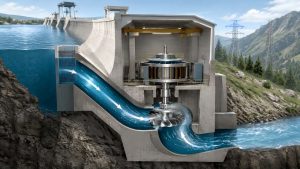
Water enters under pressure or from elevation. In high-head systems, water travels through a penstock from an elevated reservoir, building pressure and velocity before reaching the turbine. The greater the head, the more energy available at the inlet.
Water impacts the blades and generates torque. The force of water on the blades creates torque around the turbine’s central axis. Blade geometry is designed to maximize energy transfer and minimize hydraulic losses at this stage.
The rotor spins and converts energy. The rotor turns continuously as long as water flows. Rotational speed depends on the turbine type, available head, and flow rate. Efficiency depends on blade design and how well the turbine matches site conditions.
Power is delivered via a shaft or a generator. The spinning shaft drives a generator or connected mechanical equipment. Water exits through a draft tube at reduced energy and returns to the waterway.
Common Types of Hydraulic Turbine
Hydraulic turbines are classified by how they interact with water and the site conditions they’re built for. Head and flow rate are the two main factors that determine which type fits a given application.
Pelton Wheel (Impulse Turbine)
Built for high-head, low-flow sites, typically above 300 meters. High-velocity water jets strike spoon-shaped buckets on the wheel’s rim. All pressure energy converts to velocity before contact, making it highly efficient at full load. Common in mountainous regions.
Francis Turbine (Reaction Turbine)
The most widely installed type worldwide. Handles medium head and flow, typically 40–600 meters. Water enters radially through a spiral casing and guide vanes, then exits axially. Its broad operating range makes it the standard choice for large hydroelectric stations.
Kaplan Turbine (Axial-Flow Turbine)
Designed for low-head, high-flow conditions, typically below 40 meters. Water flows axially through propeller-like blades. Both the runner blades and guide vanes are adjustable, maintaining high efficiency as flow rates change — ideal for run-of-river plants.
Where Hydraulic Turbines Are Used
Hydroelectric power generation is the primary use. Large dams rely on Francis or Pelton turbines to generate hundreds of megawatts. Small hydro plants under 10 MW use Kaplan or Francis turbines to serve remote communities or feed distributed grid networks. Hydroelectric power accounts for roughly 16% of global electricity generation.
Industrial mechanical drive remains relevant in water treatment plants, mining, and manufacturing, where turbines directly drive pumps, compressors, or fans without electrical conversion, improving overall system efficiency.
Research and education — scaled turbine models are standard tools in fluid mechanics labs, used to study energy conversion efficiency, cavitation behavior, and blade geometry optimization.
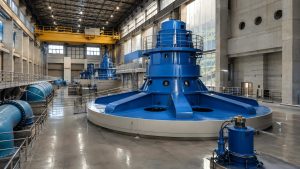
The Role of Hydraulic Turbines in Modern Energy Systems
A hydraulic turbine converts water energy into mechanical output through a straightforward sequence: pressurized water enters, strikes the blades to generate torque, spins the rotor, and delivers power via shaft or generator. The three main types — Pelton, Francis, and Kaplan — each cover a different range of head and flow conditions, making hydraulic turbines adaptable to sites from steep mountain rivers to low-gradient run-of-river plants. In practice, hydropower technology is used in large-scale hydroelectric dams, small distributed hydro systems, industrial mechanical drives, and engineering research. Matching the right turbine type to site conditions is the key factor in achieving reliable, long-term performance.
