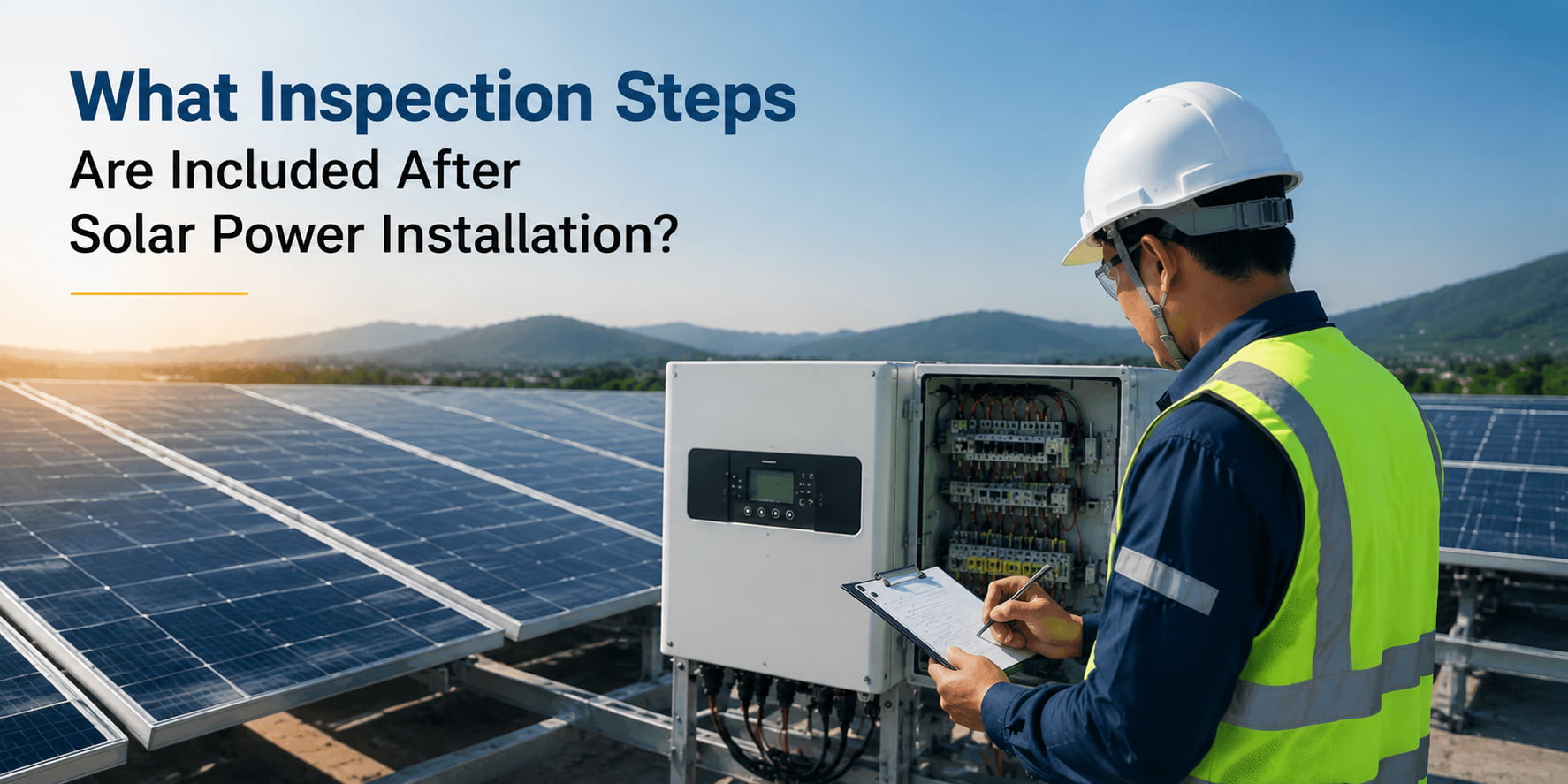
What Inspection Steps Are Included After Solar Power Installation?
After a solar power installation is completed, a series of inspection steps must be performed before the system is officially put into operation. These inspections cover the condition of solar panels, mounting structures, electrical connections, inverter performance, and final system testing. Engineers verify that each component is installed according to the approved design and that the system operates within the required electrical parameters. This article explains the main inspection steps included after solar PV installation and the key items checked during the final commissioning process.
Solar Power Installation Inspection for Solar Panels and Mounting Structures
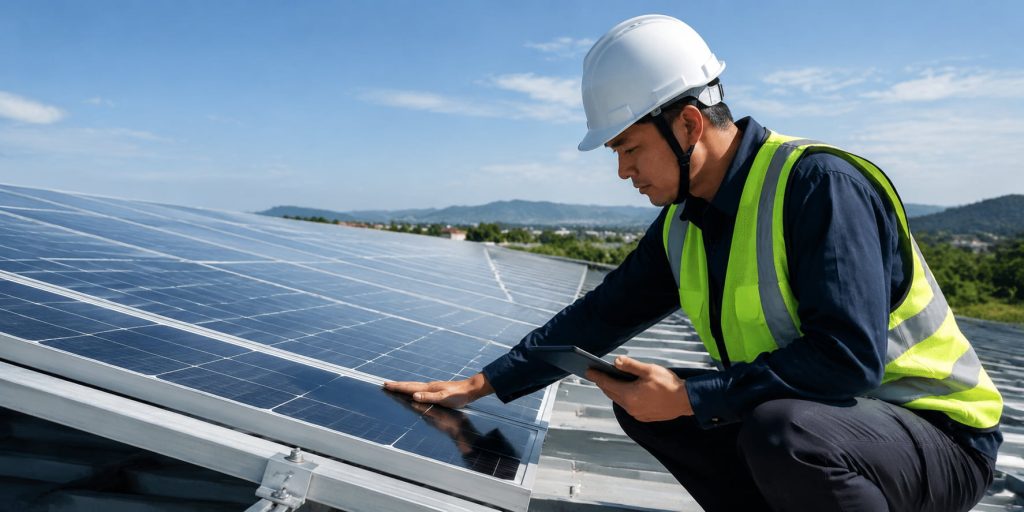
The first stage after solar power installation is a physical inspection of the solar panels and mounting structures. Engineers check whether the installed equipment matches the project design and whether all mechanical components are properly installed.
For solar modules, inspectors examine the external condition of each panel, including the glass surface, frame, junction box, and cable connections. Any visible damage, such as cracks, scratches, or deformation, must be recorded and evaluated before the system is put into operation. The position and arrangement of the panels are also reviewed to confirm that the installation matches the planned layout.
The mounting system is inspected at the same time. Since solar panels are exposed to outdoor conditions for many years, the support structure must be correctly installed and securely fixed. Engineers check mounting rails, brackets, fasteners, and connection points to confirm that there are no loose components or installation errors.
Key inspection items include:
- Checking solar panel quantity and arrangement
- Inspecting mounting bolts and fixing points
- Confirming panel alignment and installation angle
- Checking roof attachment points and waterproof treatment
During this stage of the solar PV installation inspection, engineers mainly focus on installation accuracy, mechanical stability, and visible equipment conditions.
Electrical Inspection and Testing
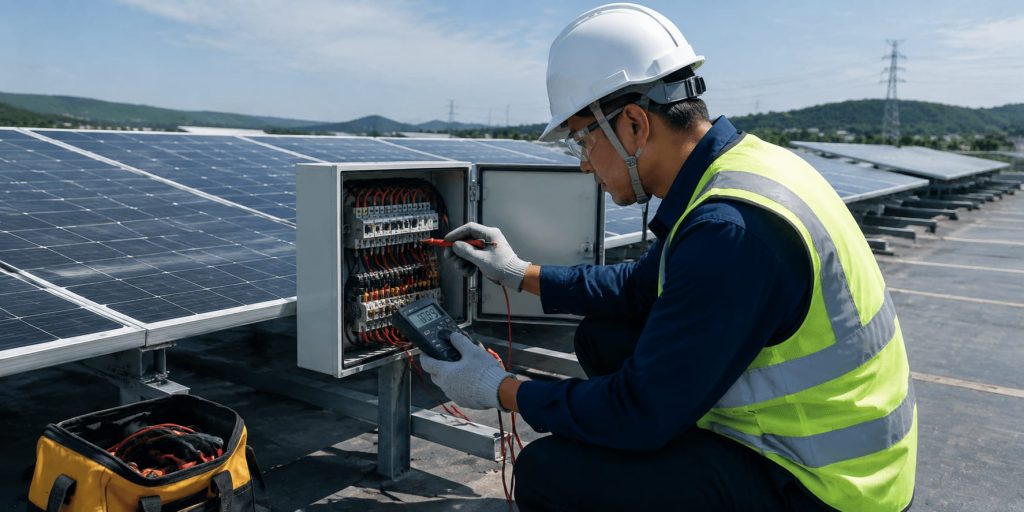
Electrical inspection is one of the main procedures after solar power installation. Engineers check the DC system, AC connection, grounding system, and protection devices to verify that all electrical components are installed according to the project requirements.
The inspection begins with the photovoltaic array. Engineers check the connection of each PV string and confirm that the positive and negative terminals are correctly connected. The condition of DC cables and connectors is also inspected, including connector locking, cable routing, insulation condition, and installation position. Any cable damage, loose connections, or incorrect installation must be corrected before system operation.
PV String Testing and Cable Inspection After Solar Power Installation
Engineers measure the open-circuit voltage (Voc) of each PV string and compare the results with the designed values. String current measurements are also performed under available sunlight conditions to check whether different strings show abnormal output differences.
During the cable inspection, engineers examine whether DC cables have sufficient mechanical protection and whether the connectors are properly installed. Cable bending, fixing points, and connection areas are checked to confirm that the wiring meets installation requirements.
Insulation and Grounding Testing
Insulation resistance testing is performed on DC circuits to verify the condition of cable insulation. Engineers also inspect the grounding connection between solar module frames, mounting structures, and the grounding system.
For the AC side, the inspection covers the connection between the inverter and the distribution board. Engineers check circuit breakers, isolators, and protection devices to confirm that their specifications match the system design.
The main electrical inspection items include checking:
- PV string voltage and current
- Cable and connector installation
- Insulation resistance
- Grounding continuity
- AC connection and protection devices
Solar Power Installation Inverter Commissioning and System Verification
After completing electrical inspections, engineers proceed with inverter commissioning during the solar power installation acceptance process. This stage focuses on inverter startup, operating parameters, grid connection, and monitoring functions.
Before activating the inverted, engineers first inspect the physical installation, including DC input terminals, AC output terminals, grounding connections, and communication cables. They also confirm that the inverter installation location meets the manufacturer’s requirements for operation and maintenance access.
Solar Power Installation Inverter Startup and Parameter Check
During startup, engineers check the inverter display and operating data. The inspection includes reviewing DC input voltage, AC output voltage, operating frequency, power output, and any warning or fault messages.
If the inverter reports abnormal conditions, engineers review the wiring, system configuration, and parameter settings before continuing the commissioning process.
Grid Connection and Monitoring Verification
For grid-connected systems, engineers test whether the inverter can synchronize with the electrical grid. They verify grid voltage, frequency, and connection status to confirm that the inverter operates within the required conditions.
After grid connection is completed, engineers check the monitoring platform and communication functions. The system data, including real-time power output, energy generation records, and inverter status information, should be correctly displayed.
Once all commissioning tests are completed, engineers record the test results as part of the final solar PV installation acceptance documentation.
Solar Power Installation Inspection Records and System Handover
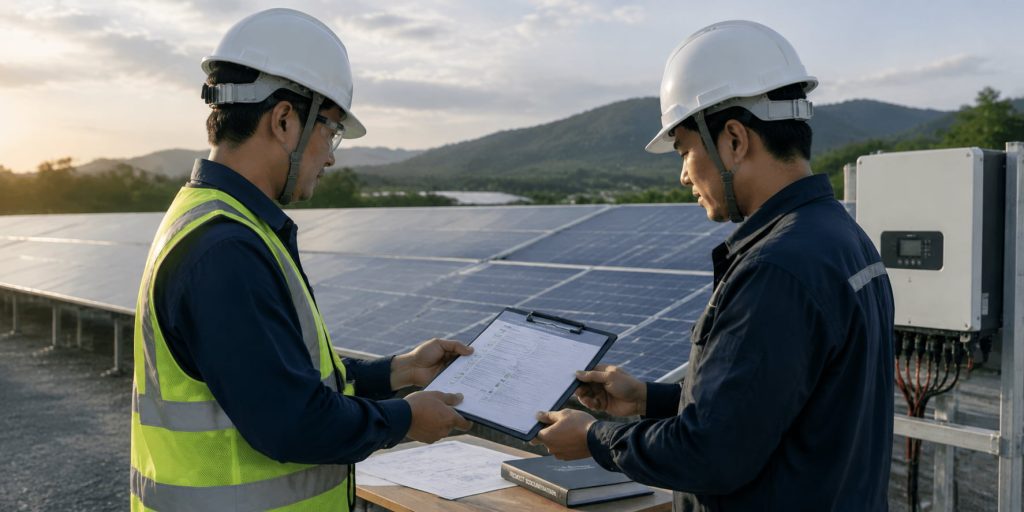
After completing the solar power installation inspection process, engineers organize all test results and installation records for system handover. The documentation includes equipment specifications, electrical test reports, installation drawings, warranty details, and operation instructions.
These records provide a complete overview of the installed solar system, including the inspected components, measured parameters, and commissioning results. The customer can use this information for future operation, maintenance, and technical support.
A properly documented solar PV installation process allows all inspection results to be traced throughout the system’s service period and provides the necessary reference materials for ongoing system management.
A Complete Review of Post-Installation Solar System Checks
A complete solar power installation inspection involves a series of checks covering the physical condition of equipment, electrical connections, inverter operation, and final system testing. From inspecting solar modules and mounting structures to verifying electrical parameters and commissioning the inverter, engineers review each part of the system according to the project requirements.
These inspection procedures form a complete verification process before the solar system is placed into operation. By reviewing installation details, test results, and commissioning records, engineers can confirm that all required inspection items have been completed and provide complete documentation for system operation and future maintenance.
