Can Solar Power Meet All My Home Electricity Needs?
Yes, solar power can meet most home electricity needs, and some homes can achieve near-complete energy independence with the right system design. However, whether it can fully power your home depends on your electricity usage, location, solar capacity, and battery storage.
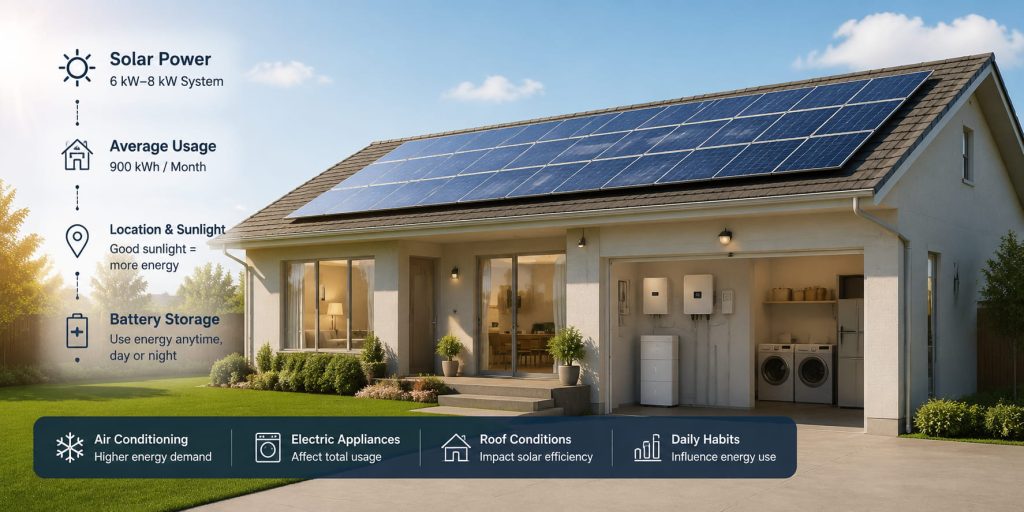
The average U.S. household consumes around 900 kWh of electricity per month. In areas with good sunlight conditions, a properly designed 6 kW–8 kW solar energy system can often generate enough electricity to offset this level of consumption.
A home’s energy demand is different from another. Factors such as air conditioning use, electric appliances, roof conditions, and daily electricity habits all affect solar energy performance. Therefore, choosing the right system size is the key to determining whether solar can meet your home’s needs.
Estimate Your Monthly Electricity Consumption First
Before choosing a Solar Power system, homeowners should first understand how much electricity their home actually uses each month. The required solar capacity is not determined only by the size of the house, but by the amount of energy consumed.
The easiest way to estimate monthly electricity consumption is to check your recent electricity bills and calculate your average usage over several months. Pay attention to factors that may increase future demand, such as adding an electric vehicle, installing electric heating, or using more air conditioning.
For example, a home using around 900 kWh of electricity per month will typically require a larger Solar Power system than a smaller household using 300–500 kWh/month. Understanding your current and future energy needs helps ensure the system is properly sized and can provide reliable performance.
Solar Power System Size Determines Whether Your Home Can Generate Enough Electricity
The first question most homeowners need to answer is: How much solar power does my house actually need?
The required system size depends mainly on your household electricity consumption. A small home with basic appliances requires much less renewable solar energy capacity than a large home with air conditioning, electric heating, swimming pools, or electric vehicle charging equipment.
For reference, a typical residential solar energy system may be designed according to the following energy needs:
| Monthly Electricity Consumption | Estimated Solar Power System Capacity | Typical Home Type |
|---|---|---|
| 300–500 kWh/month | Around 3–5 kW | Small household |
| 600–1,000 kWh/month | Around 6–8 kW | Average family home |
| 1,000–1,500 kWh/month | Around 10–15 kW | Large homes or homes with EVs |
Note: These estimates are based on typical solar conditions in the southern U.S., including California, Texas, and Arizona.
For example, an average U.S. household using approximately 900 kWh per month may require a 6–8 kW solar power system. Under suitable sunlight conditions, a 7 kW system receiving around 5 peak sunlight hours per day could theoretically generate:
7 kW × 5 hours × 30 days ≈ 1,050 kWh/month
This means the system may produce enough electricity to offset the monthly consumption of an average household.
However, actual solar power production will vary depending on:
- Local weather conditions
- Seasonal sunlight changes
- Solar panel efficiency
- Roof direction and installation angle
- Shading from trees or nearby buildings
The number of solar panels required also depends on the panel output. Modern residential solar panels commonly provide around 350W–450W per panel. Therefore, a 7 kW solar power system may require approximately 16–20 solar panels, depending on the selected equipment.
For homeowners, this means the most important step is not choosing the largest system available, but selecting a renewable solar energy system that matches actual household energy needs.
Solar Power with Battery Storage Helps Your Home Use Solar Energy Anytime
Many homeowners ask another important question: “If solar panels only produce electricity during the day, how can my home use renewable solar energy at night?”
The answer is energy storage.
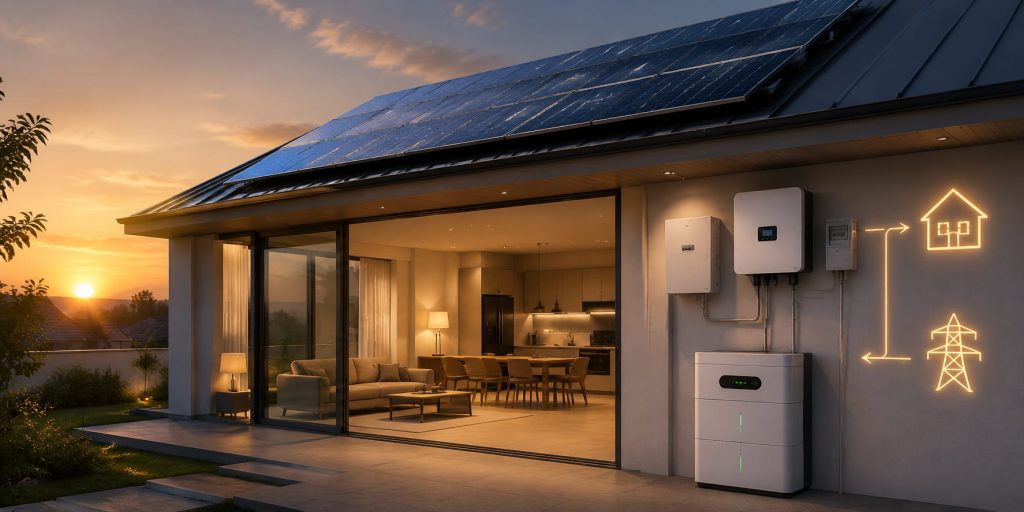
Solar panels generate electricity when sunlight is available, but household electricity demand often increases in the evening when solar production decreases. A renewable solar energy system combined with battery storage allows excess daytime energy to be stored and used later.
Without battery storage, most grid-connected solar power systems operate in the following way:
- Solar panels generate electricity during daylight hours.
- The home uses the available solar energy first.
- Excess electricity may be sent to the grid.
- Electricity is purchased from the grid when solar production is insufficient.
This setup is suitable for many homeowners who want to reduce electricity bills while maintaining grid reliability.
However, homeowners who want greater energy independence usually require battery storage. A properly sized battery system can provide power when:
- Solar production is low
- Electricity demand is high
- The grid experiences an outage
For example, a 10 kWh home battery system can typically support essential household loads such as:
- Refrigerators
- Lighting
- Internet equipment
- Security systems
- Small appliances
Larger homes with higher energy consumption may require 15–30 kWh or more of storage capacity, especially when powering air conditioning systems, electric heating, or electric vehicles.
Therefore, if the goal is for solar power to meet nearly all household electricity needs, battery storage becomes an important part of the overall system design.
Solar Power Performance Depends on Location and Household Energy Habits
Although renewable solar energy can provide enough electricity for many homes, real-world performance depends heavily on where the system is installed and how electricity is used.
A renewable solar energy system installed in a region with strong sunlight will generally produce more electricity than the same system installed in an area with frequent cloudy weather.
For example, homes in areas such as Arizona or California typically receive more annual solar radiation than homes in northern regions. As a result, the same 7 kW solar power system may generate different amounts of electricity depending on location.
In addition to climate conditions, household energy habits also affect whether solar energy can cover total electricity demand.
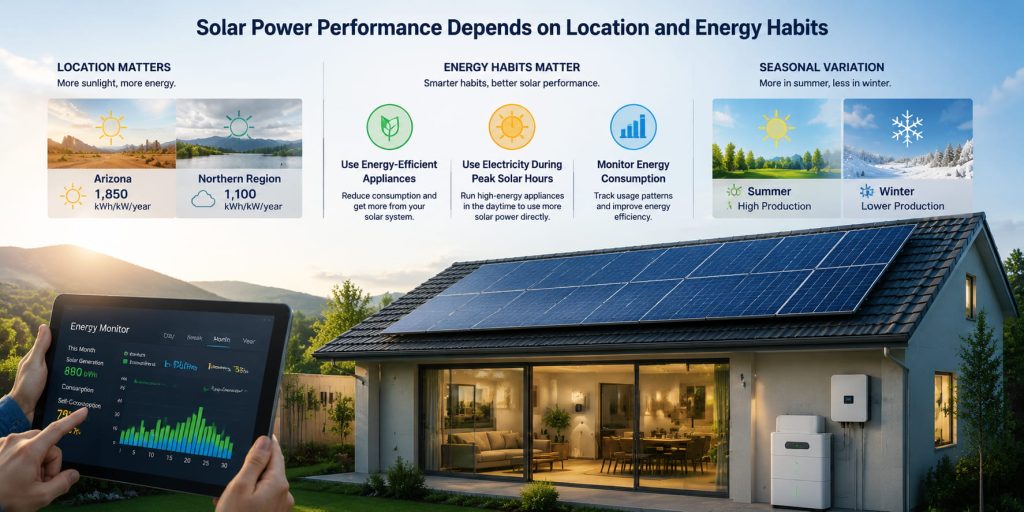
Homeowners can increase solar power efficiency by:
Using Energy-Efficient Appliances
Improving household energy efficiency is an effective way to increase the value of a Solar Power system. Appliances such as refrigerators, air conditioners, and lighting systems can significantly affect daily electricity consumption. By replacing older equipment with energy-efficient models, homeowners can reduce overall power demand and allow the same solar system to cover a larger percentage of their electricity needs. Lower energy consumption may also reduce the required solar capacity and long-term system costs.
Using Electricity During Peak Solar Hours
Solar panels typically generate the most electricity during daytime hours when sunlight is strongest. However, many households use more electricity in the evening when solar production decreases. Adjusting energy habits can help homeowners make better use of solar-generated electricity.
For example, homeowners can schedule high-energy activities such as laundry, dishwasher operation, or EV charging during peak solar hours. This increases solar self-consumption and reduces dependence on battery storage or grid electricity.
Monitoring Energy Consumption
Smart energy monitoring systems help homeowners understand how Solar Power is performing in real household conditions. Instead of only looking at monthly electricity bills, users can track detailed energy patterns, including:
- Solar electricity generation throughout the day
- Household electricity consumption trends
- Battery charging and usage performance
With this information, homeowners can identify inefficient energy habits, optimize electricity usage, and make better decisions about future system expansion or storage upgrades.
Considering Seasonal Solar Power Changes
Solar Power production is affected by seasonal changes, including daylight hours, weather conditions, and solar intensity. A system that produces sufficient electricity during summer may generate less energy in winter, especially in regions with shorter days or frequent cloudy weather.
Therefore, professional Solar Power design focuses on annual energy production rather than short-term output. By evaluating seasonal conditions and future energy needs, homeowners can choose a system that provides more reliable performance throughout the year.
Solar Power Planning Creates a Reliable Path Toward Home Energy Independence
So, can solar power meet all your home electricity needs?
For many homeowners, the answer is yes. A properly designed renewable solar energy system can generate enough electricity to cover most household consumption, and with sufficient battery storage, some homes can achieve near-complete energy independence.
However, a successful solar power installation requires careful planning based on:
- Household electricity consumption
- Local solar conditions
- Available roof space
- Solar panel capacity
- Battery storage requirements
Before installing a system, homeowners should evaluate their current electricity bills and future energy plans. For example, families planning to purchase an electric vehicle or replace gas appliances with electric alternatives may need additional renewable solar energy capacity.
A well-designed solar power system should also allow future expansion, including:
- Adding more solar panels
- Increasing battery capacity
- Integrating smart energy management systems
Ultimately, solar energy is not only about generating electricity from sunlight. It is about creating a smarter, more reliable, and more independent way to power your home. With the right system configuration, many homeowners can significantly reduce grid dependence and take a major step toward a sustainable energy future.
