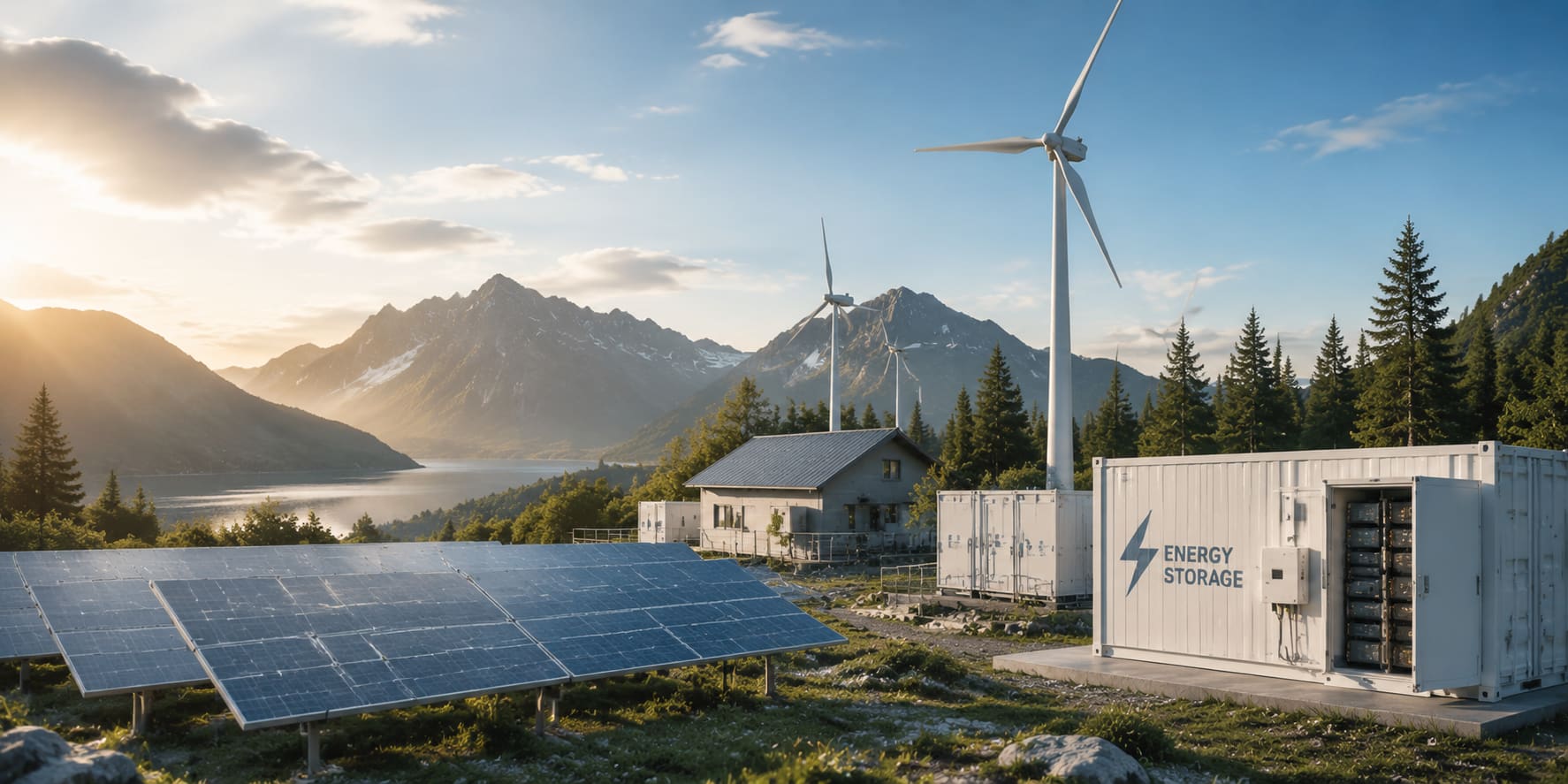
Hybrid Microgrid Design for Off Grid Energy Systems
A reliable hybrid microgrid design for off-grid energy systems is not simply about connecting solar panels, wind turbines, and batteries. It is about creating a balanced energy system that matches specific power requirements, environmental conditions, and long-term operational goals.
For users who need an independent power supply, a properly designed hybrid microgrid can provide stable electricity, improve renewable energy utilisation, and reduce dependence on traditional fuel sources. By combining solar, Wind, and battery storage technologies, hybrid microgrids offer a flexible solution for remote facilities, commercial projects, and industrial applications.
Key Benefits of Hybrid Microgrid Design for Off Grid Energy Systems
Traditional off grid power systems often rely on a single energy source or fuel-based generators, which can be affected by weather changes and rising operating costs. A hybrid microgrid design addresses these limitations by combining solar PV, wind turbines, and battery storage to create a more stable and flexible power supply.
By integrating multiple energy sources, solar power can provide electricity during daylight hours, while wind energy can supplement generation when solar output is limited. Battery storage further improves system reliability by storing excess renewable energy and supplying power during periods of low generation.
Compared with single-source renewable systems, hybrid microgrid design for off grid energy systems offers higher energy stability, lower fuel dependence, and improved long-term efficiency. It provides a sustainable solution for users seeking reliable power without access to a stable grid.
Project Requirements Analysis Before Design
Before selecting equipment, every project requires a detailed energy assessment. A suitable hybrid microgrid design should be based on actual power requirements rather than a standard configuration.
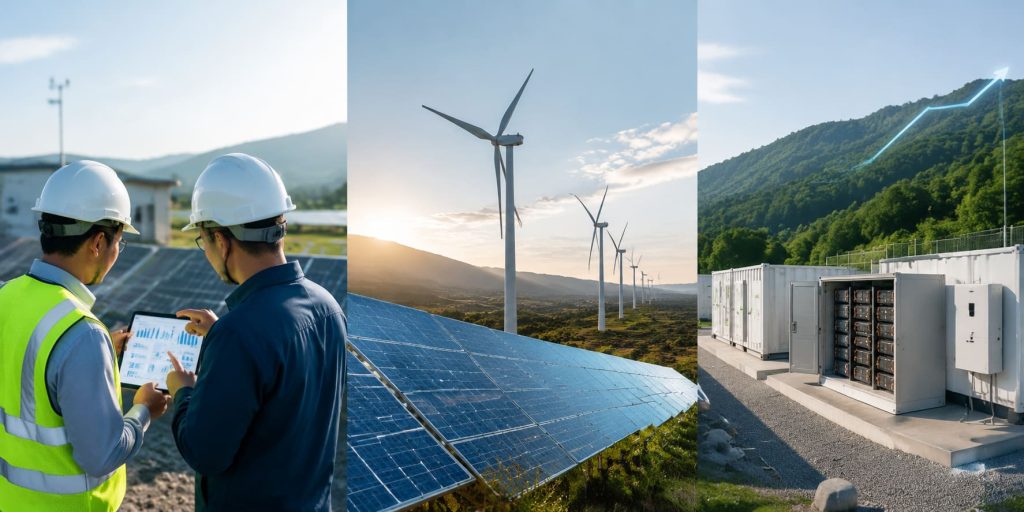
Several key factors should be evaluated before system design.
Energy Demand and Load Characteristics
Understanding electricity consumption is the first step.
Engineers need to analyse:
- Daily energy consumption
- Peak power demand
- Operating hours
- Critical equipment requirements
For example, an industrial facility may require high power output during production hours, while a communication station may require a continuous but lower power supply.
Accurate load analysis helps determine the required solar capacity, wind capacity, battery size, and inverter rating.
Renewable Energy Resource Assessment
The performance of a hybrid microgrid depends heavily on available renewable resources.
Important factors include:
- Solar radiation levels
- Wind speed conditions
- Seasonal energy changes
A location with strong sunlight may require a larger solar PV system, while an area with stable wind resources may benefit from a higher wind energy contribution.
By analysing renewable resources, engineers can create a more efficient hybrid microgrid design.
Reliability and Future Expansion Requirements
Different users have different reliability expectations.
Some applications can tolerate short interruptions, while others require continuous power supply.
The design should consider:
- Required backup duration
- Battery storage capacity
- Future energy expansion
A scalable system allows additional solar panels, wind turbines, or batteries to be added when energy demand increases.
System Configuration Options for Hybrid Microgrid Design in Off Grid Energy Systems
System configuration is one of the most important decisions in hybrid microgrid design for off grid energy systems. The correct combination of renewable energy sources and storage technologies directly affects system reliability, investment cost, and long-term performance.
Different applications require different configurations. The best solution depends on energy demand, renewable resources, and operational requirements.
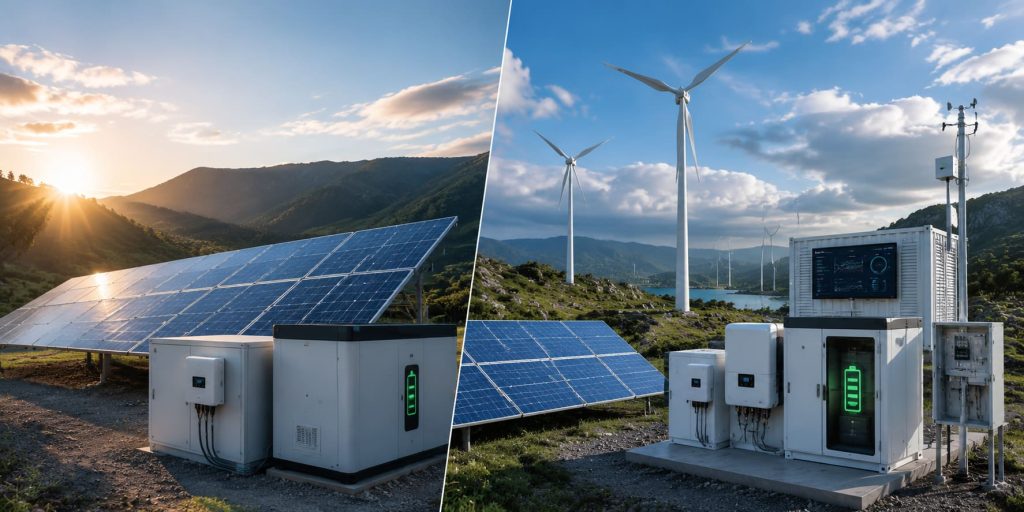
Solar + Battery Hybrid Microgrid Design
A solar and battery configuration is one of the most common solutions for off grid applications.
The system mainly includes:
- Solar PV modules
- Solar inverter
- Battery storage system
- Energy management controller
During the daytime, solar panels generate electricity to supply loads. When solar production exceeds demand, excess electricity is stored in batteries. The stored energy can then be used at night or during periods of low solar generation.
Advantages:
Simple system structure
Compared with multi-source systems, solar and battery systems have fewer components and easier maintenance requirements.
Lower initial investment
For applications with stable solar resources, this configuration can provide an economical renewable energy solution.
Suitable for predictable energy demand
It works well for:
- Small commercial facilities
- Remote monitoring systems
- Off grid buildings
Solar + Wind + Battery Hybrid Microgrid Design
A solar-wind-battery configuration provides a higher level of energy reliability by combining complementary renewable resources.
The system includes:
- Solar PV system
- Wind turbine system
- Battery storage
- Hybrid inverter
- Energy management system
The key advantage is that solar and Wind resources can support each other.
Solar Energy Contribution
Solar power is usually strongest during daytime periods.
It is suitable for:
- Daytime industrial operations
- Commercial electricity consumption
- General power supply requirements
Wind Energy Contribution
Wind energy can provide additional power when solar output decreases.
For example:
- Nighttime operation
- Cloudy weather conditions
- Seasonal periods with lower solar generation
Battery Storage Function
Battery storage connects different energy sources.
It can:
- Store excess renewable energy
- Provide backup power
- Balance energy fluctuations
Compared with solar-only systems, a solar-wind-battery hybrid microgrid design provides better energy stability and higher renewable energy utilisation.
This configuration is especially suitable for users who require reliable electricity without access to a stable grid.
Maintenance Considerations
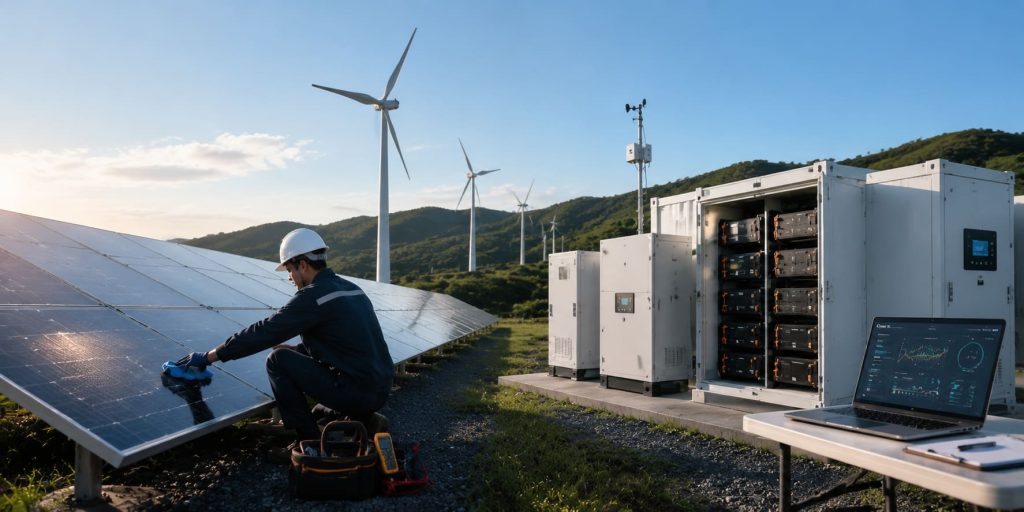
Proper maintenance is essential for ensuring the long-term reliability of a hybrid microgrid design for off grid energy systems. Although renewable energy systems require less maintenance than traditional power systems, regular inspections can help maintain stable performance and extend equipment lifespan.
Key maintenance tasks include checking solar panels, monitoring battery performance, and inspecting wind turbines and electrical connections. An energy management system can also help track system operation and identify potential issues early.
With proper maintenance, a well-designed hybrid microgrid design can continue providing reliable and efficient power while reducing long-term operating costs.
Building Reliable Off Grid Energy Solutions with Hybrid Microgrid Design
A well-planned hybrid microgrid design for off grid energy systems provides a reliable solution for achieving energy independence and improving renewable energy utilisation. By combining solar PV, wind power, and battery storage, these systems can deliver more stable electricity while reducing dependence on traditional fuel-based power sources.
The success of a hybrid microgrid depends on proper project analysis, suitable system configuration, and regular maintenance. By selecting the right combination of renewable energy sources and storage capacity, users can build an efficient power system that meets current demands while supporting future energy needs.
