
Benefits of a Solar Wind Hybrid System for Renewable Energy
A solar wind hybrid system is a renewable energy solution that combines solar power generation and wind energy generation into one integrated system. By using two complementary renewable resources, it can provide a more balanced electricity supply compared with single-source energy systems. This approach helps improve energy utilization, increase power availability, and support a more sustainable energy future.
As renewable energy adoption continues to grow, users are looking for solutions that can deliver stable performance under different environmental conditions. A solar wind hybrid system addresses this challenge by combining the advantages of solar and wind power, creating a flexible and efficient renewable energy system for residential, commercial, and off-grid applications.
Limitations of Single Renewable Energy Systems
Although renewable energy technologies have developed rapidly, single-source energy systems still face certain limitations. Solar and wind power are both clean energy solutions, but their electricity generation depends heavily on natural conditions. These variations can affect power output and make it challenging to maintain a continuous energy supply.
Solar energy systems rely primarily on sunlight to generate electricity. During daytime hours with sufficient sunlight, solar panels can produce reliable power. However, energy production decreases significantly at night and may also be affected by cloudy weather, seasonal changes, and reduced solar radiation. As a result, a solar-only system may experience periods with limited electricity generation.
Wind energy systems also have similar challenges. Wind turbines generate electricity based on wind speed and availability, which can change throughout the day and across different seasons. When wind conditions are weak, power output may decrease. Although wind energy can provide valuable renewable electricity, relying only on wind resources may not always ensure a stable energy supply.
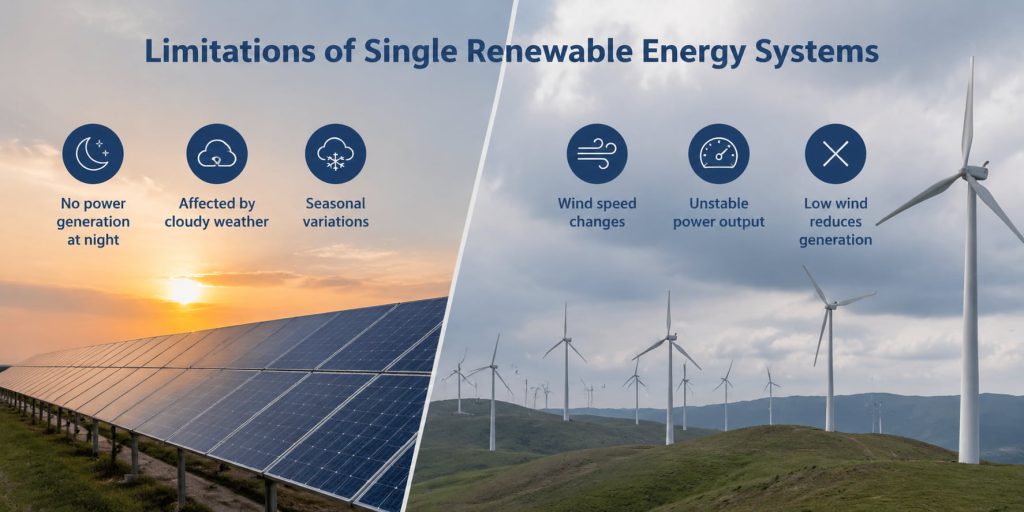
However, these limitations do not imply that solar or wind energy alone is of low value. Instead, they highlight the importance of combining multiple renewable sources. A single renewable energy source may not always match energy demand, while a hybrid approach can improve system balance and make renewable power generation more dependable.
This is why a solar wind hybrid system has become an effective solution for users seeking more consistent renewable energy performance.
How a Solar Wind Hybrid System Combines Solar and Wind Energy
The key advantage of a solar wind hybrid system is the complementary relationship between solar and wind energy. Instead of depending on one renewable resource, the system combines two different power generation methods to improve overall energy availability.
Solar panels typically produce the highest electricity output during daylight hours when sunlight is available. Wind turbines, however, can generate electricity at different times depending on local wind conditions and may continue producing power when solar generation is reduced. This difference allows solar and wind energy to support each other throughout changing weather conditions.
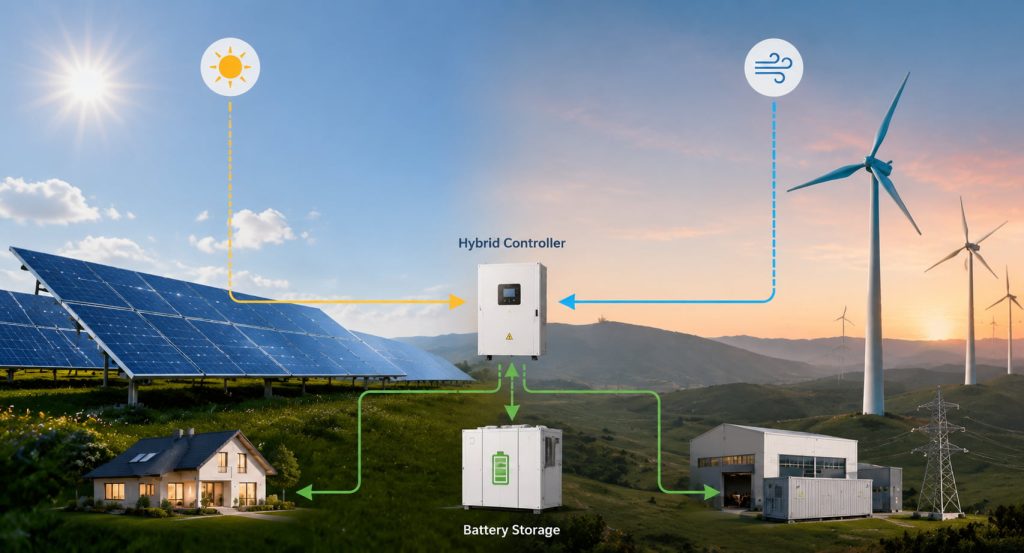
By integrating solar and wind power, a hybrid renewable energy system can achieve a more balanced energy output. When solar generation decreases due to limited sunlight, wind power can provide additional electricity. Similarly, when wind resources are insufficient, solar generation can continue supporting the system during suitable conditions.
A solar wind hybrid system also relies on advanced hybrid energy management systems and key components such as controllers and batteries to coordinate power generation. Hybrid controllers monitor electricity production from solar panels and wind turbines, manage energy distribution, and ensure that available renewable energy is used efficiently. When combined with battery storage, the system can store excess electricity and provide power when renewable generation is lower.
This integrated approach allows the system to operate more efficiently than independent renewable energy sources. Instead of treating solar and wind power as separate technologies, a hybrid system uses their strengths together to create a more reliable renewable energy solution.
The Key Benefits of Solar Wind Hybrid System for Renewable Energy
1. Improved Renewable Energy Reliability and Energy Utilization Efficiency
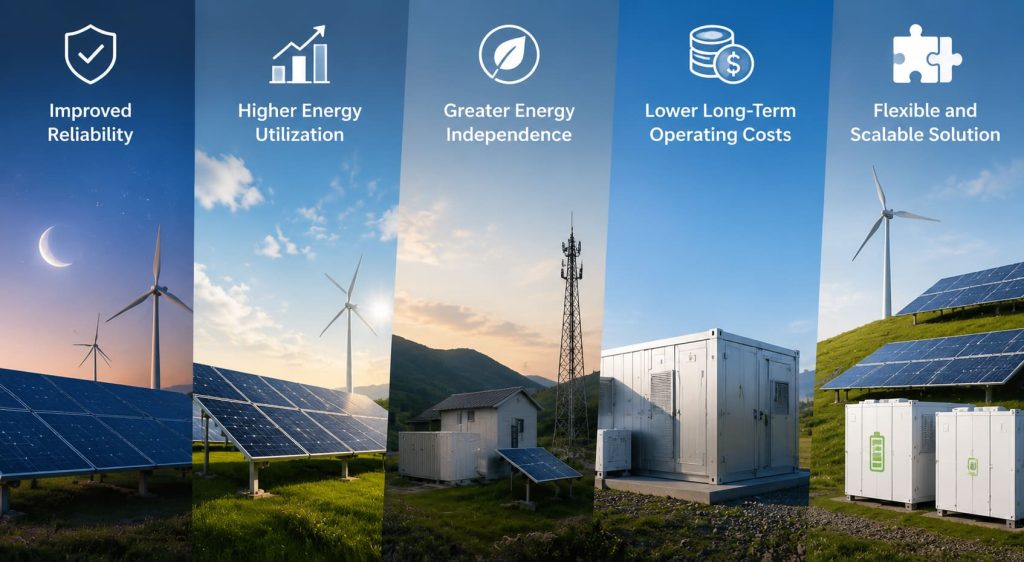
One of the key benefits of a solar wind hybrid system is its ability to improve both renewable energy reliability and resource utilization. Unlike single-source energy systems that depend on one environmental condition, a hybrid system combines solar and wind power to create a more balanced approach to electricity generation.
Solar panels typically generate the most electricity during daylight hours, while wind turbines can continue producing power under different wind conditions, including periods when solar generation is reduced. By combining these two renewable sources, the system can better utilize available natural resources and reduce the impact of fluctuations from individual energy sources.
This complementary operation helps minimize unused renewable energy potential. For example, when solar output decreases due to cloudy weather or nighttime conditions, wind power can provide additional electricity. Similarly, solar generation can continue supporting the system when wind resources are temporarily limited.
As a result, a solar wind hybrid system can achieve more consistent energy production throughout different seasons and weather conditions. For users such as remote facilities, farms, communication systems, and off-grid locations, this improved performance provides a more reliable renewable energy solution while maximizing the value of installed renewable energy equipment.
2. Greater Energy Independence
Energy independence is another major advantage of a solar wind hybrid system. By generating electricity from renewable resources, users can reduce dependence on traditional power sources and external electricity supplies.
This is particularly valuable for off-grid applications where grid connection may be expensive, difficult, or unavailable. Remote facilities, agricultural operations, and isolated energy users can use hybrid renewable energy systems to create their own independent power solutions.
With proper system design and energy storage integration, a solar wind hybrid system can provide continuous renewable power while supporting long-term energy security.
3. Solar Wind Hybrid System Reduces Long-Term Operating Costs
Although renewable energy systems require an initial investment, they can provide significant long-term economic benefits. A solar wind hybrid system reduces reliance on fuel-based generators and helps lower ongoing energy expenses.
Unlike traditional power solutions that require continuous fuel purchases, solar and wind resources are naturally available and renewable. With fewer fuel-related costs and proper maintenance, hybrid systems can provide stable energy generation for many years.
For businesses and organizations, this can support better energy management while reducing exposure to changing electricity prices and fuel costs.
4. Flexible and Scalable Renewable Energy Solution
Another important benefit of a solar wind hybrid system is its flexibility. Different users have different energy requirements, and hybrid systems can be designed according to specific power needs, environmental conditions, and application goals.
The system can be customized by adjusting solar capacity, wind turbine size, battery storage capacity, and energy management components. This makes it suitable for various applications, from small-scale residential systems to larger commercial renewable energy projects.
As energy demand increases, many hybrid systems can also be expanded with additional components. This scalability allows users to develop renewable energy solutions that support both current requirements and future growth.
Advancing Renewable Energy Through Hybrid Power Innovation
The transition toward renewable energy requires solutions that are not only clean but also efficient, flexible, and reliable. While individual renewable energy sources have natural limitations, combining solar and wind power creates a more balanced approach to energy generation.
A solar-wind hybrid system improves renewable energy performance by increasing reliability, enhancing resource utilization, supporting energy independence, and reducing long-term operating costs. These advantages make hybrid renewable energy solutions an increasingly valuable choice for users seeking sustainable power generation.
