What Conditions Are Needed to Use Wind Energy in Agriculture?
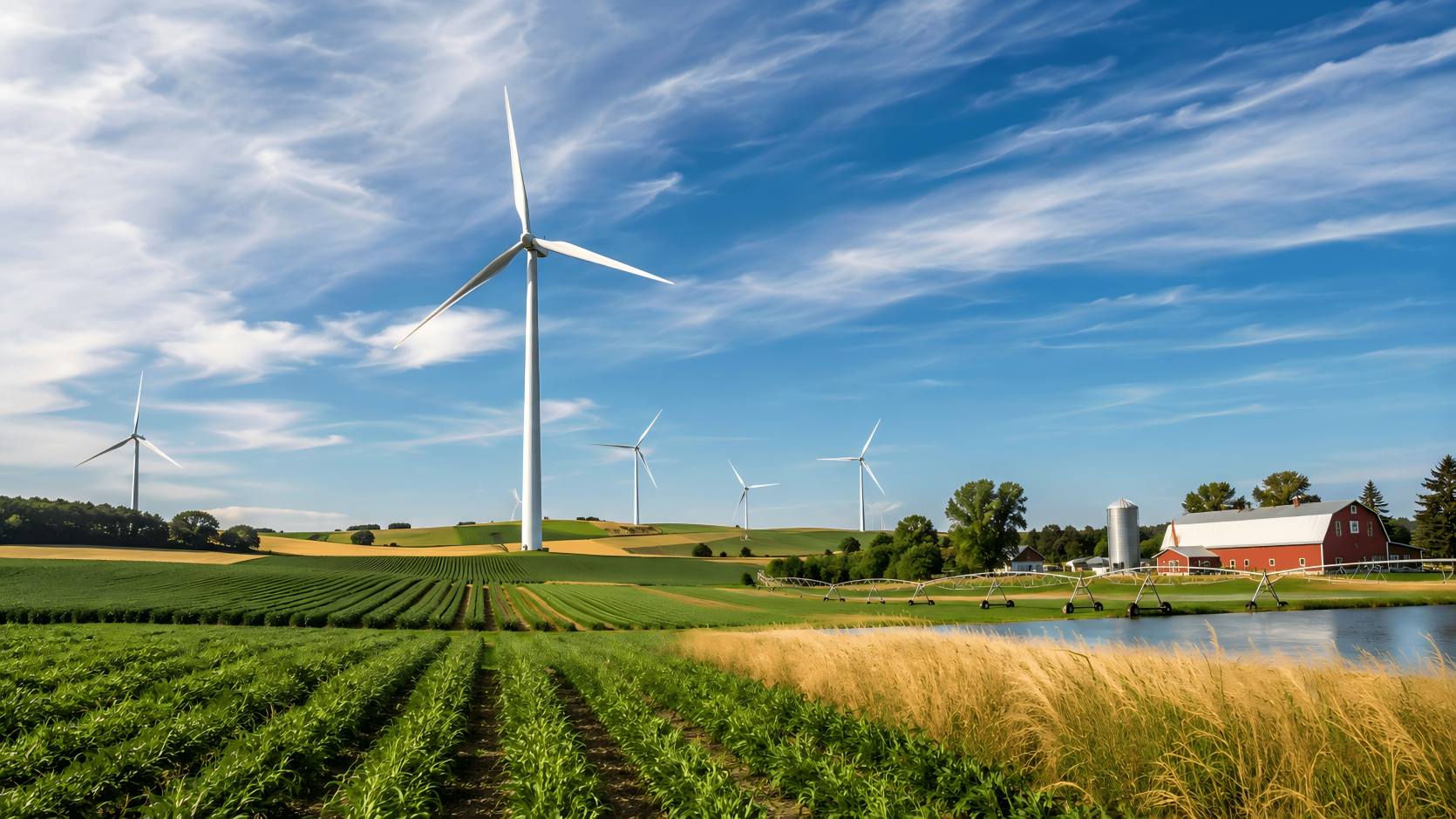
Wind energy in agriculture can work well — but only when the site and setup are right. The short answer: you need steady wind, open land, and a power demand that matches what a small wind system can realistically deliver. If those three things line up, wind energy is worth looking at seriously. If they don’t, it may cause more problems than it solves.
Wind Energy Does Not Fit Every Farm
Not every farm is a good candidate for wind energy. A turbine sitting in a sheltered valley surrounded by trees and buildings is not going to perform. Wind energy rewards the right location. It penalizes the wrong one.
Farms with low average wind speeds, limited open space, very low electricity demand, or heavy continuous power loads are generally poor fits. Heavy continuous loads — like large-scale refrigeration or high-capacity irrigation pumps running around the clock — typically need more consistent power than a small wind system can supply on its own.
Steady Wind Is the First Requirement
The single most important condition is consistent wind, not occasional gusts. A farm that gets strong winds a few times a week but calm conditions most of the time will not get useful output from a turbine.
Most small agricultural wind turbines need an average wind speed of at least 10–12 mph (roughly 4.5–5.5 m/s) to generate usable power. The sweet spot for small systems is 12–20 mph. Above that range, turbines are designed to handle it. Below 10 mph on average, the economics rarely work out.
Before anything else, check local wind data. The NREL Wind Toolkit and NOAA surface data are good starting points for U.S. farms.
Open Land Makes Wind Turbines More Effective
Turbines need clean airflow. Trees, barns, silos, and terrain features all create turbulence that reduces output and increases mechanical stress on the turbine.
As a general rule, a turbine should be installed at least 30 feet above any obstacle within 500 feet, and positioned upwind of buildings where possible. Flat, open fields are ideal. Rolling terrain can work if the turbine is placed on higher ground with good exposure.
Farm Location Affects Wind Power Potential
Certain agricultural regions tend to have better wind resources. These include:
- Plains and prairies — consistent wind with few obstructions
- Coastal and near-coastal farmland — reliable onshore wind patterns
- High-elevation agricultural land — generally stronger and more consistent wind
- Grassland and rangeland — open exposure with minimal turbulence
- Remote agricultural areas often have good wind and a real incentive to reduce reliance on grid power or diesel
Farms in sheltered inland valleys, heavily wooded areas, or dense agricultural zones with lots of structures nearby are typically lower-potential sites.
Power Demand Should Match the Wind System
Wind energy in agriculture works best for moderate, intermittent power loads. Good matches include irrigation pump assist, livestock water systems, barn and outbuilding lighting, greenhouse ventilation fans, electric fencing energizers, remote sensors and monitoring equipment, and small refrigeration units for produce or vaccine storage.
These are loads that tolerate some variability and don’t need to run continuously at full power. A wind system paired with battery storage can handle most of them reliably.
Where wind energy struggles is with loads that must run constantly at high wattage regardless of weather — large cold storage facilities, high-volume grain dryers, or heavy equipment charging. Those applications typically require grid backup or a hybrid system.
Key Factors to Check Before Using Wind Energy: Wind
| Factor | What to check |
|---|---|
|
Average wind speed |
Minimum 10–12 mph average for viable output — 12–20 mph is the productive range for most small turbines. Check the NREL Wind Toolkit or NOAA surface data for your region before committing to any equipment. |
|
Site layout |
Open exposure with minimal obstructions within 500 ft — trees, barns, and silos all create turbulence that cuts output. Flat fields and elevated terrain perform best. Sheltered valleys are typically poor sites. |
|
Distance from structures |
Turbine hub height should clear nearby buildings by at least 30 ft. Position upwind of structures where possible to avoid wake effects on both the turbine and the buildings. |
|
Power demand |
Match load type and size to what wind can realistically supply — irrigation assist, lighting, ventilation, sensors, and water systems work well. Avoid relying on wind alone for large cold storage, grain dryers, or continuous high-wattage loads. |
|
Battery storage |
Required if demand does not align with when wind is available. Size storage based on your longest typical calm period — usually 2–3 days for most agricultural applications. |
|
Local permits |
Zoning rules, height restrictions, and setback requirements vary significantly by county and state. Some agricultural zones allow turbines by right — others require a special use permit. Check before purchasing equipment. |
|
Maintenance access |
Turbines need periodic inspection and occasional component replacement. Remote sites need a service plan in place — factor in travel costs when evaluating total system economics. |
Practical Conditions for Wind Energy in Agriculture
Wind energy in agriculture is not a universal solution, but it is a practical one for the right farm. The farms that benefit most tend to share a few common traits: they sit in open, exposed locations with average wind speeds above 10 mph, they have moderate and somewhat flexible power demands, and they are either off-grid or looking to reduce dependence on grid power.
If your farm checks those boxes, a small wind turbine — especially combined with battery storage — can reliably cover lighting, water systems, ventilation, and monitoring loads. If the wind data is weak or the land is constrained, the investment is hard to justify.
Start with the wind data. Everything else follows from that.
