Monocrystalline vs. Bifacial Solar Panels: Which Is Better for You?
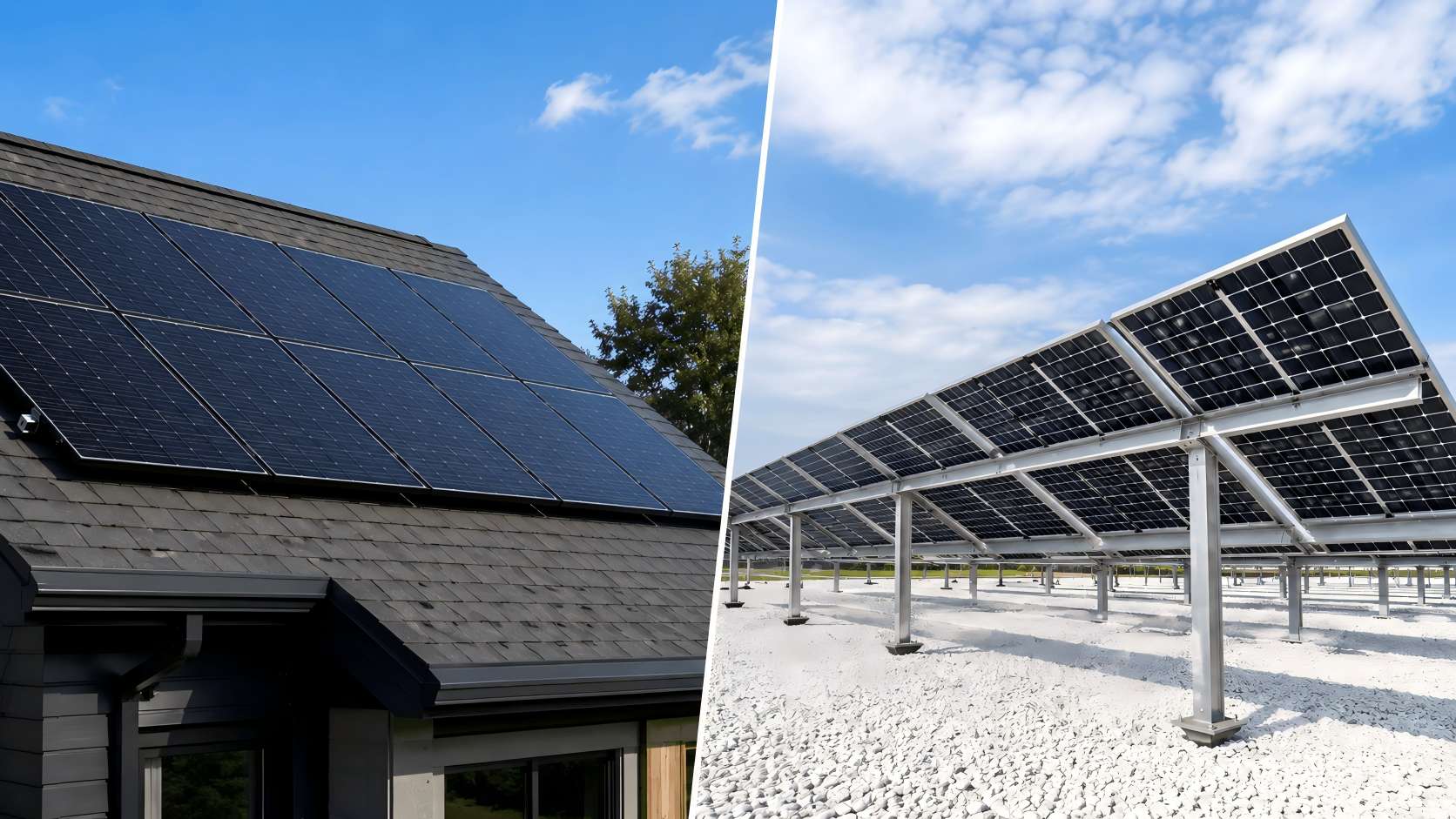
Bifacial solar panels are only better if the back side has something useful to see. If your panels will sit close to a dark rooftop, monocrystalline panels are usually the smarter choice. If they will stand above open, reflective ground, bifacial solar panels may give you more energy from the same sunlight. The difference is not just panel technology. It is how much of the surrounding environment the system can use.
Think of it this way: monocrystalline panels are designed for reliable front-side performance. Bifacial panels are designed to turn the space around the panel into part of the energy system. That makes bifacial technology powerful, but also more dependent on installation design. A better solar panel choice starts with the site, not the spec sheet.
Monocrystalline Solar Panels Offer Stable, Predictable Performance
Monocrystalline panels are made from a single continuous crystal of silicon. That structure gives them high efficiency and consistent output across a wide range of conditions. They offer stable front-side performance on pitched rooftops, compact arrays, and installations where space is limited.
For many residential and commercial rooftop systems, monocrystalline solar panels are the familiar choice. Their performance is well understood, their installation requirements are straightforward, and their output can be projected with reasonable accuracy over the life of the system. That predictability matters when a system has specific energy targets and limited roof space.
Bifacial Solar Panels Need the Right Environment to Win
Bifacial solar panels — sometimes called double-sided solar panels — capture light from both the front and the rear of the panel. The front side works like a standard solar panel, while the rear side collects sunlight that bounces off the ground, roof, or nearby surfaces. Under the right conditions, this can add meaningful energy output compared to a conventional single-sided panel.
Worth noting: many bifacial panels are built on monocrystalline cells. So this is not a choice between two entirely separate technologies. It is a choice about whether the installation environment can make use of rear-side generation. When the conditions are right, bifacial panels extend how much of the available sunlight a system can actually harvest.
The Main Difference Between Monocrystalline and Bifacial Solar Panels Is the Site
The core question is not which panel is technically superior. It is which panel can your site support?
Bifacial panels perform best when installed with adequate clearance above a light-colored or highly reflective surface — white gravel, sand, concrete, or snow-covered ground. Ground-mounted systems, solar carports, and elevated rooftop arrays over light membranes are strong candidates.
Monocrystalline panels often make more sense in flush rooftop installations where rear-side irradiance is minimal, and reliability matters more than theoretical maximum output. If the rear of the panel is sitting close to dark shingles, bifacial technology may add complexity without adding much energy.
The site determines which design actually delivers.
Efficiency on Paper Is Different from Energy in Real Life
Panel efficiency ratings are measured under laboratory conditions. Real-world performance depends on temperature, shading, mounting angle, and — for bifacial panels specifically — the albedo, or reflectivity, of the surface below.
A bifacial panel may perform better than expected on a white gravel ground-mount in a sunny climate. That same panel installed flush on a dark asphalt roof may deliver rear-side gains so small they barely move the numbers. Understanding solar energy technologies means understanding that specifications are starting points, not guarantees.
Monocrystalline solar panels, by contrast, are easier to model accurately. What you calculate is usually closer to what you get. That consistency makes system planning and financial estimates more reliable.
Installation Design Can Make or Break Bifacial Performance
Getting value from bifacial solar panels requires more than buying the right product. It requires designing the system around the panel’s needs, especially in projects involving solar power installation.
Key design factors include:
Tilt angle and mounting height: Higher clearance from the ground allows more diffuse light to reach the rear cells.
Ground surface material: Light-colored, high-reflectivity surfaces can increase rear-side yield. Dark or vegetated ground reduces it.
Row spacing: Closer rows create shading on the rear of the panel and reduce bifacial gain.
System modeling: Forecasting bifacial output requires assumptions about reflectivity, spacing, height, and local sunlight conditions.
This is why bifacial panels should not be judged only by their datasheet rating. A strong bifacial panel in a poor location may underdeliver, while a standard monocrystalline system in a suitable location may produce more predictable results.
Cost Should Be Judged by Usable Output, Not Panel Price
Bifacial panels typically cost more upfront than standard monocrystalline panels. Whether that premium makes financial sense depends on how much rear-side energy the site can actually generate.
On a well-designed ground-mount with high surface reflectivity, bifacial panels may deliver a lower cost per kilowatt-hour over the system’s lifetime — even with a higher purchase price. On a standard rooftop installation, the premium may not pay off.
The right metric is not only dollars per watt of panel capacity. It is the total cost relative to the projected energy output over 20 to 25 years. That calculation only works when site conditions are realistically assessed.
Which Solar Panel Type Is Better for Your Project?
If the site is a pitched rooftop with limited clearance and a dark surface beneath the panels, monocrystalline solar panels are likely the better fit. They are efficient, reliable, and easier to model accurately.
If the site is a ground-mount, an elevated commercial array, or part of a broader hybrid energy system, bifacial solar panels can meaningfully outperform conventional options when there is room for proper spacing and reflected light. The rear-side gains are real — but only when the design supports them.
The best panel is not always the most advanced one on the market. It is the one the site can actually use well. Start with an honest site assessment, compare both options against expected energy output, and let the numbers guide the choice. The right technology follows from the right analysis.
