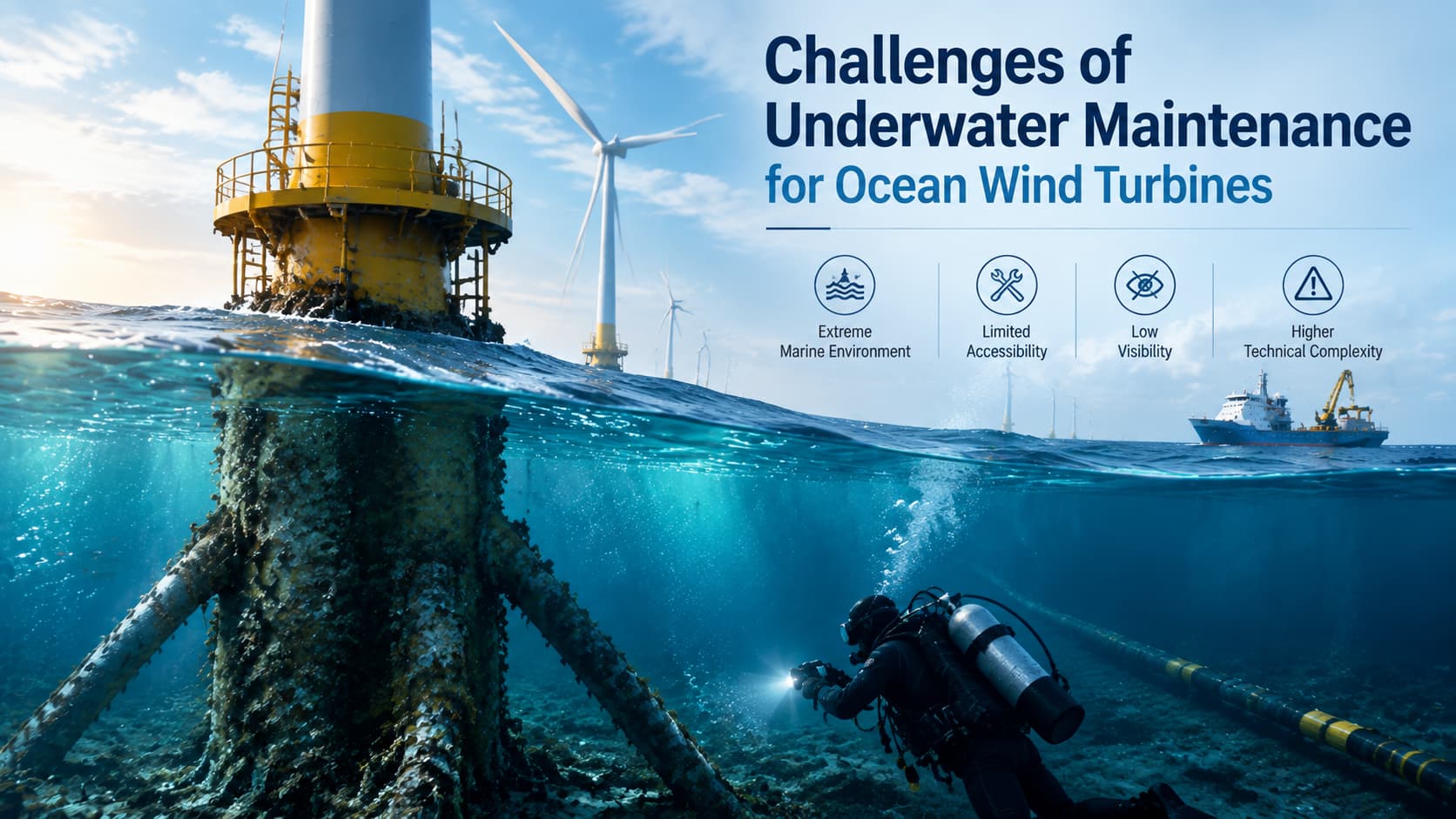
Challenges of Underwater Maintenance for Ocean Wind Turbines
Ocean wind turbines operate in harsh marine environments where underwater components face continuous exposure to seawater, wave loads, and changing ocean conditions. Unlike onshore wind systems, offshore turbines require specialized underwater maintenance to ensure the structural integrity and operational reliability of foundations, subsea cables, and other critical components. Industry studies indicate that offshore maintenance activities represent a significant technical challenge due to limited accessibility and complex marine conditions.
The underwater environment creates unique difficulties for inspection, repair, and preventive maintenance. Factors such as corrosion, biofouling, strong currents, and restricted working conditions can accelerate component degradation and increase service complexity. A comprehensive understanding of these challenges is essential for maintaining the long-term reliability of offshore wind turbines and supporting stable renewable energy generation.
Environmental Challenges Affecting Ocean Wind Turbines
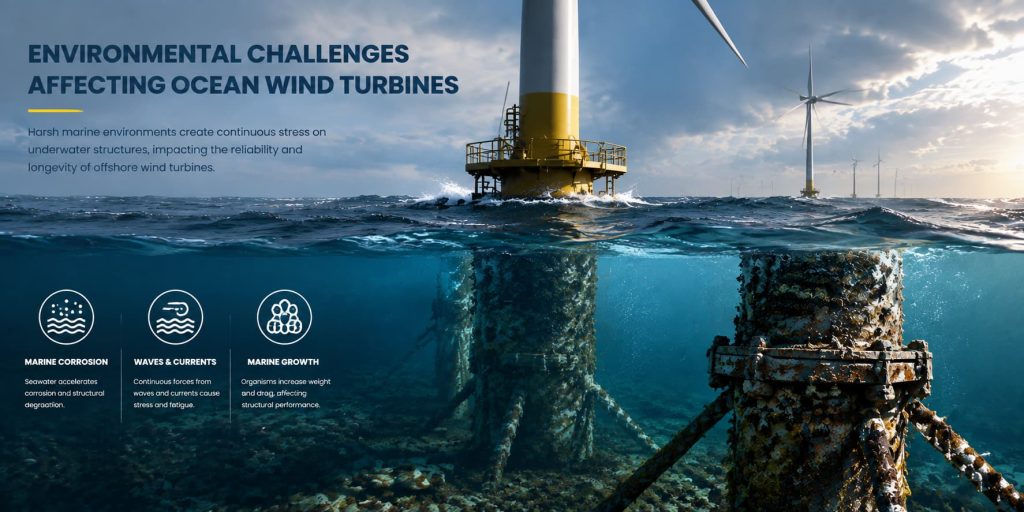
Ocean wind turbines operate in marine environments where extreme conditions continuously affect structural performance. Unlike onshore wind systems, offshore turbines are exposed to seawater, strong currents, wave impacts, and marine organisms throughout their operating life. These environmental factors create significant challenges for underwater components, especially foundations, support structures, and subsea connections.
Marine Corrosion and Structural Degradation
Corrosion is one of the most critical challenges faced by offshore wind turbines in underwater environments. The high salt content and moisture conditions in seawater accelerate electrochemical reactions, gradually reducing the strength and durability of metallic components.
Subsea foundations, connection points, and supporting structures are particularly vulnerable because they remain exposed to marine conditions for extended periods. In addition, differences in oxygen concentration, water temperature, and pressure levels can create uneven corrosion patterns, making structural degradation more difficult to predict.
Impact of Waves, Currents, and Marine Growth
Ocean wind turbines must withstand continuous mechanical loads caused by waves and underwater currents. Long-term exposure to these forces can create stress accumulation in underwater structures and affect their overall stability.
Marine growth is another environmental factor that increases complexity. Organisms attached to underwater surfaces can change structural conditions by adding additional weight and increasing resistance against water flow. These combined effects make the underwater environment highly demanding for offshore wind turbine systems.
Technical Challenges in Offshore Wind Turbine Systems
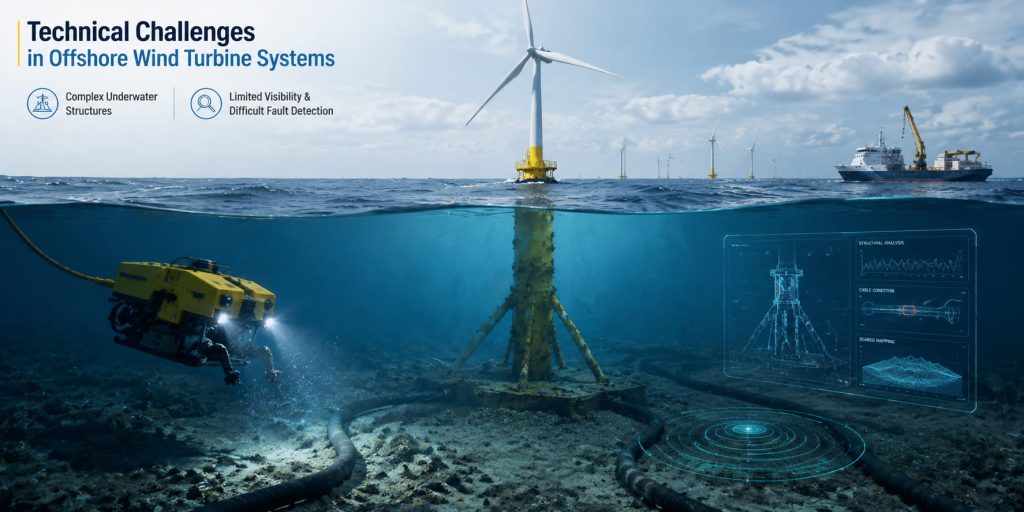
Beyond environmental conditions, the complex structure of offshore wind turbines creates additional technical challenges. Many critical components are located below the water surface, where accessibility is limited and direct observation is difficult. As a result, identifying structural conditions and potential risks becomes more complicated compared with land-based wind systems.
Complexity of Underwater Structures in Ocean Wind Turbines
Offshore wind turbines rely on multiple underwater components, including foundations, anchoring systems, and subsea cables. Each component plays an essential role in maintaining system stability, but their underwater location makes them difficult to access and evaluate.
Subsea cables, in particular, face challenges from mechanical stress, seabed movement, and external impacts. Any damage to these components may affect power transmission reliability and require complex technical assessments to determine the source and extent of the issue.
Limited Visibility and Difficult Fault Detection
Another major challenge for ocean wind turbines is the difficulty of detecting underwater problems early. Limited visibility, changing marine conditions, and the depth of offshore installations make conventional inspection approaches less effective.
Small defects in underwater structures may remain unnoticed until they develop into larger issues. In addition, distinguishing between normal environmental changes and potential equipment problems requires advanced analysis methods and accurate condition data.
Improving Ocean Wind Turbines Maintenance Reliability Through Advanced Strategies
Although underwater maintenance presents considerable challenges, advanced engineering approaches can improve the reliability and efficiency of ocean wind turbines. Preventive strategies, intelligent monitoring systems, and enhanced material protection technologies provide effective methods for managing underwater component performance.
Condition Monitoring and Preventive Maintenance
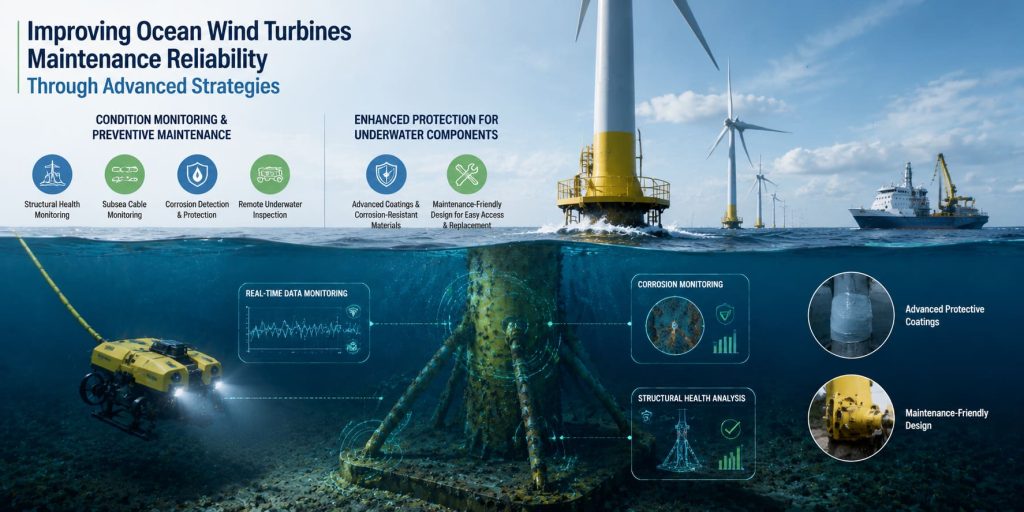
Condition monitoring enables maintenance teams to identify potential issues before they develop into severe failures. By collecting real-time operational data, engineers can evaluate component conditions and determine appropriate maintenance actions.
Common monitoring approaches include:
- Structural health monitoring for offshore wind foundations
- Subsea cable condition monitoring
- Corrosion detection and protection systems
- Remote underwater inspection technologies using remotely operated vehicles (ROVs)
ROV-based inspection provides a reliable method for examining underwater components that are difficult to access, such as foundations, subsea structures, and cable protection systems. Equipped with cameras and sensors, ROVs can capture underwater conditions and help engineers detect corrosion, cracks, marine growth, and other potential defects without requiring extensive diving operations.
These monitoring methods improve maintenance planning by providing accurate information about equipment conditions. As a result, service activities can be arranged more efficiently while reducing unnecessary inspections, operational risks, and emergency repairs.
Enhanced Protection for Underwater Components
Improving the durability of underwater components is another effective approach to increasing maintenance reliability. Advanced protective coatings, corrosion-resistant materials, and optimized structural designs help reduce environmental damage caused by long-term seawater exposure.
In addition, maintenance-friendly designs can simplify inspection and repair procedures. Components that allow easier access, monitoring, and replacement can improve the overall serviceability of offshore wind turbines and support more reliable offshore wind operations. Combined with ROV inspection technologies, these design improvements enable more efficient underwater maintenance and extend the operational lifespan of offshore wind assets.
Maintaining the Reliability of Ocean Wind Turbines Through Effective Underwater Service
Underwater maintenance is critical to ensuring the safe and stable operation of ocean wind turbines. Challenges such as marine corrosion, limited accessibility, complex inspections, and demanding repair procedures require specialized technologies and professional engineering solutions.
Through effective condition monitoring, preventive maintenance practices, and durable underwater protection measures, offshore wind systems can achieve improved operational reliability. A well-planned maintenance strategy provides essential support for protecting critical components and ensuring consistent offshore wind turbine performance in challenging marine environments.
