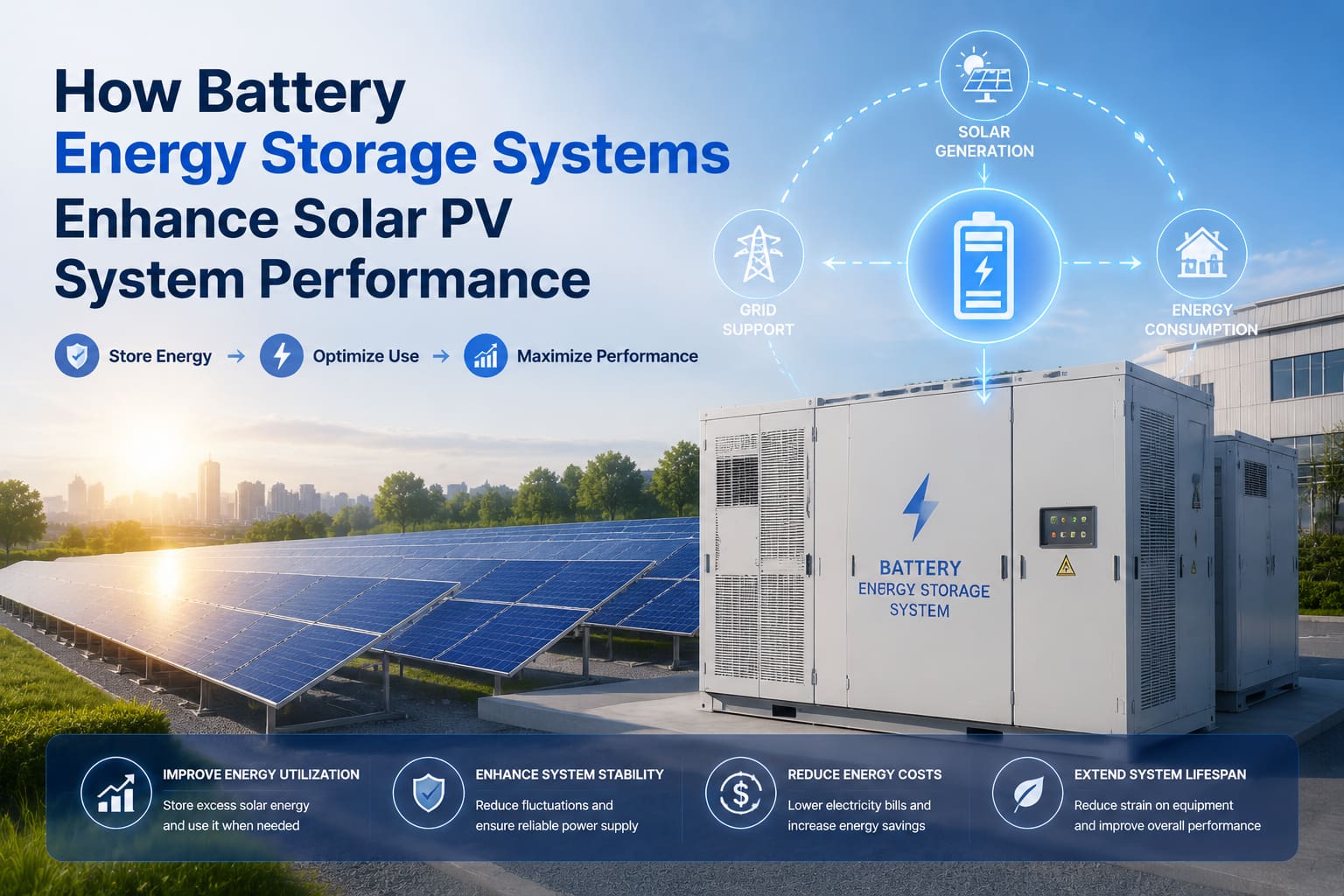
How Battery Energy Storage Systems Enhance Solar PV System Performance
A battery energy storage system improves solar PV system performance by storing excess solar energy, balancing power supply and demand, and optimizing energy usage. Instead of relying only on real-time solar generation, a photovoltaic system with battery storage can deliver more stable, efficient, and reliable power under different operating conditions.
Solar energy production naturally changes with sunlight availability and weather conditions, which can affect system output. By capturing unused solar electricity and releasing it when needed, battery energy storage helps increase renewable energy utilization, reduce energy waste, and improve overall system operation.
Maximizing solar PV system Energy Utilization With Battery Storage
One of the main challenges of a solar PV system is the mismatch between solar generation and electricity demand. Solar panels often produce excess power during peak sunlight hours, while energy consumption may increase during periods with limited solar availability.
Battery energy storage systems solve this challenge by storing surplus electricity and supplying it when needed. This improves renewable energy utilization and allows the photovoltaic system to deliver more consistent energy throughout the day.
Reducing Solar Energy Waste Through Intelligent Storage Management
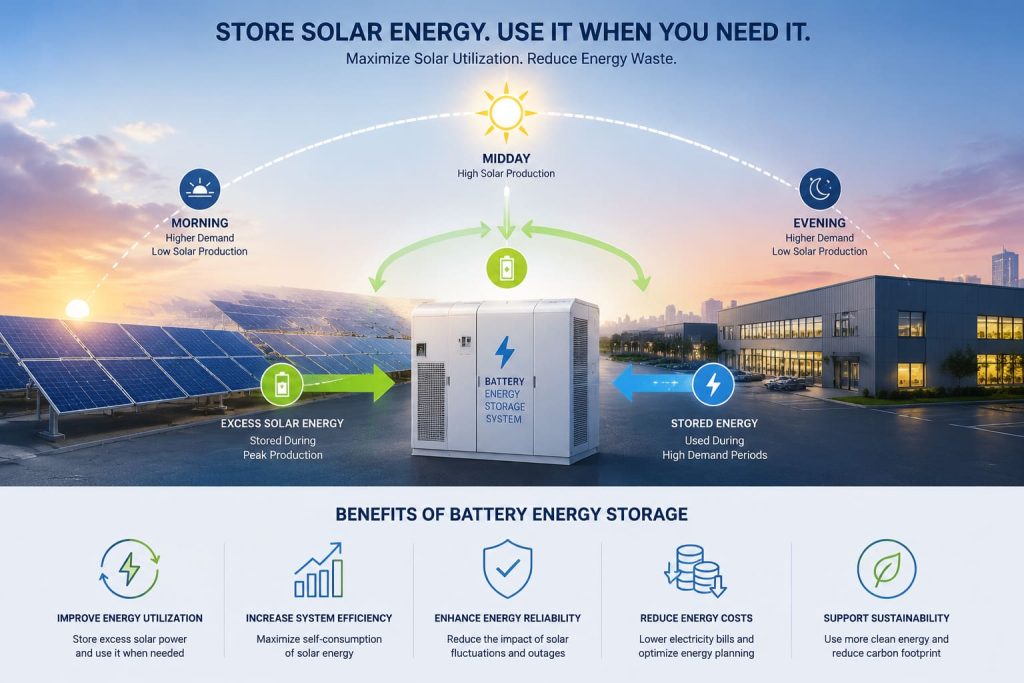
Battery energy storage systems reduce solar energy waste by capturing, storing, and releasing energy in a controlled way. When a photovoltaic system produces more electricity than the current demand, the energy storage system automatically directs the surplus power to the battery instead of allowing it to remain unused.
During periods when solar generation decreases, the stored electricity is released based on energy demand and system conditions. This process allows solar power generated during peak sunlight hours to be used later, creating a better match between electricity production and consumption.
The charging and discharging process is controlled by the battery management system (BMS) and energy management system (EMS). These systems monitor solar output, battery status, and electricity demand in real time. Based on collected data, they adjust charging speed, storage capacity, and power release timing to maintain efficient operation.
For example, when a photovoltaic system produces excess electricity at noon, the EMS can prioritize battery charging. When electricity demand increases in the evening, the system can discharge stored energy to supply the load. Through this coordinated process, the solar PV system can use more generated electricity instead of losing potential energy.
Battery storage also manages fluctuations caused by changing weather conditions. When solar output suddenly decreases due to cloud coverage, stored energy can be released to maintain a more balanced power supply.
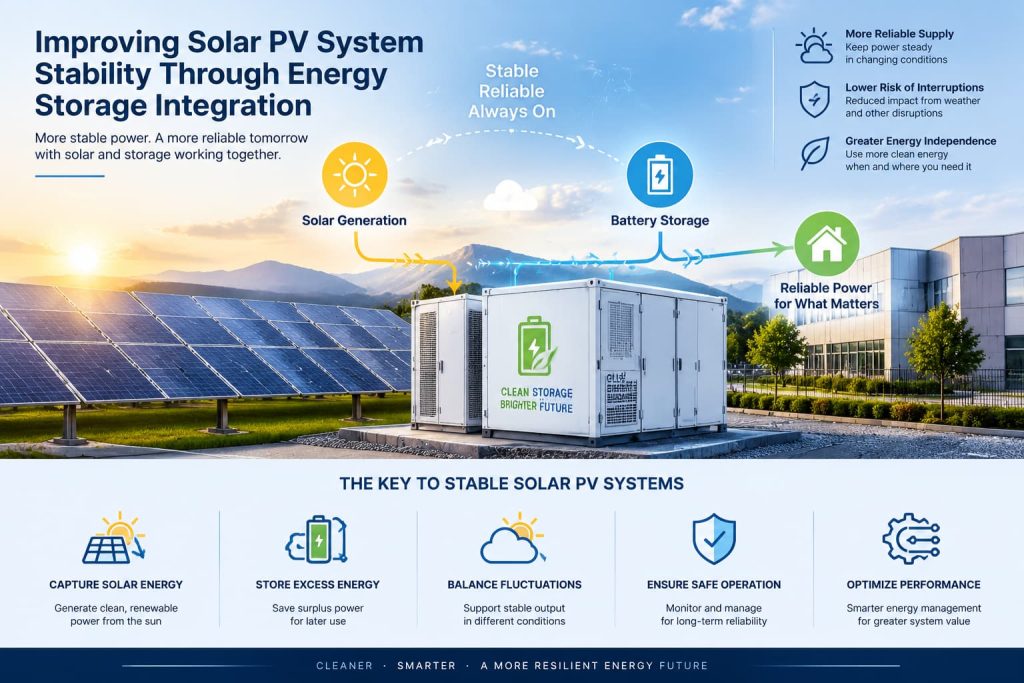
Improving solar PV system Stability Through Energy Storage Integration
Solar generation is naturally variable because photovoltaic output depends on sunlight availability. For applications that require a continuous power supply, this fluctuation can create challenges for system reliability.
Battery energy storage improves system stability by providing flexible power support when solar production is insufficient. It allows a solar PV system to maintain energy availability during cloudy weather, nighttime operation, or temporary power interruptions.
Supporting Reliable Operation Through Battery Management
Battery energy storage systems maintain stable operation through continuous monitoring, intelligent control, and coordinated energy management. The battery management system (BMS) monitors key operating parameters, including voltage, temperature, current, and charging status.
During daily operation, the BMS evaluates battery conditions and controls charging and discharging processes according to safety requirements. If the battery approaches unsuitable operating conditions, the system can adjust power flow or limit certain operations to protect battery performance.
Energy management systems (EMS) coordinate the interaction between the photovoltaic system, battery storage, and electricity loads. The EMS collects real-time data from different components and determines when energy should be stored, released, or supplied directly to the load.
For example, during periods of high solar production, the EMS directs excess electricity to the battery. When solar output is insufficient, it releases stored energy to maintain power availability. This continuous adjustment helps the photovoltaic system respond to changing energy conditions.
Through the combination of BMS monitoring and EMS control, battery energy storage systems can maintain stable power output and support reliable operation in different application scenarios.
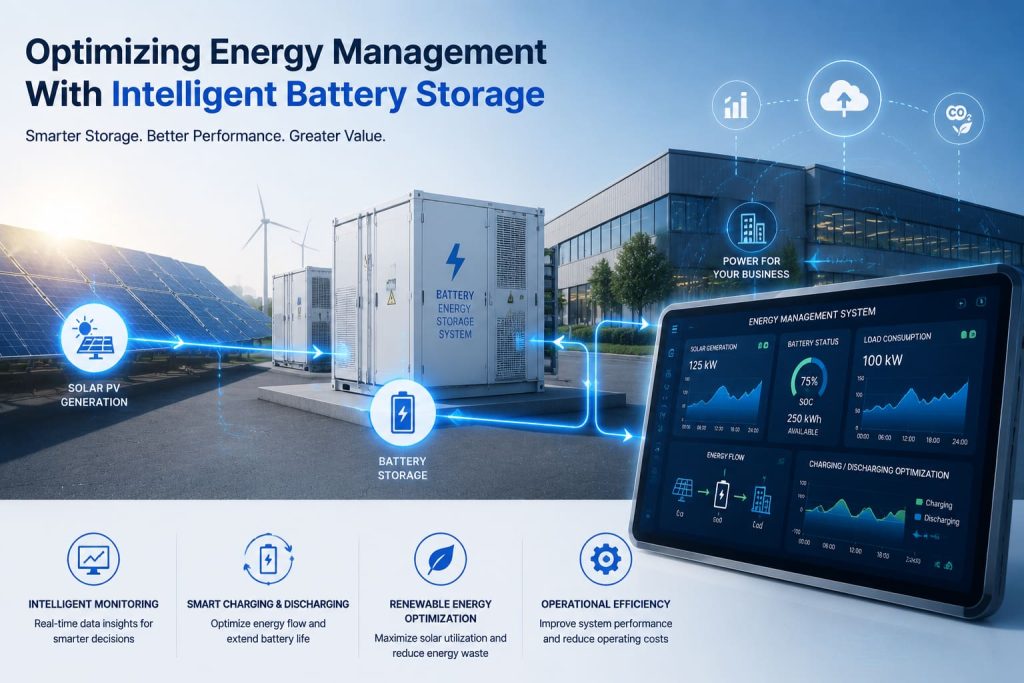
Optimizing Energy Management With Intelligent Battery Storage
Modern battery energy storage systems do more than store electricity. They also provide intelligent energy management for better solar PV system operation. Effective energy management helps users control when electricity is stored, distributed, and consumed based on demand and system conditions.
Through intelligent monitoring platforms, users can evaluate solar production, energy consumption trends, and battery performance. This information helps optimize system settings and ensures that stored electricity is used efficiently.
A well-designed energy storage solution can improve:
- Renewable energy utilization by increasing the use of generated solar power
- System flexibility by adapting to different energy demand patterns
- Operational efficiency by optimizing charging and discharging strategies
Intelligent battery storage also helps reduce stress on electrical components. By smoothing variations in solar output, energy storage supports more stable operation of inverters and other system equipment. This contributes to improved durability and more reliable long-term performance.
When selecting a battery energy storage system, factors such as storage capacity, compatibility, safety design, lifecycle performance, and maintenance requirements should be carefully evaluated. The storage solution should match the specific requirements of the photovoltaic system to achieve optimal results.
Building More Efficient Solar PV System Solutions With Battery Storage
Battery energy storage plays an increasingly important role in improving solar PV system performance. By storing excess solar energy, balancing power supply, and optimizing energy management, battery storage helps photovoltaic systems achieve higher efficiency and more stable operation.
Through effective energy storage integration, solar PV systems can overcome common challenges such as inconsistent solar output and mismatched energy demand. Battery storage improves renewable energy utilization, supports reliable power supply, and enables more flexible control over electricity usage.
A properly designed battery energy storage system allows photovoltaic systems to operate more efficiently under different application conditions. By combining solar generation with intelligent storage management, users can achieve better energy performance, improved system stability, and more reliable renewable power solutions.
