
What Factors Can Affect Wind Power Equipment Installation Accuracy?
The accuracy of wind power equipment installation directly affects wind turbine performance, operational safety, and service life. A wind turbine is composed of large and complex components, including towers, nacelles, blades, and electrical systems, all of which require precise positioning and proper assembly. Even small installation deviations can influence structural balance, increase mechanical stress, and create additional maintenance challenges during operation.
Several factors can affect the accuracy of wind power equipment erection, including site conditions, installation methods, environmental conditions, and engineering management. Understanding these factors allows project owners and engineers to evaluate installation risks better and ensure that wind energy systems achieve reliable performance after commissioning.
Factors That Influence Wind Power Equipment Installation Accuracy
Wind power equipment installation is a multi-stage process that includes foundation preparation, component lifting, structural alignment, electrical connection, and final inspection. Each stage requires precise control because errors introduced at one step may affect subsequent installation procedures.
The main factors influencing installation accuracy include:
- Foundation quality and site conditions
- Component positioning and installation methods
- Measurement technology and quality control procedures
- Weather conditions and engineering experience
These factors are closely connected throughout the installation process. For example, poor foundation preparation may affect tower alignment, while inaccurate component positioning may increase vibration after the turbine starts operating. Therefore, installation accuracy depends on controlling every stage rather than focusing on only one part of the project.
How Site Conditions Affect Wind Power Equipment Installation Accuracy
The construction environment provides the basis for the entire wind turbine installation process. Before equipment assembly begins, engineers must consider whether the site conditions can support accurate and stable installation.
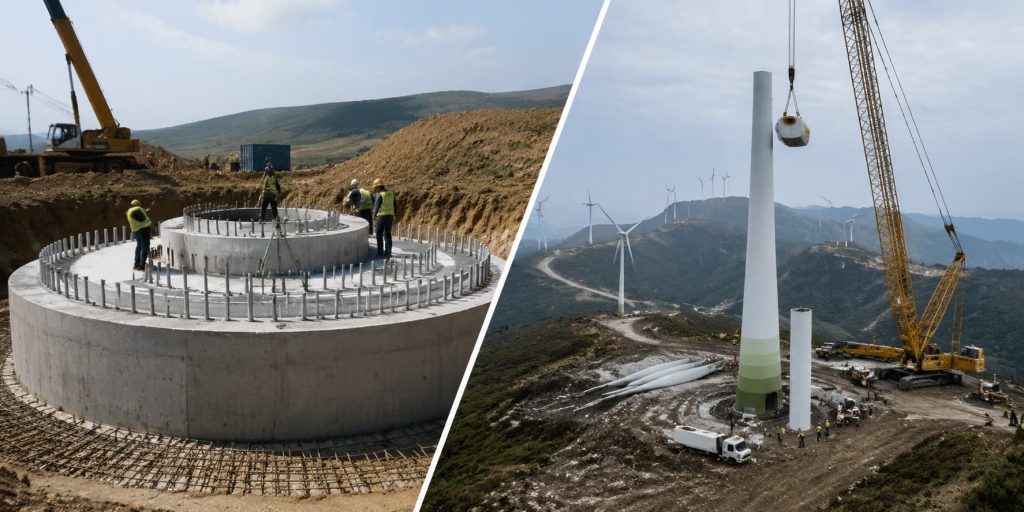
Foundation Accuracy and Structural Stability
The foundation is a critical factor affecting wind power equipment installation accuracy because it supports the weight and operating loads of the entire wind turbine structure. Any deviation in foundation construction may influence the alignment of upper components.
For example, incorrect anchor bolt positioning can make tower section connections more difficult and create alignment deviations during assembly. Uneven foundation surfaces may also affect tower verticality, resulting in additional stress on mechanical connections.
In addition, insufficient foundation quality may reduce structural stability during long-term operation. Since wind turbines experience continuous loads from wind forces and rotation, installation accuracy at the foundation stage plays an important role in maintaining overall equipment reliability.
Terrain and Installation Site Conditions
The surrounding environment can also influence the accuracy of wind power equipment erection. Many wind farms are constructed in remote or challenging locations where terrain conditions vary significantly.
Uneven landscapes, limited construction space, and transportation difficulties may affect the movement and positioning of large turbine components. Tower sections, nacelles, and blades require sufficient space for lifting and assembly, and unsuitable site conditions can increase the possibility of positioning errors.
Therefore, site characteristics are an important consideration because they determine the difficulty of installation activities and the level of precision required during construction.
How Installation Techniques Affect Wind Turbine Alignment Accuracy
Apart from site conditions, installation techniques and engineering management directly affect the accuracy of wind turbine assembly. Because wind power equipment includes large and heavy components, proper installation methods are necessary to maintain alignment and structural performance.
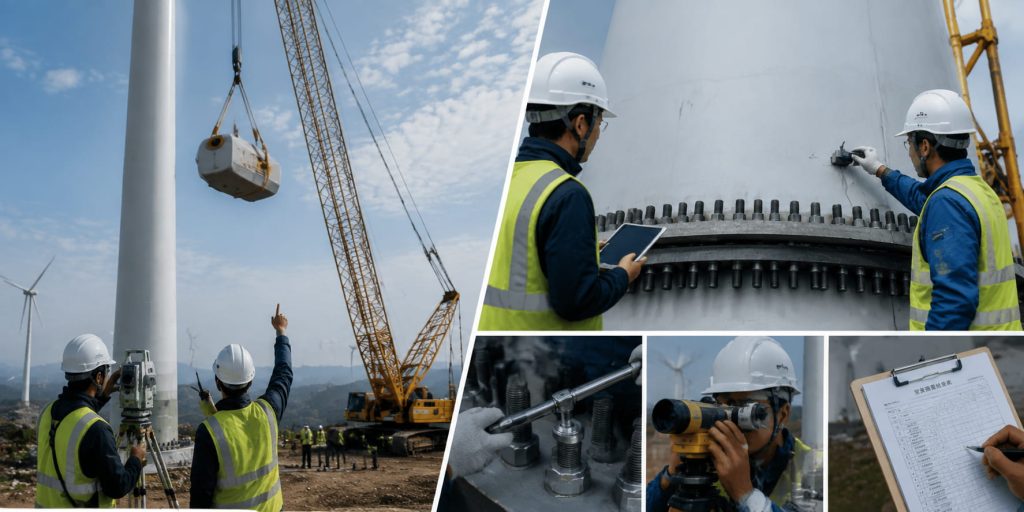
Positioning and Alignment Technology for Wind Power Equipment Installation
Accurate positioning is one of the most important requirements in wind power equipment installation. Large components must be correctly aligned to ensure proper connection and stable operation.
During installation, positioning errors in tower sections, nacelles, or blades may affect the turbine system’s balance. Misalignment can increase vibration, reduce mechanical efficiency, and place additional stress on key components.
Measurement technologies and monitoring systems are commonly used during installation to check component positions and identify deviations. These tools provide engineers with accurate data and help maintain consistency throughout the assembly process.
Installation Procedures and Quality Inspection
Standardized installation procedures also influence the final accuracy of wind power equipment erection. Without proper control, differences in installation methods can lead to inconsistent results between different turbine units.
For example, incorrect fastening procedures, insufficient inspection, or inaccurate component connections may create hidden issues that affect turbine performance after operation begins.
Quality inspection throughout the installation process is essential because it allows engineers to verify whether each stage meets technical requirements. Detailed inspection records also provide valuable information for future maintenance and troubleshooting.
How Weather Conditions and Human Expertise Influence Wind Power Equipment Installation Quality
Although equipment technology and installation procedures are important, external conditions and personnel experience also significantly affect installation accuracy. Wind turbines are usually installed in open outdoor environments, making the process more sensitive to changing conditions.
Weather and Construction Conditions
Weather conditions can create challenges during wind power equipment installation, especially during lifting and component alignment operations.
Strong winds may cause large components to move during installation, making precise positioning more difficult. Rain, extreme temperatures, and poor visibility can also affect construction efficiency and increase the possibility of installation errors.
Because wind turbine components are large and require accurate placement, unfavorable weather conditions can directly influence installation quality and safety.
Engineer Experience and Team Coordination
The skills and experience of installation personnel are another important factor affecting the accuracy of wind power equipment erection. Wind turbine installation involves complex procedures that require technical knowledge and careful execution.
Experienced engineers can better identify potential problems, adjust installation methods, and manage unexpected site conditions. In contrast, insufficient training or poor communication between teams may lead to mistakes during assembly and inspection.
Effective coordination between manufacturers, contractors, and project managers helps ensure that technical requirements are correctly understood and followed throughout the installation process.
Effective Measures for Maintaining Wind Turbine Installation Accuracy
Improving wind power equipment installation accuracy requires a combination of careful planning, advanced measurement methods, and strict quality management. By controlling potential risks before and during installation, engineers can reduce errors and improve overall project reliability.
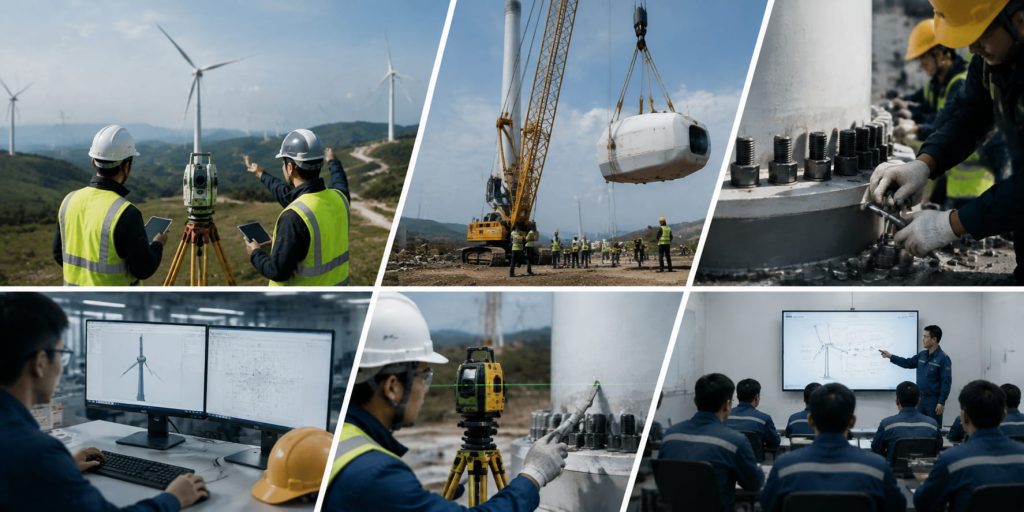
Conduct Detailed Site Assessment Before Wind Power Equipment Installation
A comprehensive site evaluation is the first step toward improving installation accuracy. Engineers should review foundation conditions, terrain characteristics, transportation routes, and construction limitations before installation begins.
Proper site assessment helps identify potential challenges in advance and allows teams to select suitable installation methods. It also reduces unexpected adjustments during construction, helping maintain consistent installation quality.
Use Precise Measurement Tools and Standardized Installation Procedures
Accurate measurement and standardized procedures are essential for controlling installation deviations. Advanced positioning technologies can help engineers verify component alignment and ensure that each part is installed according to design specifications.
In addition, clear installation procedures provide consistent guidance for lifting, assembly, fastening, and inspection activities. Combining precise measurement with standardized workflows improves the reliability of the entire wind power equipment erection process.
Strengthen Quality Control and Technical Training
Continuous quality control helps maintain accuracy throughout every installation stage. Regular inspections, documentation, and performance checks allow engineers to identify problems before they affect turbine operation.
Meanwhile, professional training improves the technical ability of installation teams. Skilled personnel can better manage complex installation tasks, respond to challenges, and maintain high standards during construction.
Ensuring Reliable Wind Power Equipment Installation Accuracy
Multiple factors, including foundation conditions, installation technology, environmental conditions, and human expertise, influence the accuracy of wind power equipment installation. Each factor can affect the final performance and reliability of wind turbine systems.
By understanding these influences and applying effective control measures, engineers can improve installation quality and reduce operational risks. A precise and well-managed wind power equipment installation process provides a strong foundation for safe operation, efficient energy production, and long-term equipment reliability.
