
Wind Turbine Selection and Design Service for Optimized Wind Energy Projects
Selecting the right wind turbine selection and design service requires more than comparing rated power or equipment prices. Turbine performance depends on local wind conditions, installation environment, and energy requirements. A professional evaluation of factors such as wind speed, site conditions, and power demand helps identify the most suitable turbine configuration for efficient and reliable operation.
At Energylz, we provide wind turbine selection and design services to help customers develop optimized wind energy solutions. By combining renewable energy manufacturing experience with engineering analysis, we support turbine comparison, performance evaluation, layout optimization, and system design to improve energy output and long-term project performance.
Wind Turbine Selection Based on Wind Conditions and Performance Requirements
Choosing a suitable wind turbine is not merely a matter of comparing rated power or prices. Since turbine performance varies greatly under different wind characteristics, installation environments, and power demands, proper selection must comprehensively assess local wind resources and match turbine parameters to site conditions to secure high efficiency, stable operation, and favorable long-term output.

Wind Resource Assessment for Accurate Turbine Selection
Wind resource assessment is the first step in wind turbine selection. Engineers analyze important factors, including:
- Average wind speed
- Wind direction and seasonal changes
- Turbulence conditions
- Installation height and site environment
These factors help determine the most suitable turbine type and configuration. For example, low wind speed areas often require turbines with larger rotor diameters and lower cut-in wind speeds to capture more available energy. In areas with stronger wind resources, turbines with higher output capacity may provide better performance.
Accurate wind analysis helps avoid unsuitable turbine choices that may result in low energy production or higher operating costs.
Wind Turbine Capacity Selection and Performance Matching
After evaluating wind conditions, the next step is selecting the appropriate turbine capacity and technical parameters. Key factors include:
- Rated power: Ensures the turbine output matches the project’s energy demand.
- Rotor diameter: Determines the amount of wind energy captured by the turbine.
- Cut-in wind speed: Affects power generation performance in different wind conditions.
- Generator configuration: Influences efficiency and long-term reliability.
A suitable wind turbine selection solution should balance energy output, equipment reliability, and project cost. By considering both environmental conditions and technical performance, customers can choose a turbine that delivers consistent power generation and better overall value.
Wind Turbine Design Optimization for Maximum Energy Output
Selecting a suitable turbine model is an important step in a wind energy project, but the final energy output also depends on how the turbine is designed, positioned, and optimized. Wind turbine design optimization focuses on improving energy production by analyzing site conditions, airflow characteristics, turbine arrangement, and operational factors. Through professional design evaluation, the system can better utilize wind resources, reduce energy losses, and improve long-term performance.
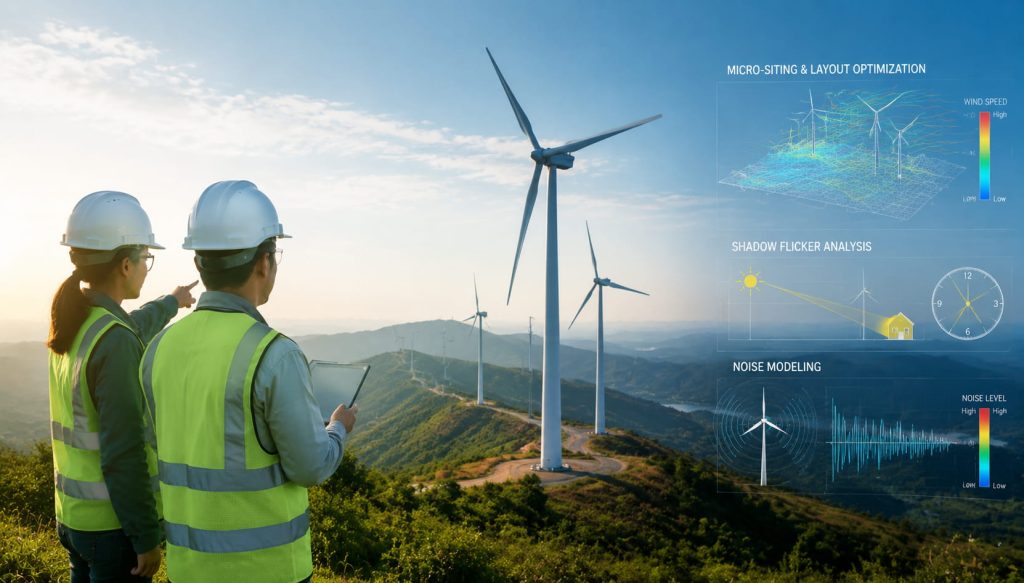
Micro-Siting Analysis and Turbine Layout Optimization
Proper turbine placement and layout design play an important role in maximizing annual energy production. Even a high-performance turbine may not achieve expected results if it is installed in an unsuitable location or affected by surrounding airflow conditions.
The position of each turbine can influence wind flow and overall system efficiency. Poor placement may create wake effects, where one turbine reduces the available wind energy for another turbine positioned behind it. This effect is especially significant in larger wind projects where multiple turbines operate within the same area.
During the micro-siting and layout optimization process, engineers evaluate key factors, including:
- Terrain characteristics
- Wind flow patterns
- Turbine spacing
- Wake effects
- Surrounding obstacles
By analyzing these conditions, the optimal turbine arrangement can be determined to improve wind utilization and reduce unnecessary energy losses. For commercial and large-scale wind projects, effective micro-siting optimization can significantly improve annual energy production and enhance long-term project value.
Turbine Design Considering Environmental and Operational Factors
A reliable wind energy system needs to balance energy output with environmental compatibility and operational stability. In addition to turbine performance, factors such as noise impact and shadow flicker should also be considered during the design stage.
Shadow Flicker Analysis
Shadow flicker occurs when rotating turbine blades create moving shadows under certain sunlight conditions. While it is a normal effect of wind turbine operation, excessive shadow flicker may affect nearby buildings or local communities.
Through shadow flicker modeling, potential impacts can be evaluated before installation. This analysis helps optimize turbine locations and supports better project planning while reducing environmental concerns.
Noise Modeling
Noise performance is another important consideration, especially for wind turbines installed near residential areas or sensitive locations. Mechanical components and airflow interaction with the blades mainly generate turbine noise.
Noise modeling allows engineers to predict sound levels under different operating conditions and identify suitable installation strategies. By considering both energy production and environmental factors, wind turbine design optimization helps create renewable energy projects that are efficient, reliable, and compatible with surrounding environments.
Customized Wind Turbine Solutions
Every renewable energy project has different objectives, so turbine solutions should be customized to specific application requirements. Energylz provides flexible wind turbine selection and design solutions for various scenarios.
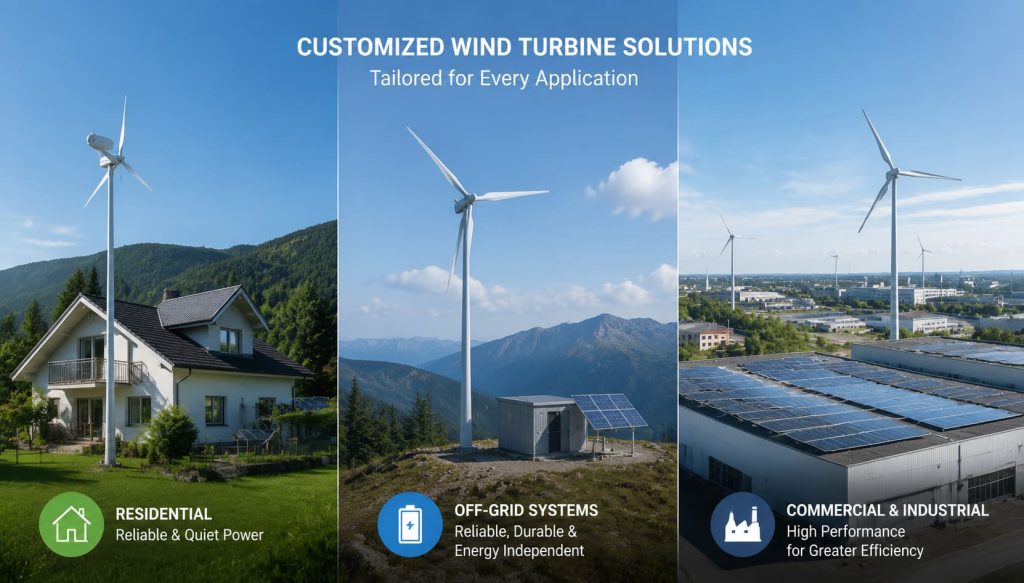
Residential Wind Energy Applications
Residential customers often require compact, reliable solutions that provide stable electricity while maintaining low operating noise. Through proper turbine selection, Energylz helps homeowners choose systems that match local wind conditions and household energy consumption.
Off-Grid Wind Power Systems
Remote areas often face challenges such as limited grid access and difficult maintenance conditions. For off-grid applications, turbine selection focuses on reliability, durability, and compatibility with energy storage systems.
Energylz considers:
- Battery integration requirements
- Energy independence goals
- Long-term maintenance needs
to create practical renewable energy solutions.
Commercial and Industrial Renewable Energy Projects
Commercial projects usually require higher energy output and stronger system performance. Energylz evaluates project scale, electricity demand, and operating conditions to recommend suitable turbine configurations.
Whether for small-scale applications or larger renewable energy projects, our engineering team focuses on delivering solutions that improve efficiency and long-term value.
Making Better Wind Energy Decisions Through Technical Expertise
Choosing the right wind turbine requires careful evaluation of wind resources, technical performance, site conditions, and operational requirements. A well-planned selection and design approach can help improve energy output, reduce potential risks, and create greater value throughout the project lifecycle.
Through professional wind turbine selection and design services, Energylz supports customers in evaluating turbine options, optimizing system configuration, and developing solutions that fit their specific project conditions. By combining engineering analysis with renewable energy manufacturing experience, we help customers make informed decisions and build more efficient wind energy projects.
