Floating Offshore Wind vs Fixed Offshore Wind: Which Is Better?
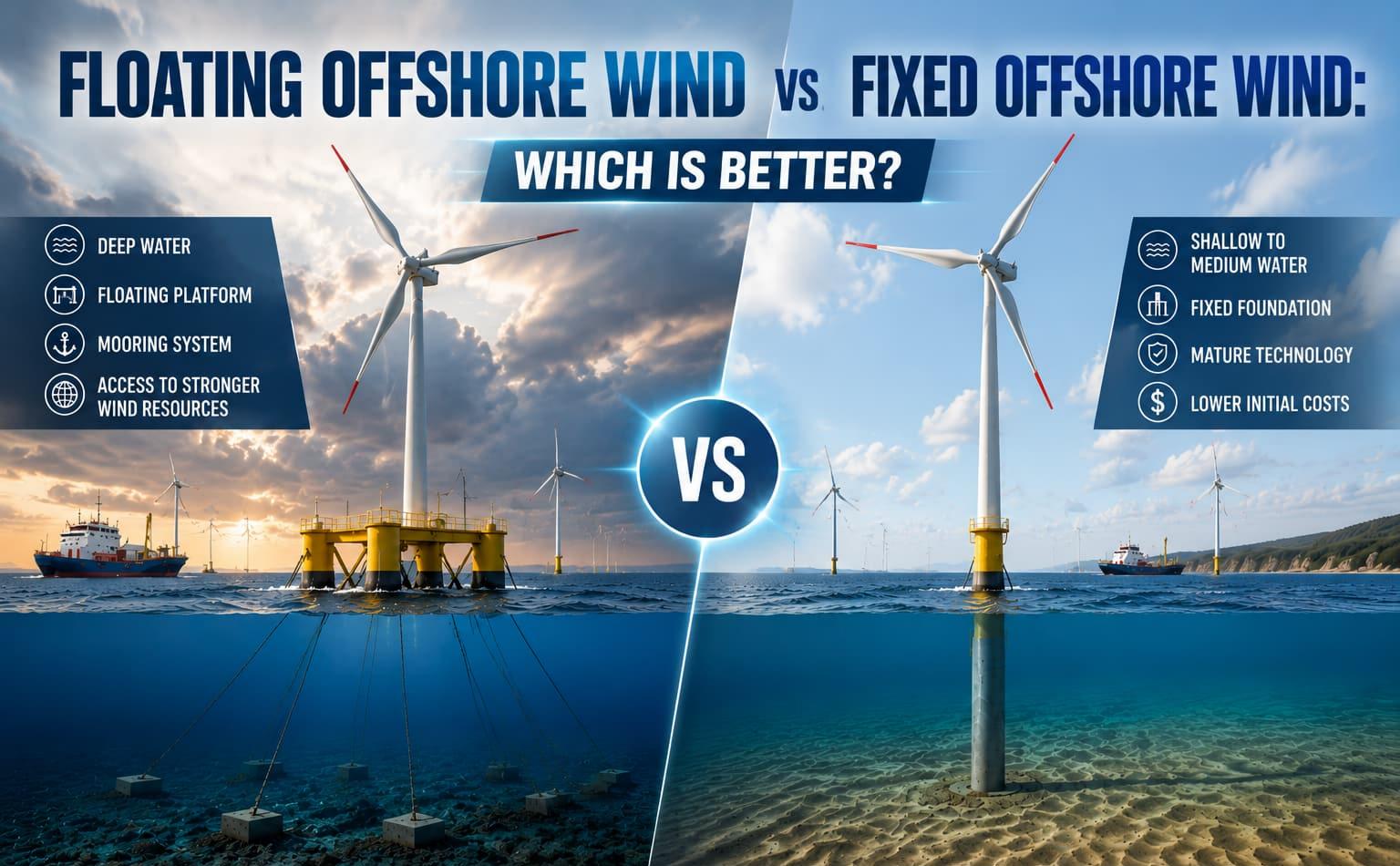
Floating offshore wind and fixed offshore wind are two major approaches for generating renewable electricity from ocean wind resources. The first uses turbines installed on floating platforms, while the second relies on foundations fixed directly to the seabed.
Neither technology is always better than the other. The right choice depends on project conditions, including water depth, installation requirements, investment budget, and long-term energy goals.
What Is Floating Offshore Wind?
Floating Offshore Wind is an advanced offshore wind technology that allows wind turbines to operate in deeper waters where traditional fixed foundations are difficult to install.
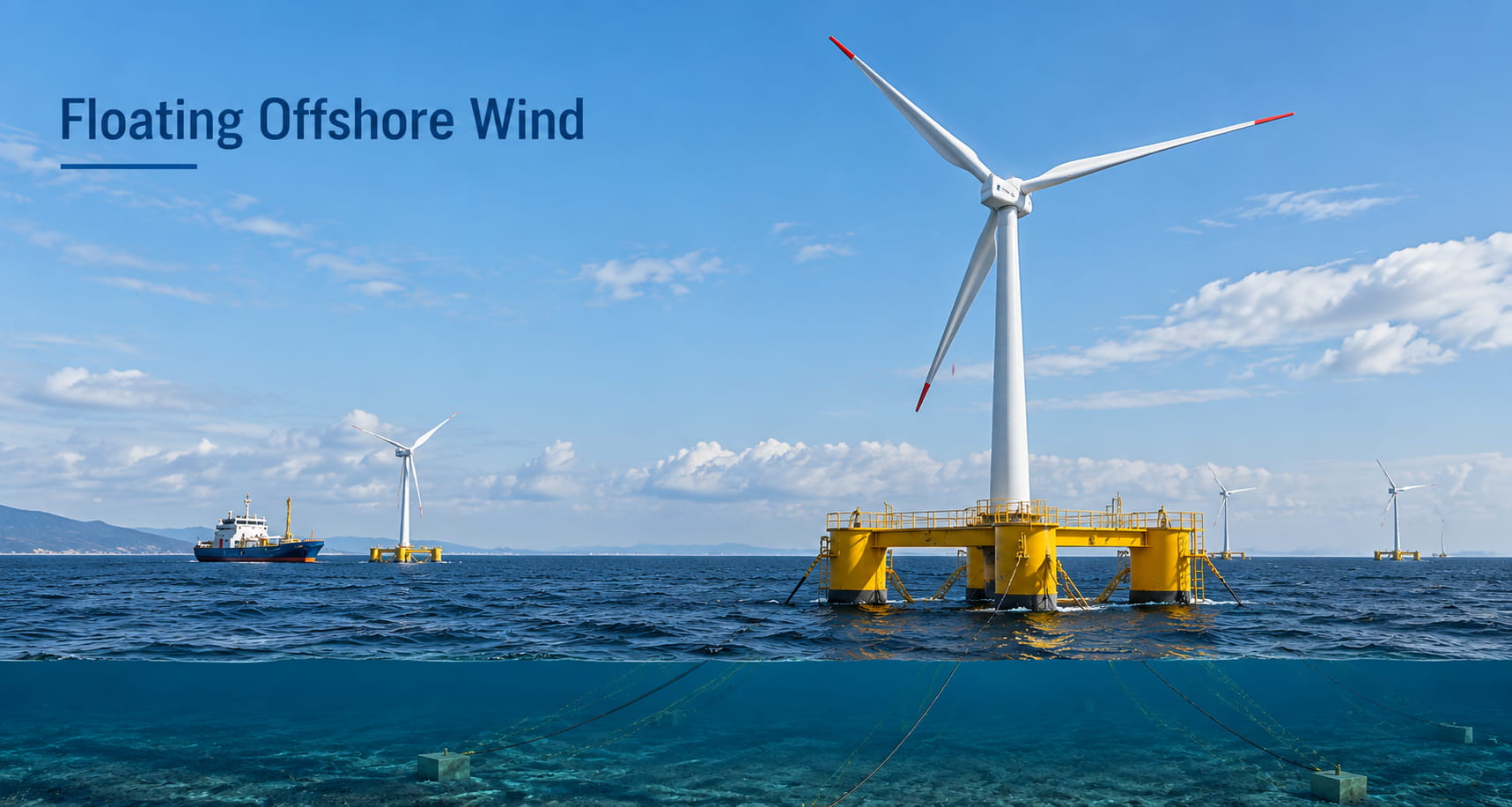
Unlike fixed offshore wind turbines that stand directly on the seabed, floating offshore wind turbines are mounted on floating platforms. These platforms remain in position through mooring systems connected to seabed anchors. This design allows wind farms to be developed farther from the coastline and in areas with stronger and more stable wind resources.
One of the biggest advantages of floating offshore wind is its ability to access deep-water locations. Many offshore areas have excellent wind conditions but cannot support traditional fixed foundations because the water is too deep. Floating technology helps unlock these areas and creates new opportunities for large-scale renewable energy development.
Another benefit of floating offshore wind is flexibility. Floating platforms can be manufactured and assembled onshore before being transported to the installation site. This can reduce some offshore construction challenges and make future large-scale deployment easier.
What Is Fixed Offshore Wind?
Floating offshore wind is often compared with fixed offshore wind because the latter is currently the more established offshore wind solution.
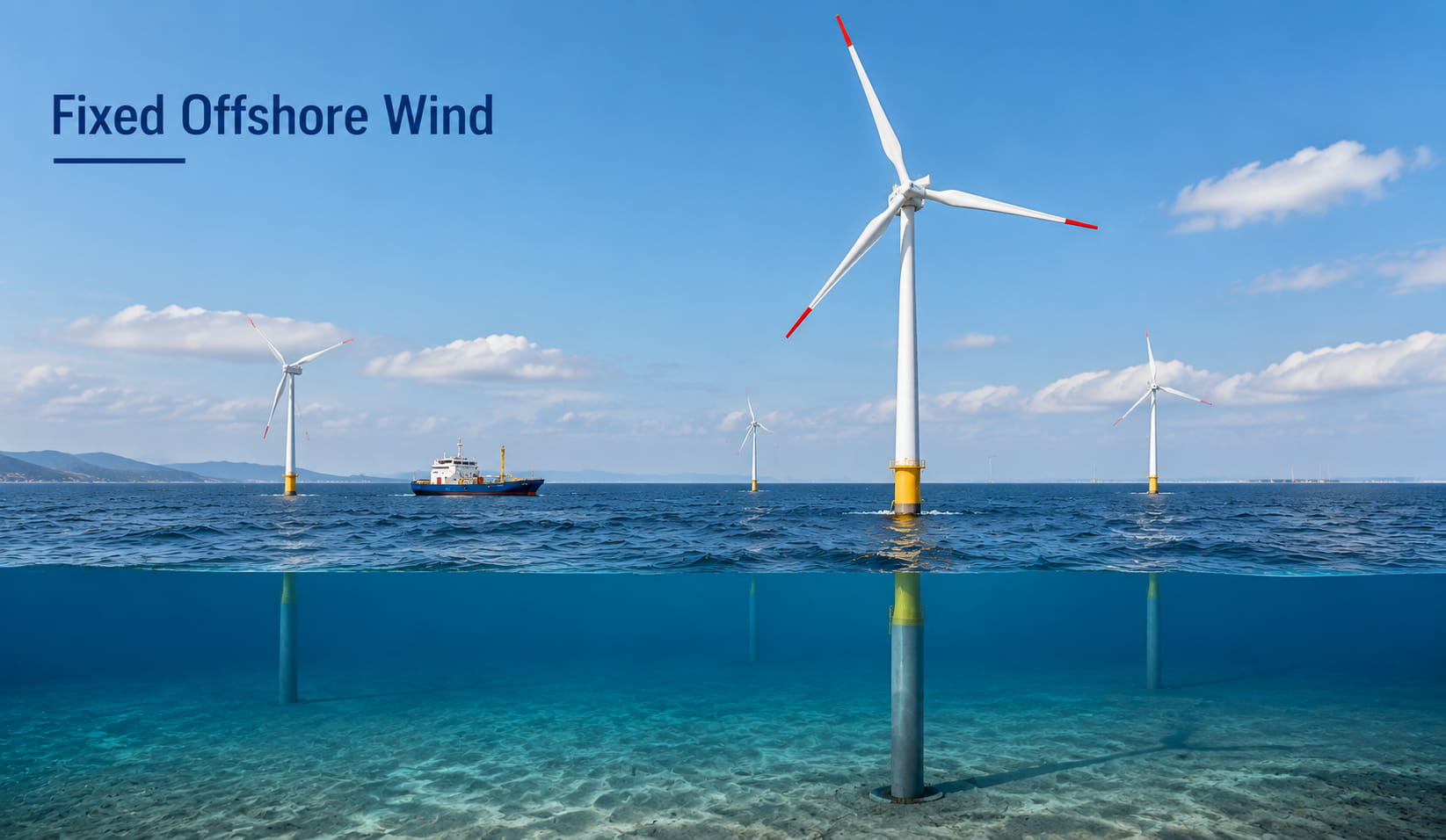
Fixed offshore wind uses turbines installed on foundations that are attached directly to the seabed. These foundations provide strong support for the turbine structure and allow stable operation in suitable offshore areas.
Fixed offshore wind projects are commonly developed in shallow and medium-depth waters where seabed conditions are suitable. Because this technology has been used for many years, it has a mature supply chain, experienced installation teams, and proven operating performance.
One major advantage of fixed offshore wind is reliability. The technology has been tested through many commercial projects, and many companies already have experience in design, construction, and maintenance.
Fixed offshore wind can also offer lower project costs compared with floating offshore wind, especially in locations where water depth is limited and installation conditions are favorable.
Key Differences Between Floating and Fixed Offshore Wind
Water Depth Requirements
The most important difference between the two technologies is where they can be installed.
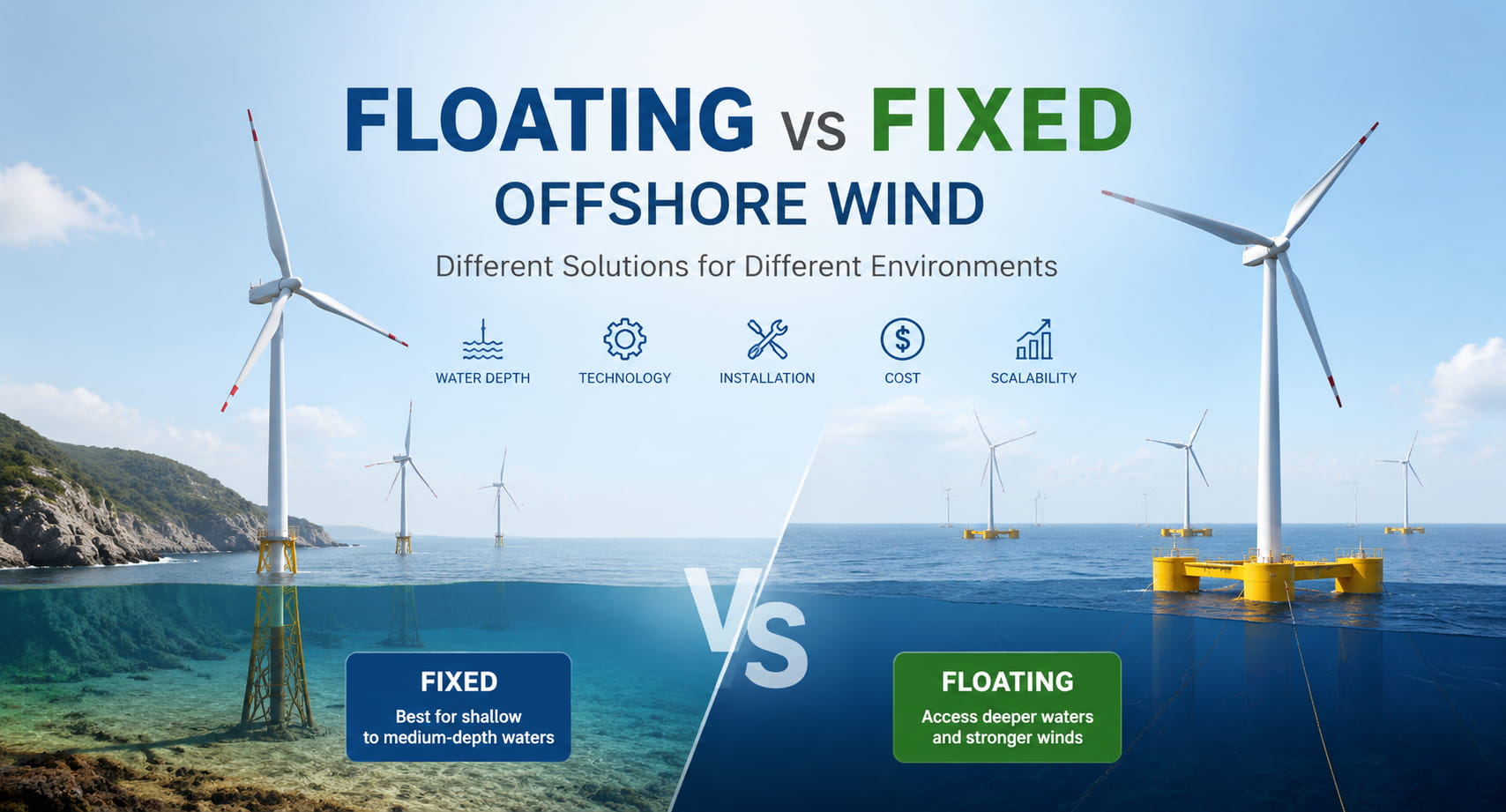
Fixed offshore wind is mainly suitable for shallow and medium-depth waters because turbines require seabed foundations for support.
Floating wind systems are designed for deeper waters. Since turbines are supported by floating structures, they can be installed farther offshore and access areas with stronger wind conditions.
For projects located in deep-water environments, floating technology provides greater flexibility.
Technology Development
Fixed offshore wind currently has a higher level of technological maturity. Many components, installation methods, and maintenance processes have already been standardized.
Floating wind technology is newer and requires advanced engineering solutions, including floating platforms, anchoring systems, and dynamic cables.
However, ongoing innovation is improving reliability and reducing costs. As the industry develops, floating systems are expected to become an increasingly important part of future offshore energy development.
Installation Process
Installation methods are another major difference.
Fixed offshore wind projects require foundations to be installed directly into the seabed before turbines are assembled. This process depends heavily on seabed conditions and specialized offshore equipment.
Floating wind projects use floating platforms that can often be assembled before being transported offshore. Once positioned, the platforms are secured with mooring systems.
This approach can reduce seabed construction requirements but requires careful planning for transportation and offshore operations.
Cost Considerations
Cost is a key factor when selecting an offshore wind solution.
Fixed offshore wind generally has lower upfront costs because the technology is more established and supported by mature supply chains.
Floating wind projects typically require higher initial investment due to the complexity of floating structures and installation processes.
However, costs are expected to decrease as manufacturing improves and project experience increases. For some deep-water projects, the additional investment may be justified by access to stronger wind resources and larger development potential.
Energy Potential and Scalability
Both technologies can contribute significantly to renewable energy development.
Fixed offshore wind provides reliable power generation in suitable coastal areas. It remains an effective solution where water depth and seabed conditions allow efficient installation.
Floating systems offer greater scalability because they can be deployed in deeper waters with fewer geographical limitations. This creates opportunities for developing larger offshore wind farms in areas that were previously difficult to access.
How to Choose Between Floating and Fixed Offshore Wind for Different Projects?
The best offshore wind solution depends on the specific requirements of each project.
When Floating Offshore Wind Is a Better Choice
A floating wind solution may be suitable when:
- The project is located in deep waters;
- Strong offshore wind resources are available;
- Coastal space is limited;
- Long-term renewable energy expansion is a priority.
For developers looking to access new offshore areas, floating technology provides greater flexibility.
When Fixed Offshore Wind Is More Suitable
Fixed offshore wind may be preferred when:
- Water depth is suitable for foundations;
- Lower initial costs are important;
- Proven technology is required;
- Installation conditions are favorable.
For many current offshore projects, fixed systems remain a practical and reliable choice.
The Best Offshore Wind Depends on Different Scenarios
Both floating and fixed offshore wind technologies have an important role in the renewable energy transition.
Fixed offshore wind offers a mature and cost-effective solution for suitable locations, while floating offshore wind creates new possibilities for deep-water energy development.
Instead of asking which technology is always better, project developers should evaluate their specific needs, including location, budget, technical requirements, and future energy goals.
By selecting the right offshore wind solution, companies can achieve better project performance and support the growth of clean energy worldwide.
