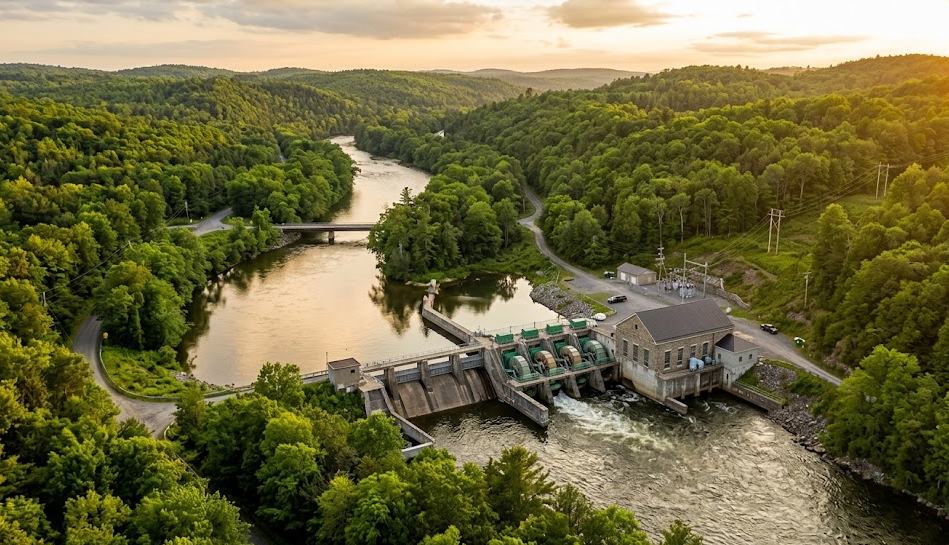
How a Generator for Hydro Systems Turns Water Into Electricity
A generator for hydro systems is the reason hydropower remains the oldest large-scale source of renewable electricity on the planet. It still accounts for more electricity generation than solar and wind combined. Most people understand that water turns a turbine and that the turbine generates power, but the mechanics behind that process matter when evaluating a hydropower project, sourcing equipment, or specifying the right system for your site.
What Is a Hydro Generator?
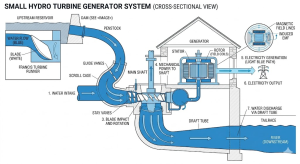
A hydro generator is the component that converts mechanical energy produced by a spinning turbine into electrical energy. It works on the same principle as any electromagnetic generator: a rotor fitted with magnets spins inside a stator wound with copper coils, and that movement induces an electrical current.
The turbine and the generator are distinct components, though they’re almost always discussed together and often sold as a paired system. The turbine captures the energy of moving water and converts it into rotational force. The generator then converts that rotational force into electricity. Together, they form the core of any hydroelectric installation, from a small run-of-river system generating a few kilowatts to a utility-scale dam producing hundreds of megawatts.
According to the U.S. Geological Survey, the process is conceptually similar to a coal-fired power plant — the difference is that falling water replaces steam as the force that spins the turbine. The output, however, is entirely clean and produces no emissions during operation.
How a Generator for Hydro Systems Works
Two variables determine how much power a hydroelectric system can produce: head and flow.
Head is the vertical drop between the water source and the turbine, essentially the height from which water falls. More head means more pressure and more energy potential per unit of water. For instance, a site with 100 meters of head contains significantly more usable energy than one with 10 meters, even at the same flow rate.
Flow is the volume of water moving through the system per unit of time. A wide, fast-moving river with low head can produce substantial power through high flow volume. Similarly, a steep mountain stream with high head but limited flow can generate meaningful electricity just through a different mechanism.
Together, these two variables follow a straightforward formula: power output is proportional to head multiplied by flow rate, adjusted for system efficiency. In practice, that efficiency figure — typically between 70% and 90% for modern turbine-generator systems- accounts for mechanical losses, friction, and electrical conversion inefficiencies.
Types of Hydro Turbines and Which Sites They Suit
Turbine selection is the most consequential technical decision in a hydropower project. The wrong turbine for a given head and flow profile will underperform, wear prematurely, or require costly modifications. According to the U.S. Department of Energy, turbine type is primarily determined by the site’s head and flow conditions.
Head refers to the vertical distance water falls before reaching the turbine. Flow refers to the volume of water moving through the system per unit of time. Together, these two variables define a site’s power potential and narrow the viable turbine options considerably.
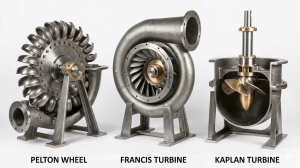
High-head sites — typically above 100 meters — suit Pelton turbines, which use the kinetic energy of a high-velocity water jet. Medium-head sites between 30 and 300 meters generally work best with Francis turbines, which handle a wide range of flow conditions and are the most widely installed turbine type globally. Low-head sites below 30 meters call for Kaplan turbines, which use adjustable blades to maintain efficiency across variable flow rates.
Getting this decision wrong is not just a performance issue. A mismatched turbine creates mechanical stress, increases maintenance cycles, and shortens the operational lifespan of the entire hydro system. The site assessment and turbine selection process should happen before any other equipment decisions are made.
Pelton Turbines High Head, Lower Flow
Pelton turbines are impulse turbines. Water exits a nozzle as a high-velocity jet and strikes double-cupped buckets mounted around the wheel. The water gives up its kinetic energy and falls away. The turbine spins in open air at atmospheric pressure. As a result, Pelton turbines are the standard choice for high-head sites typically above 250 meters. Mountain streams and elevated reservoir sites are natural fits. Under optimal conditions, they can achieve efficiencies above 90%.
Francis Turbines Medium Head, High Flow
Francis turbines are reaction turbines; they operate fully submerged and use both water pressure and velocity to generate rotational force. Water enters around the full circumference of the runner and flows inward through fixed blades. Consequently, Francis turbines are the most widely deployed type in medium- to large-scale hydropower. They handle heads from as low as 2 meters up to around 200 meters. Their efficiency under optimum conditions can reach 95%.
Kaplan Turbines Low Head, High Flow
Kaplan turbines are axial-flow reaction turbines. They’re designed for low-head, high-flow sites, rivers, tidal channels, and run-of-river installations. Their distinguishing feature is adjustable blade pitch. Both the runner blades and guide vanes can be varied during operation. As a result, the turbine maintains high efficiency across a wide range of flow conditions. This adaptability makes Kaplan turbines well-suited for sites with significant seasonal water-level fluctuations.
Generator for Hydro: How the Electrical Side Works
Once the turbine is spinning, the generator takes over. Most hydro generators are synchronous AC generators. They produce alternating current at a frequency determined by rotor speed. For grid-connected systems, that frequency must match the local grid standard precisely: 60 Hz in North America, 50 Hz elsewhere.
Rotational speed and pole count together determine output frequency. For instance, a generator for slower-spinning turbines, such as a large Kaplan unit, uses more magnetic poles to achieve the correct frequency at lower RPM. Faster turbines, like Pelton units at high head, can use fewer poles at higher speeds.
For off-grid installations, however, the frequency requirement is more flexible. Many small hydro systems use DC generators or an inverter to convert variable AC output into stable power. In either case, the generator specification voltage, frequency, power factor, and protection ratings should be matched to the downstream electrical infrastructure from the outset.
What to Consider Before Installing a Hydro Generator System
Beyond turbine and generator selection, several factors determine whether a hydropower project performs as expected over its operational life.
Site Hydrology: Flow rate is rarely constant. Seasonal variation, drought years, and upstream changes can all affect available water volume. A system sized for average annual flow may underperform significantly during dry periods. Prudent project design accounts for minimum flow conditions, not just average or peak flow.
Civil Infrastructure: The penstock, the pipe or channel that delivers water to the turbine, drives a significant portion of the project cost and causes energy loss when undersized or poorly routed. Intake screens, sediment management, and tailrace design all affect long-term performance. Civil works typically represent 50–70% of the total project cost in small hydro installations.
Grid Connection vs Off-Grid: Grid-connected systems require synchronisation equipment and protection relays, and often involve utility approval processes. Off-grid systems need battery storage or load management to handle variable consumption. The choice significantly affects both the generator specification and the total system cost.
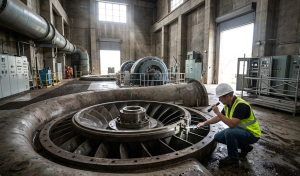
Maintenance AccessHydro: generators are long-lived, well-maintained systems that routinely operate for 30–50 years. However, turbine runners, seals, and bearings require periodic inspection and replacement. Remote sites need either robust self-diagnostic systems or planned maintenance access built into the project design.
Why Hydropower Projects Choose Professional Installation Partners
A hydro generator system involves hydraulic engineering, mechanical systems, and electrical infrastructure, all of which interact. An error in turbine selection affects generator sizing. Similarly, a poorly designed penstock reduces efficiency and strains the turbine. Moreover, undersized electrical protection puts the generator at risk during grid faults.
For that reason, most commercial and industrial hydropower projects work with experienced installation partners rather than assembling systems from independent component suppliers. The integration of knowledge across turbine-to-site, generator-to-turbine, and control systems-to-grid requirements determines project success. To discuss your site conditions and project requirements, talk to our hydro team.
